



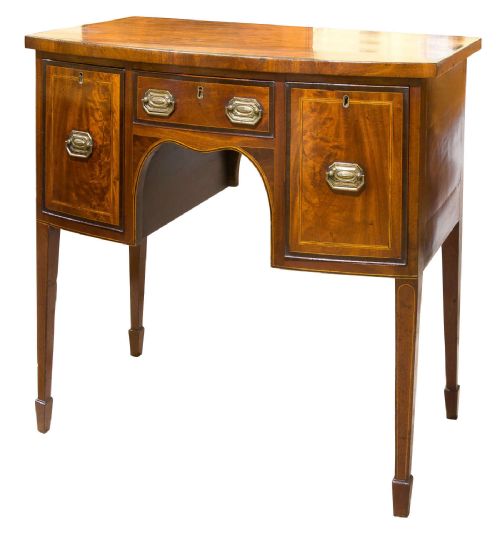


Classic Mahogany Sideboard Table
A classic mahogany sideboard table brings rich timber grain and restrained proportions to a dining room or hallway.
Classic Mahogany Sideboard Table
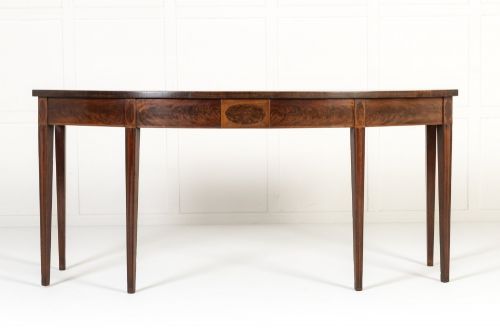
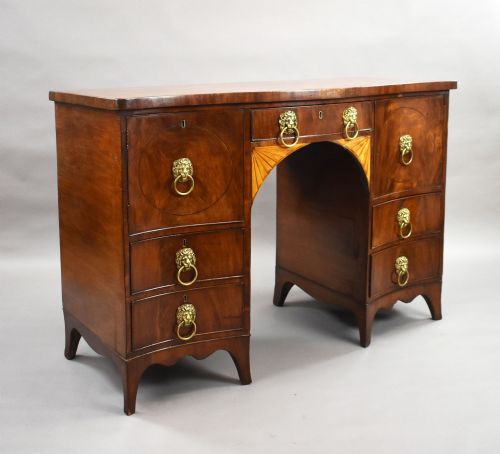
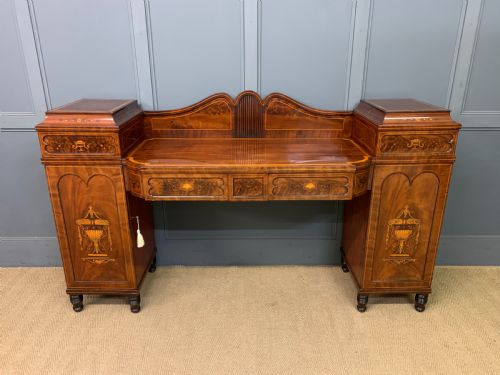
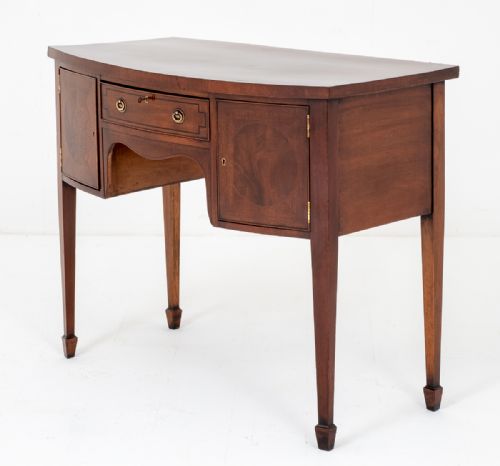
When you search for a classic mahogany sideboard table, you encounter practical serving furniture designed for dining rooms across several distinct eras. The selection here spans eighteenth-century Georgian pieces, Regency examples, and later revival items from the Victorian period and nineteen-ten.
Most entries on this page take the form of bowfront or serpentine sideboards, serving tables, and console tables. These brown-wood pieces combine utility with formal elegance, often featuring disciplined storage and expansive top surfaces.
How they were made
Cabinetmakers built these pieces using solid mahogany and carefully cut wood veneer over secondary timbers. The natural warmth of the primary wood provides a deep red-brown surface that shows subtle figuring.
Many examples incorporate contrasting boxwood and satinwood inlay to accentuate drawers and borders. Bright brass hardware such as ring pulls and drop handles finishes the construction.
Classic Mahogany Sideboard Table Retail Price Guide 2026
Typical asking prices for classic mahogany sideboard table among the pieces listed under this phrase on Sellingantiques today, from the lower quarter to the upper quarter. They describe what is for sale here now, not the wider market.
Listings feature eighteenth-century and nineteenth-century pieces alongside revival items, utilising mahogany, brass, boxwood, and satinwood.
What varies in quality
The distinction between standard and exceptional pieces rests upon the precision of the cabinetwork and timber selection. Highly figured flame mahogany veneers and crisp inlay distinguish the finest examples from simpler constructions.
Proportion and structural harmony also dictate value within this group. Pieces with balanced bowfront or serpentine contours and integrated tapering legs demonstrate superior craftsmanship.
Wilkinson London
The Classic Mahogany Sideboard Table Glossary
- Bowfront
- A convex curved front profile popular on Georgian and Regency sideboards. This shape softens the room and adds gentle movement to the furniture.
- Serpentine front
- A curved front featuring a convex centre flanked by concave wings. It demands advanced woodworking skill to shape the drawers and frame.
- Satinwood inlay
- Contrasting pale yellowish wood set into the darker mahogany surface. It creates geometric borders and delicate decorative banding.
- Console table
- A table designed to stand against a wall, sometimes supported by brackets or legs. These serve as decorative surfaces in entrance halls and formal rooms.
- Pedestal sideboard
- A form featuring distinct pedestals flanking a central section. These often house cupboards or drawers for dining room storage.
Classic Mahogany Sideboard Table: Frequently Asked Questions
What is a classic mahogany sideboard table used for?
These tables provide a surface for serving food and displaying decorative objects during meals. They also offer interior storage space for dining accessories.
In contemporary interiors, buyers often place them in hallways or living rooms as console surfaces.
How do I date a classic mahogany sideboard table?
Dating relies on identifying stylistic markers such as George III lines, Regency neoclassical details, or later Victorian revival traits. Timber choice and construction methods help confirm the period.
Earlier pieces from the eighteenth century typically display hand-cut joinery and dense, patinated mahogany.
What is the difference between a sideboard and a serving table?
A serving table primarily offers an open top and legs without enclosed cupboard storage beneath. Sideboards usually incorporate banks of drawers and cabinets for holding tableware.
Both forms belong to the broader category of dining room servery furniture.
How do I care for mahogany furniture?
Keep mahogany pieces away from direct sunlight and heat sources to prevent the timber and veneer from drying out. Regular dusting with a soft, dry cloth preserves the polished finish.
Avoid using silicone-based polishes that can build up a hazy film on the wood over time.