



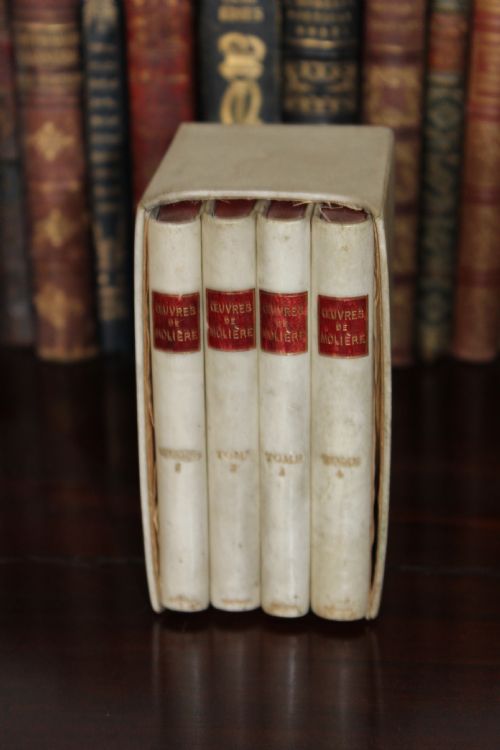
Classic Literature Leather Sets
Classic literature leather sets bring together historical writing and traditional bookbinding, offering shelves consistency and tactile character.
Classic Literature Leather Sets
Classic literature leather sets comprise multi-volume groups of historical texts, plays, and novels gathered into unified bindings. These groupings range from modest four-volume editions to extensive forty-seven-volume collections spanning the eighteenth and nineteenth centuries.
The selections appearing here include works by notable authors such as Shakespeare, Sir Walter Scott, and Charles Dickens, alongside historical and philosophical writings. Most examples originate from the Victorian, Georgian, and Regency periods, reflecting nineteenth-century publishing habits.
Buyers encounter multi-volume sets arranged for domestic display and reading, often retaining contemporary publishers' bindings or later uniform rebinding. Each set preserves historical literature within durable covers designed to sit together on library shelves.
Materials and Binding Techniques
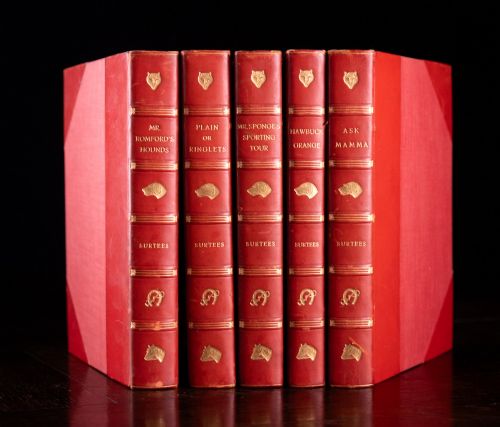
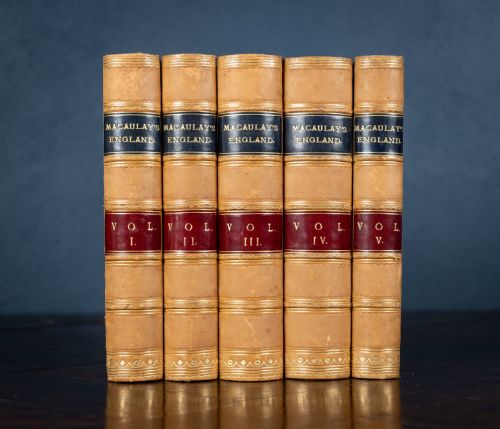
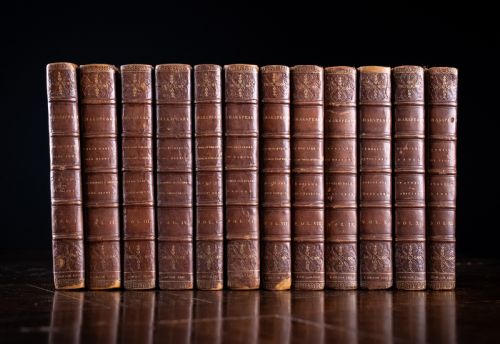
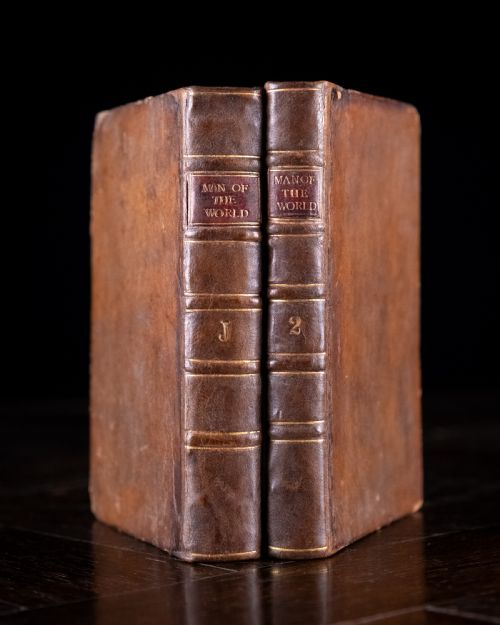
Binders utilised natural hides, predominantly calfskin and calf leather, stretched over board covers to protect the paper text blocks within. These leather surfaces received tooling and handling by hand during the nineteenth and eighteenth centuries.
Spines and covers gained decoration through the application of gold leaf and gilt tooling, creating bright lettering and ornamental borders against dark leather. Marbled paper often appeared on endpapers and internal boards, complementing the exterior calfskin.
Several volumes preserve the microscopic hand-written marginalia of nineteenth-century readers who disagreed openly with the author's plot choices.
Factors Distinguishing Better Editions
Quality rests primarily on the integrity of the original bindings and the uniformity of the set as a whole over time. Volumes that retain matching contemporary calf leather and consistent spines command greater appreciation from collectors seeking visual harmony.
The clarity of the gold leaf tooling and the preservation of internal paper pages also distinguish superior examples. Sets featuring complete multi-volume runs without mismatched replacement volumes maintain stronger historical coherence.
The Classic Literature Leather Sets Glossary
- Calfskin
- A fine leather derived from the hide of a calf, prized for its smooth texture and ability to accept detailed gilt tooling.
- Gilt
- A thin layer of gold applied to the edges of paper leaves or stamped into leather bindings to provide metallic decoration.
- Marbled paper
- Paper decorated with a patterned, multi-coloured swirling design, commonly used for endpapers inside the covers of older books.
- Regency
- An architectural and design period spanning the early nineteenth century, known for classical restraint and elegance in book production.
- Victorian
- The stylistic era covering the reign of Queen Victoria, during which many large multi-volume literature sets were published and bound.
Classic Literature Leather Sets: Frequently Asked Questions
How are these book sets typically displayed?
These multi-volume sets sit upright on library shelves or within bookcases, arranged in numerical or chronological order by volume number.
Their uniform leather spines create a cohesive visual line that anchors the design of a traditional room.
Can these books still be read?
Most volumes remain legible, with traditional paper pages and clear typography suited to careful handling.
Readers often support the heavy leather covers gently to protect the historical spine connections during reading.
What periods do these sets represent?
The available collections primarily date from the eighteenth and nineteenth centuries, encompassing Georgian, Regency, and Victorian publishing eras.
Earlier eighteenth-century editions sit alongside extensive nineteenth-century novel series and collected plays.
What materials make up the bindings?
Binders used natural calf leather and calfskin stretched over sturdy boards, finished with gold leaf stamping and gilt lettering.
Internal elements frequently incorporate marbled paper endpapers and traditional rag paper for the text blocks.