





Classic Library Desk
A classic library desk is a substantial workspace built to anchor a serious study, prized for solid timber construction and ample writing surfaces.
Classic Library Desk
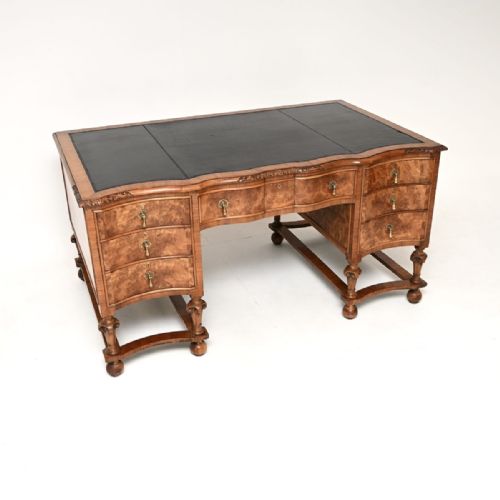
The classic library desk encompasses substantial writing tables, partner desks, and pedestal desks designed for functional study spaces. These pieces emerge primarily from the Georgian, Victorian, and Edwardian eras, utilising rich timbers suited to domestic and institutional libraries.
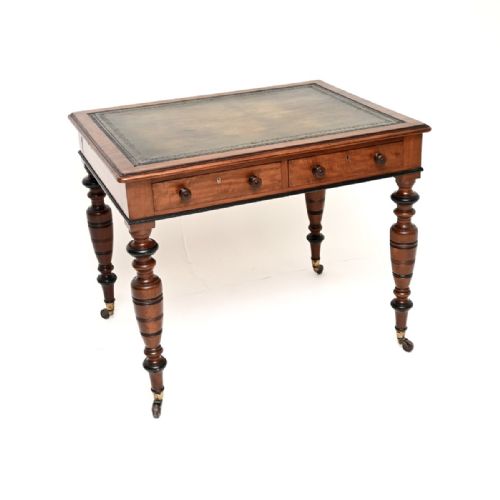
Buyers encountering this selection will most frequently find nineteenth-century mahogany writing tables and pedestal forms. These items reflect the heavy utility and formal aesthetic demanded by historical studies and offices.
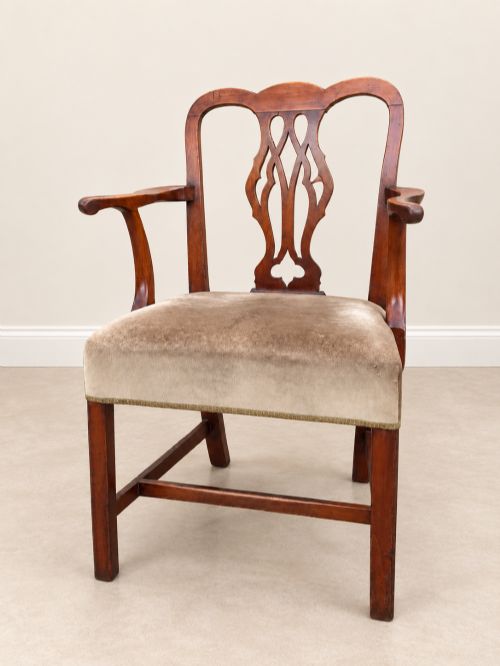
The category also extends to related library furnishings such as yew wood armchairs, drum tables, and bureau plat designs. Each form maintains a direct functional relationship to the traditional workspace.
Materials and construction
Construction relies heavily on dense hardwoods like mahogany, yew, and burr walnut. These timbers provide the structural integrity required for large writing surfaces and pedestal frameworks.
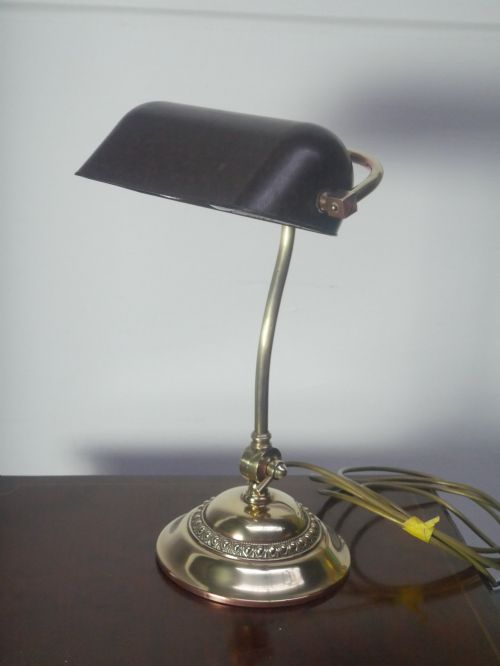
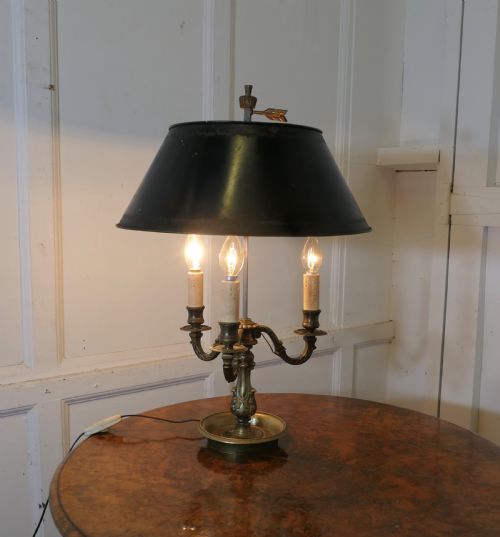
Writing surfaces frequently incorporate inset leather or velvet panels, often finished with gilt tooling. Metal components such as brass handles, hinges, and associated lamps provide both structural support and functional illumination.
A likeness of William Shakespeare on a marble plinth stands ready to oversee quiet literary research.
Factors of quality
Quality rests upon the selection of timber veneers and the precision of the joinery in drawers and pedestals. Solid mahogany or burr walnut constructions with well-fitted joints represent the higher end of the range.
The execution of secondary details, such as reeded carvings, brass hardware, and the quality of the inset leather writing surface, separates standard utilitarian pieces from finer showroom examples.
Maple and Co·Faraday and Sons
The Classic Library Desk Glossary
- Pedestal desk
- A heavy writing desk built with two separate supporting pedestals containing drawers beneath the main surface.
- Partners desk
- A large double-sided desk designed for two people to work opposite one another with drawers on both faces.
- Drum table
- A circular library table with a deep frieze containing drawers, typically supported on a central pillar and tripod base.
- Bureau plat
- A freestanding French writing table featuring a leather inset top and multiple frieze drawers.
- Reeded
- A decorative moulding consisting of parallel convex strips resembling bundled reeds, commonly found on table legs and frames.
Classic Library Desk: Frequently Asked Questions
What is a partner desk?
A partner desk is a large double-sided workspace featuring drawers and cupboards on both faces. This allows two people to sit and work opposite each other.
Historically placed in the centre of a large room rather than against a wall, these desks offer symmetrical storage and generous proportions.
How do I care for a leather desk top?
Leather desk inserts require gentle cleaning with a slightly damp cloth followed by a specialised leather cream to maintain suppleness. Avoid harsh chemical cleaners that strip the original dye and gilt tooling.
Keeping the leather conditioned prevents cracking and preserves the traditional appearance of the writing surface.
Where should a pedestal desk be placed?
Pedestal desks are traditionally positioned facing into the room or anchored against a library wall depending on their finished back panels. Because they are finished on all sides or feature substantial pedestals, they command the centre of a study.
Ensure adequate clearance around the pedestals for chairs and movement within the workspace.
How do I identify a Victorian desk?
Victorian desks are typically constructed from dense mahogany or walnut, often featuring deep pedestal configurations and brass hardware. The timber grain and heavy joinery reflect nineteenth-century manufacturing methods.
Stylistic cues include turned legs, reeded framing, and inset leather writing panels stamped with gold tooling.