


Classic Georgian Furniture
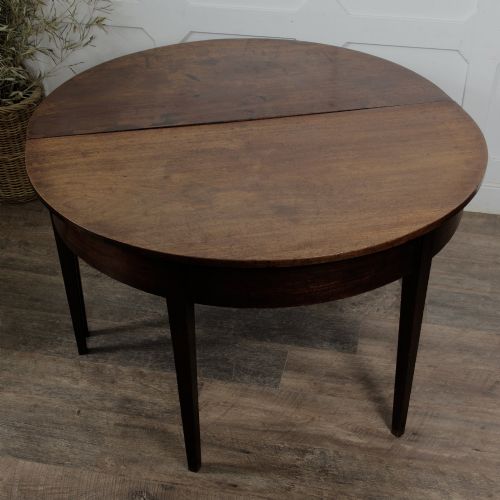
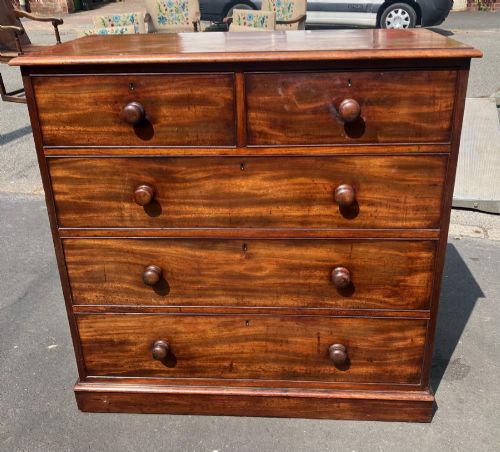
Classic georgian furniture brings together mahogany chests, desks, and tables from the eighteenth and nineteenth centuries.
Classic Georgian Furniture
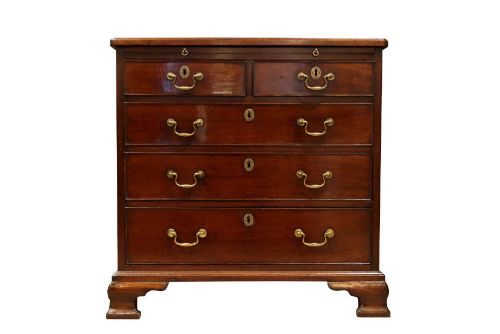
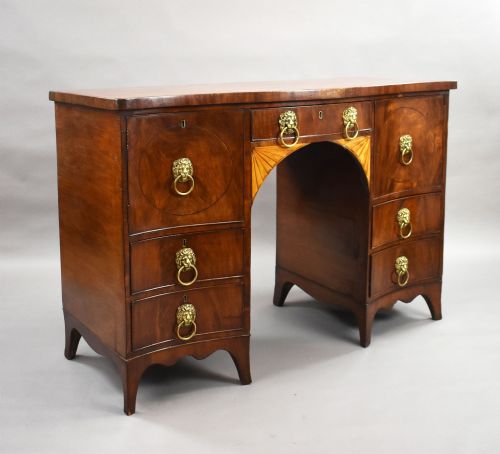
Classic georgian furniture encompasses utilitarian and formal domestic pieces built across the Georgian, Regency, and Victorian periods. The selection focuses heavily on mahogany chests of drawers, alongside sideboards, desks, and console tables.
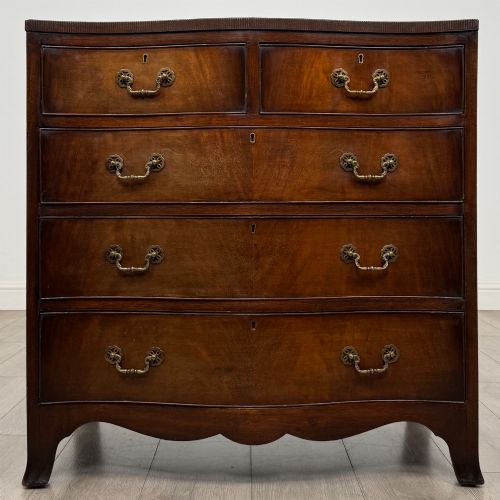
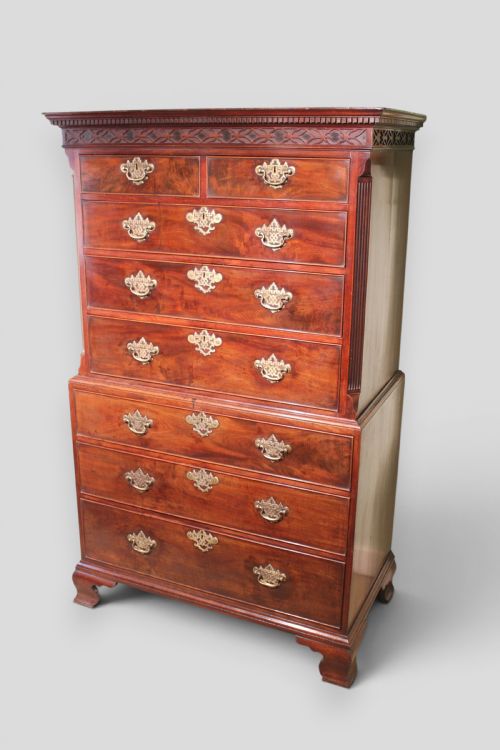
Buyers meet forms ranging from bowfront and serpentine chests to tallboys and demilune tables. Pieces span strict eighteenth-century origins through to later nineteenth-century revivals.
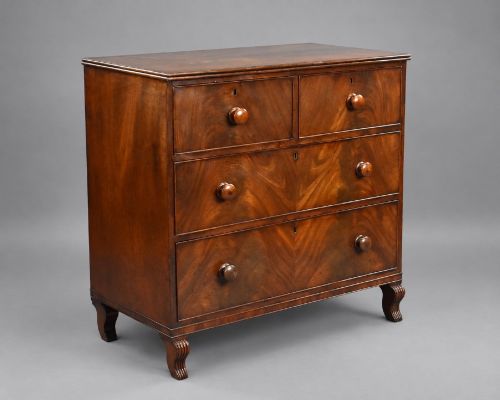
Walnut and flame mahogany veneers appear frequently alongside solid timber carcases. Brass handles and boxwood stringing provide the primary decorative contrast across these domestic forms.
How they were made
Cabinetmakers utilised solid mahogany and oak timbers for structural integrity and drawer linings. Flame mahogany veneers were carefully matched and laid across primary drawer fronts to create figured grain patterns.
Brass hardware, including drop handles and escutcheons, was cast and fitted by hand to drawer faces and doors. Boxwood stringing and inlay work required precise recessing into contrasting timber surfaces.
A brass door knocker sneaks into the furniture lineup, proving someone took antique browsing rather literally.
What varies in quality
The selection of timber grain dictates visual depth, particularly where symmetrical flame mahogany veneers meet across drawer fronts. Superior execution shows in the crispness of brass inlay and the tightness of dovetail joints within the carcase.
Proportion and scale separate standard utilitarian output from pieces designed for principal rooms. Refinement in secondary timbers, such as oak drawer linings, indicates the original tier of production.
C Hindley·Howard And Sons
The Classic Georgian Furniture Glossary
- Bowfront
- A curved convex cabinet front that swells outward in the centre, popular on chests of drawers from the late eighteenth century onward.
- Tallboy
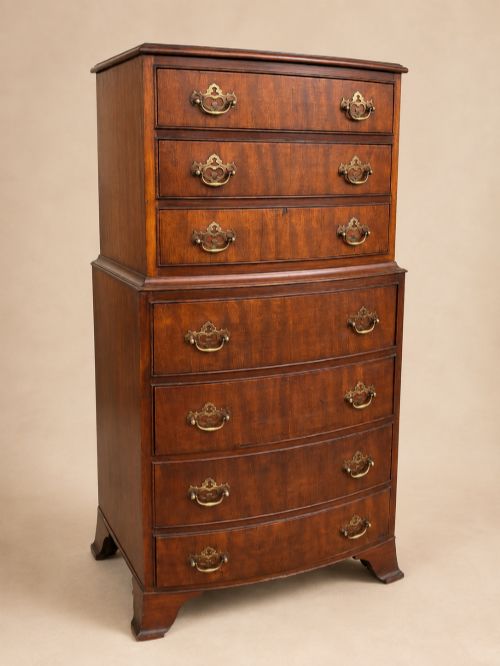
- A tall chest of drawers constructed in two stacked sections, often combining a lower chest base with a smaller upper chest.
- Demilune
- A half-moon shape used for small tables and console pieces designed to stand flush against a wall.
- Stringing
- Thin inlaid lines of contrasting wood, such as boxwood, used to outline panels and drawer edges on cabinet furniture.
- Serpentine
- A front profile defined by a concave central section flanked by two convex curves, requiring advanced woodworking skill.
Classic Georgian Furniture: Frequently Asked Questions
How do I date a mahogany chest?
Dating relies on examining construction methods, timber selection, and hardware styles. Dovetail joints and drawer linings change visibly between the Georgian period and later nineteenth-century revivals.
Secondary woods like oak or pine inside the carcase provide further clues to the decade of manufacture. Original brass handles and feet help confirm the timeline.
Are these pieces suitable for daily use?
Sturdy mahogany construction and robust drawer carcases make these items well suited for everyday domestic storage. Chests and sideboards integrate easily into modern bedrooms and living spaces.
Routine care involves maintaining stable indoor humidity to protect timber veneers and polished finishes.
What is the difference between Georgian and Regency styles?
Georgian furniture leans towards classical proportions and understated mahogany surfaces, with roots in the mid to late eighteenth century. Regency design introduces bolder classical motifs inspired by ancient Greece and Rome.
Regency pieces often incorporate more dramatic flame veneers and distinct brass mounts compared to earlier Georgian forms.
How do I care for antique veneer?
Antique flame mahogany veneer requires protection from direct sunlight and excessive heat sources to prevent lifting or drying out. Gentle dusting with a dry cloth preserves the polished surface.
Application of traditional wax polish feeds the timber and maintains the natural depth of the grain over time.