



Classic Georgian Commode
A classic georgian commode brings understated architectural presence and deep figured timber into a room.
Classic Georgian Commode
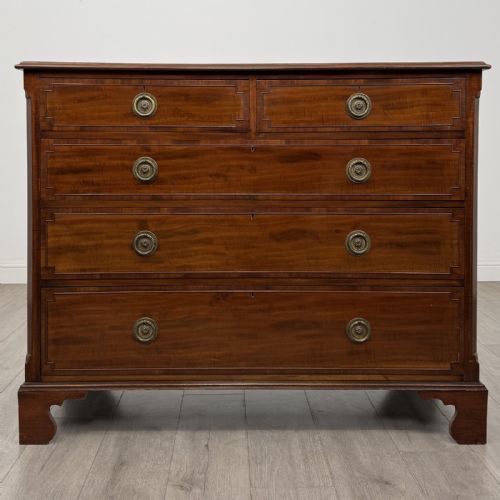
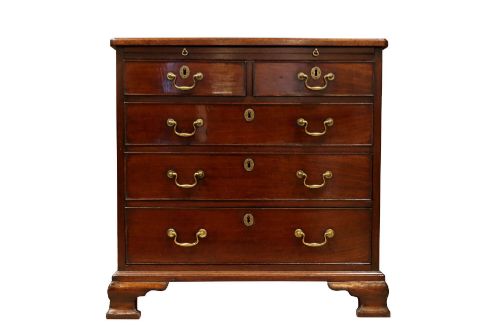
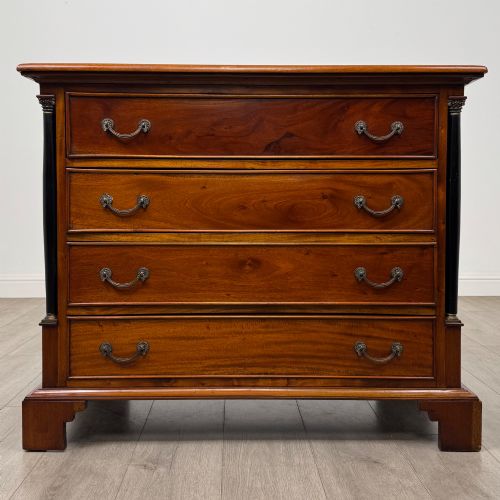
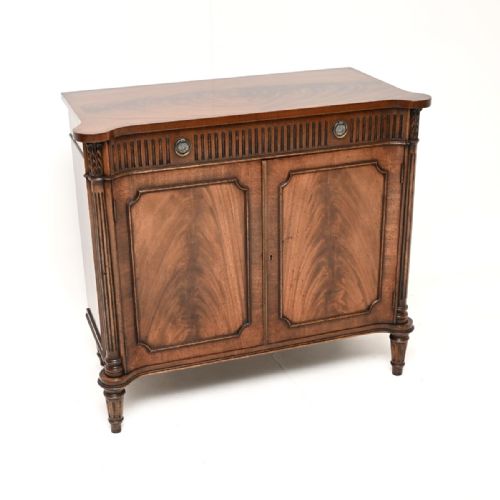
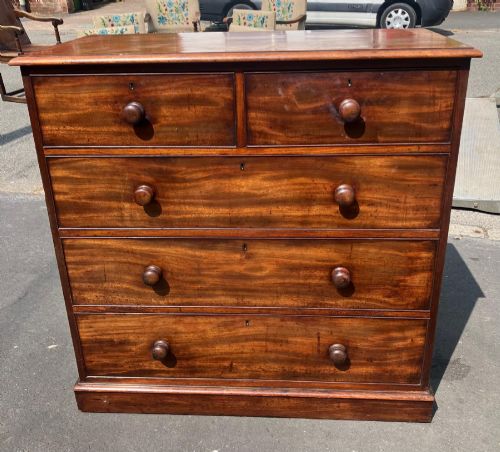
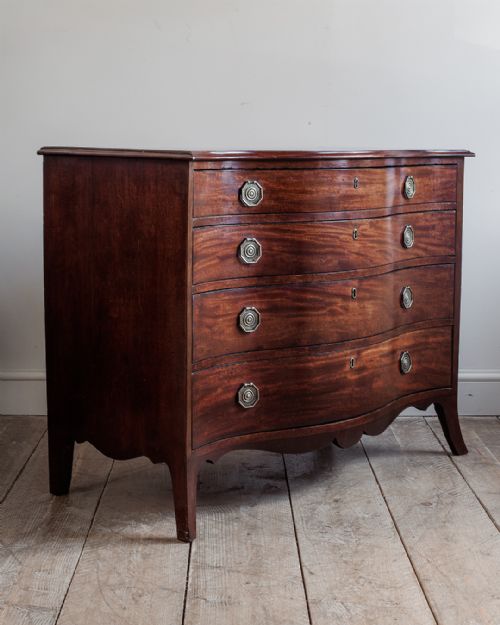
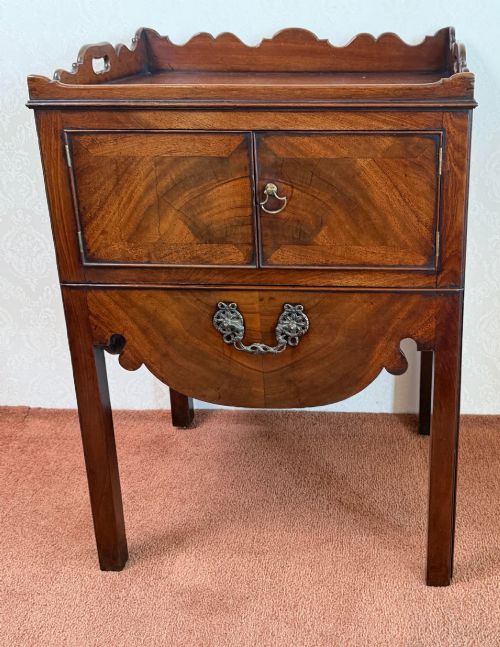
When you search for a classic georgian commode, you encounter substantial chests of drawers and bedside cabinets spanning the eighteenth century through to later revival periods. The selections predominantly feature mahogany and walnut timbers fashioned into bow front, serpentine, and straight configurations.
Most examples originate from the Georgian era itself, supplemented by Regency interpretations and twentieth century revivals. These pieces function primarily as refined storage furniture, balancing utility with decorative presence through figured veneers and fitted brushing slides.
How they were made
Cabinet makers utilised solid mahogany and walnut alongside flame mahogany veneer to construct these carcases, often incorporating oak for internal drawer linings. Selected pieces feature subtle boxwood stringing and contrasting ebonised wood details to accentuate the drawer fronts.
Structural stability relied on traditional joinery methods, supported by brass handles and bracket feet. Surface finishing ranged from plain polished timber to intricate inlaid patterns that highlighted the natural grain of the wood.
Classic Georgian Commode Retail Price Guide 2026
Typical asking prices for classic georgian commode among the pieces listed under this phrase on Sellingantiques today, from the lower quarter to the upper quarter. They describe what is for sale here now, not the wider market.
Listings feature mahogany, walnut, and oak alongside decorative brass handles and boxwood stringing.
What varies in quality
The sophistication of the timber selection largely determines the status of a piece, with striking flame mahogany veneer and figured walnut marking out the finer examples. The handling of secondary woods like oak within the internal construction also signals the care taken during production.
Proportion and cabinetwork refinement separate standard storage items from superior specimens. Subtle details such as serpentine shaping and precise bracket feet elevate the architectural success of the design.
C. Hindley
The Classic Georgian Commode Glossary
- Commode
- A low cabinet or chest of drawers designed for domestic storage. In this context, the term encompasses various drawer configurations and bedside cabinets.
- Brushing slide
- A pull-out shelf integrated above the top drawer. It provided a temporary surface for writing or grooming.
- Serpentine front
- A furniture front curving outward in the centre and inward at the sides. This shape requires advanced woodworking skill to execute properly.
- Bracket foot
- A structural support extending from the corners of the base. It typically forms an L-shaped bracket profile characteristic of the period.
- Flame mahogany veneer
- A thin layer of timber sliced from the point where branches join the main trunk. This creates a distinctive flickering flame pattern across the surface.
Classic Georgian Commode: Frequently Asked Questions
What is a commode?
A commode functions primarily as a set of drawers or a small bedside cabinet designed for refined storage.
These pieces combine practical utility with decorative wood selection to anchor a room's interior scheme.
How do I spot an original?
Examine the construction methods, secondary woods like oak, and the natural wear on the timber surfaces.
Original eighteenth century examples display distinct hand-cut joinery and period-appropriate hardware configurations.
Where should I place it?
These cabinets suit living rooms, hallways, or bedrooms where their compact proportions provide useful surface space.
Keep them away from direct heat sources to protect the polished mahogany and walnut veneers from drying.
What defines the style?
The style relies on classical architectural proportions, restrained ornamentation, and figured timber grains.
Design variations include straight fronts, bowed profiles, and undulating serpentine shapes supported by bracket feet.