





Classic Drawer Cabinet
A classic drawer cabinet brings enduring timber and practical storage into a room, offering the structured compartments that collectors and homeowners rely upon.
Classic Drawer Cabinet
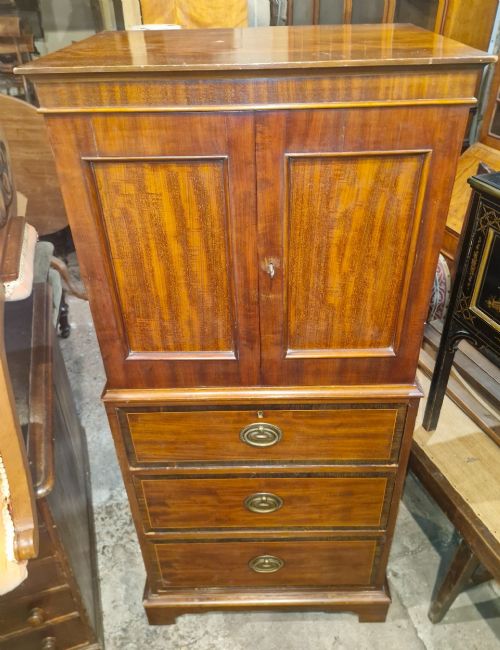
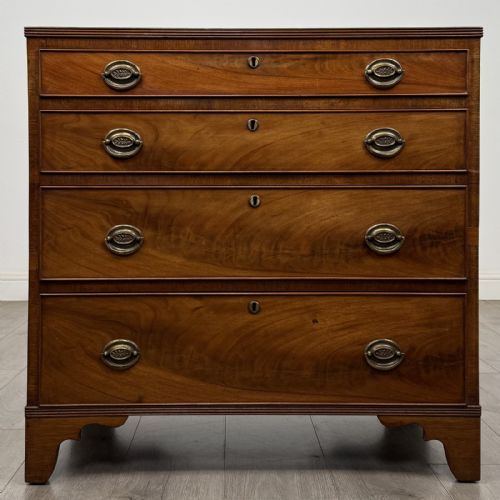
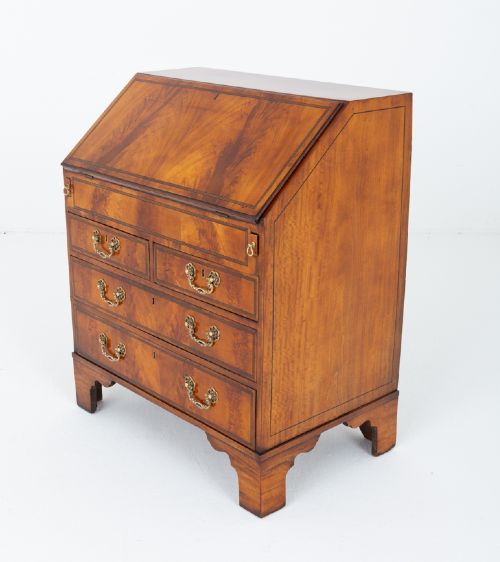
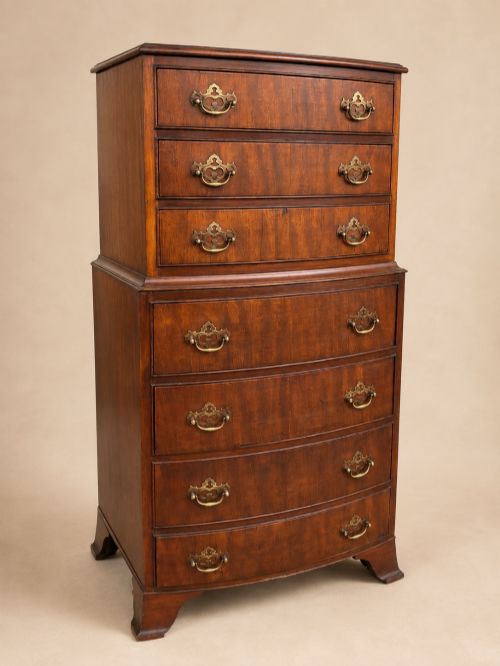
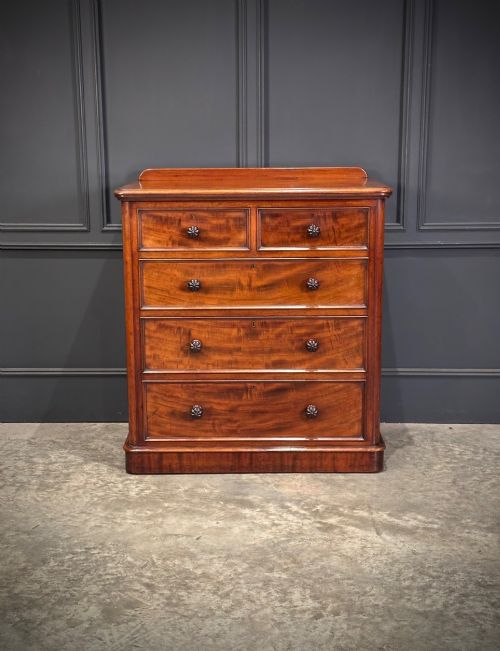
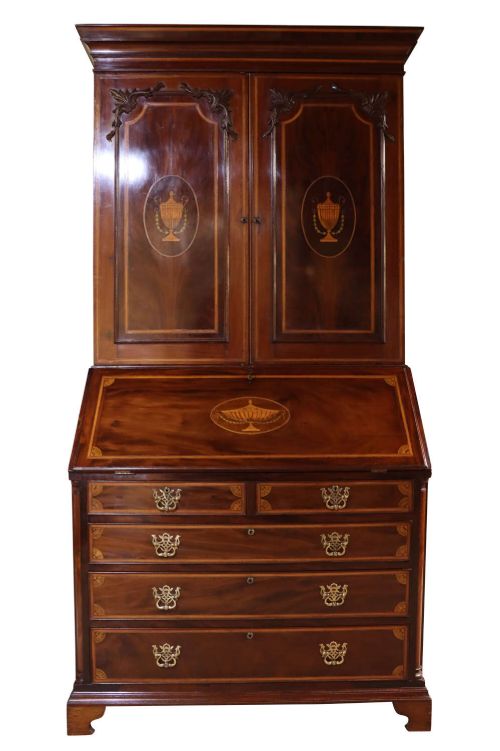
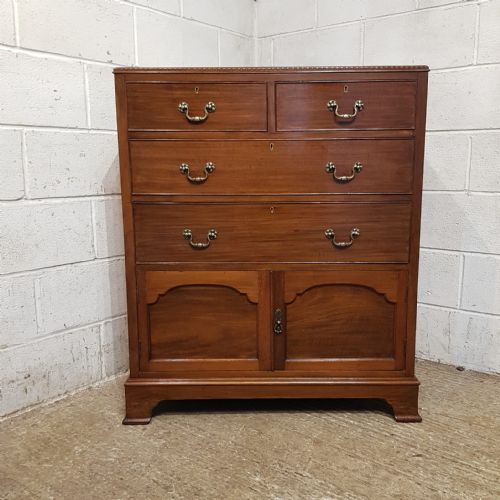
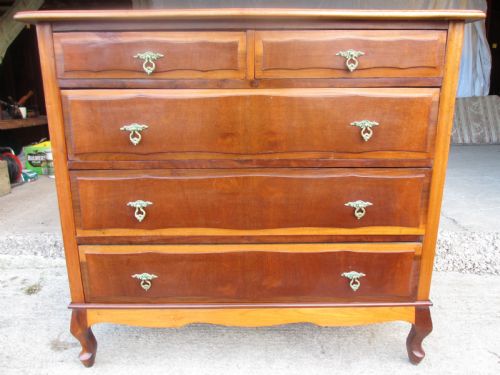
A classic drawer cabinet encompasses traditional forms such as chests of drawers, tallboys, bureau bookcases, and specialised collectors cabinets. These pieces span multiple eras including the Georgian, Regency, Victorian, and Edwardian periods, reflecting centuries of cabinetmaking heritage.
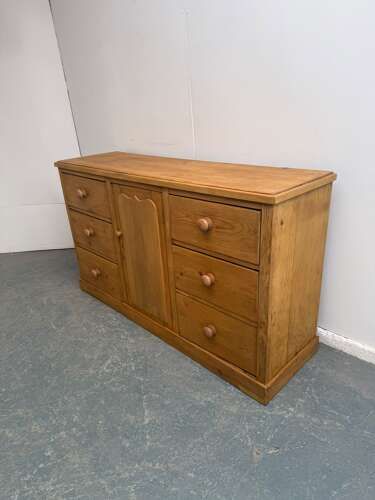
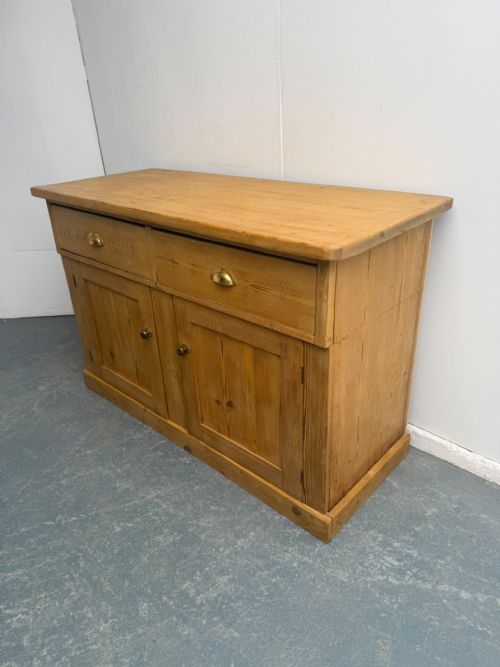
Buyers browsing this selection will frequently encounter mahogany chests of drawers alongside pine dressers, pitch pine collectors cabinets, and yew secretaire desks. The variety extends from compact bedside cabinets to substantial forty-drawer storage units.
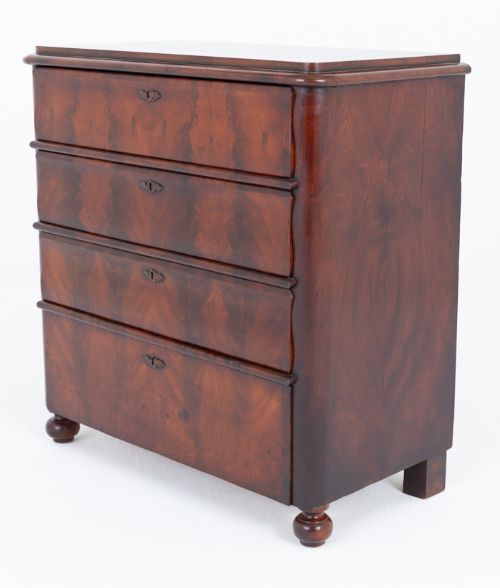
Origins range across distinct historical styles, including Biedermeier and William IV designs, each bringing specific proportions and detailing to domestic spaces.
Materials and construction methods
Cabinetmakers relied heavily on dense hardwoods like mahogany, flame mahogany veneer, and oak, often pairing them with secondary woods such as pine for internal framing and drawer linings.
Surfaces were frequently enhanced with wood veneers, ebonised wood, and satinwood, while hardware components typically incorporated brass for handles and key escutcheons.
Classic Drawer Cabinet Retail Price Guide 2026
Typical asking prices for classic drawer cabinet among the pieces listed under this phrase on Sellingantiques today, from the lower quarter to the upper quarter. They describe what is for sale here now, not the wider market.
Some Victorian collectors cabinets contain up to forty tiny drawers once destined for beetles and butterflies, now waiting for modern stationery.
Quality and craftsmanship variations
The distinction between standard examples and superior pieces rests on the choice of timber and the precision of the veneer work, particularly in figured cuts like flame mahogany and burr walnut.
Joinery execution and the integrity of original fittings, such as bracket feet and brass handles, elevate certain cabinets through their enduring structural stability and refined surface finish.
Brady·J T Crockett
The Classic Drawer Cabinet Glossary
- Bowfront
- A curved cabinet front that swells outward in the centre, common in Regency and later mahogany pieces. This shape required advanced joinery skills to curve the drawers and frame accurately.
- Chest on chest
- A tall storage unit formed by stacking one chest of drawers directly on top of a larger base section. Also known as a tallboy, this form maximises vertical capacity.
- Secretaire
- A cabinet or desk incorporating a fitted writing drawer with a drop-front or sliding surface. It conceals small pigeonholes and inner compartments for correspondence.
- Wellington chest
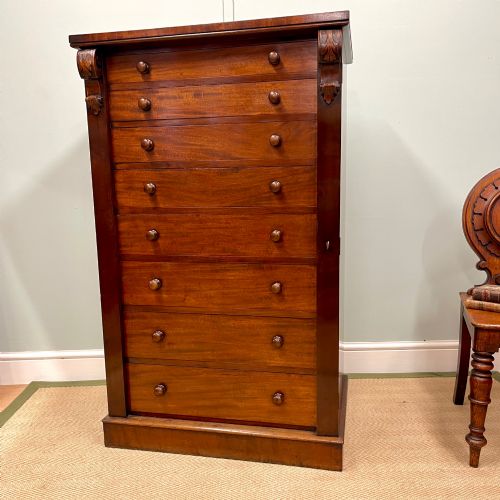
- A tall, narrow chest of drawers secured by a hinged vertical locking sidebar on one side. This design originated in the nineteenth century for secure document storage.
- Collector cabinet
- A specialised multi-drawer cabinet designed to house natural history specimens or small artefacts. They often feature numerous shallow drawers within a glazed or panelled housing.
Classic Drawer Cabinet: Frequently Asked Questions
How do I identify a Georgian cabinet?
Georgian cabinets typically display restrained classical proportions, robust mahogany construction, and details such as bracket feet or finely moulded cornices. The wood often exhibits a rich natural patina developed over centuries.
Interior construction methods, including hand-cut dovetails on the drawer sides, help distinguish these eighteenth-century pieces from later reproductions and style revivals.
Where should I place a collectors cabinet?
A multi-drawer collectors cabinet suits a study, library, or living space where its numerous shallow drawers can organise small items or display collections safely. Placing it away from direct sunlight protects the timber surface and any sensitive contents.
Because these cabinets often feature deep footprints or specialised locking bars, positioning them against a solid wall ensures stability and easy access to the upper and lower tiers.
How do I care for antique pine furniture?
Antique pine pieces, such as waxed kitchen dressers or pine cabinets, benefit from regular dusting with a soft, dry cloth to prevent dirt accumulation. Maintaining stable indoor humidity levels prevents the wood from drying out or splitting.
Applying traditional beeswax periodically nourishes the waxed finish and preserves the soft sheen characteristic of older utilitarian pine surfaces.