



Classic Button Tufted Sofa
These classic button tufted sofa examples offer deep-buttoned comfort and traditional form, bringing established English seating into your room.
Classic Button Tufted Sofa
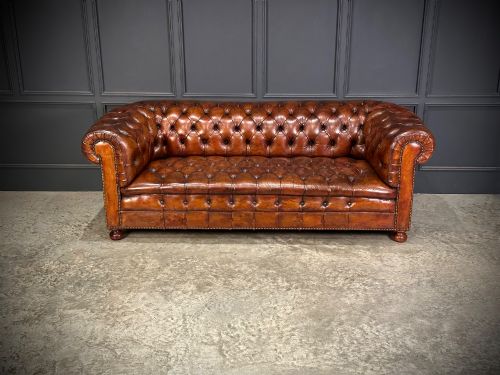
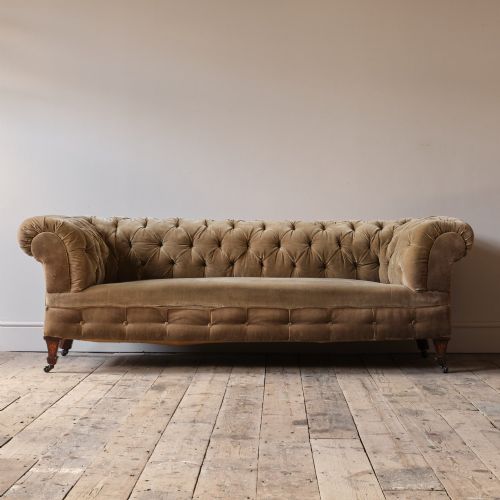
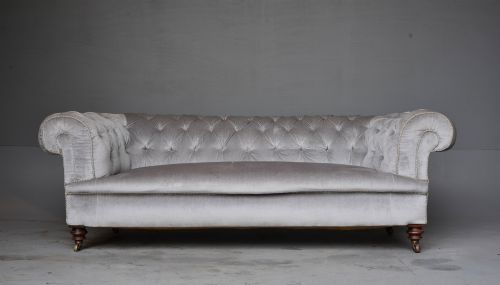
When you search for a classic button tufted sofa, you are looking at substantial seating built in forms such as the Chesterfield and lounge suites. The pieces on this page span the Victorian period, the nineteenth century, the Edwardian era, and the nineteen-thirties.
You are most likely to meet leather Chesterfield sofas, alongside occasional three-piece suites combining a sofa and chairs. These items originate from British traditions, often finished in shades of brown, whiskey, aubergine, or green leather.
How they were made
Construction relies on timber and hardwood frames built to support heavy daily use. Workshops incorporated coil springing and horsehair filling to pad the deep-buttoned backs and seats.
Upholstery uses leather and velvet, secured with brass detailing where appropriate. Makers built these frames using traditional joinery methods suited to heavy timber.
Classic Button Tufted Sofa Retail Price Guide 2026
Typical asking prices for classic button tufted sofa among the pieces listed under this phrase on Sellingantiques today, from the lower quarter to the upper quarter. They describe what is for sale here now, not the wider market.
What varies in quality
The distinction between top examples and simpler versions lies in the integrity of the original materials and the depth of the upholstery work. Hand-dyed leathers and original stuffing methods carry more integrity than later replacements.
Maker attribution alters the standing of a piece, particularly when workshops like Robert Strahan or Howard and Sons built the frame. The treatment of the leather, from hand-dyed finishes to retained original hides, marks the grade of the work.
Robert Strahan & Co·Howard & Sons
The Classic Button Tufted Sofa Glossary
- Chesterfield
- A traditional style of sofa characterised by arms and back of the same height, featuring deep button tufting. This form remains a staple of British seating design.
- Buttonback
- Upholstery technique where buttons are pulled deep into the padding to create a diamond pattern. This method secures the internal filling.
- Horsehair
- Traditional stuffing material used in upholstery for its resilience and support. It provides firm cushioning beneath the leather.
- Coil sprung
- An interior support system using steel springs tied together to distribute weight evenly. This method underpins the seat construction.
Classic Button Tufted Sofa: Frequently Asked Questions
What is a classic button tufted sofa?
A classic button tufted sofa is a traditional seating form defined by rolled arms and a deep-buttoned back. These pieces typically feature leather upholstery and sturdy timber frames.
Originating in nineteenth-century Britain, these sofas evolved through various periods including the Victorian era and the nineteen-thirties. They remain known for their distinctive silhouette and padded construction.
How do I care for antique leather?
Antique leather requires gentle cleaning and regular conditioning to prevent the hide from drying out. Keep these sofas away from direct heat sources and strong sunlight.
Use specialist leather balms recommended for older hides rather than modern chemical cleaners. Proper maintenance preserves the original colour and supple texture of the leather.
Are these sofas comfortable for daily use?
These sofas offer firm support due to traditional coil springing and dense internal padding. The deep seating proportions accommodate upright sitting and relaxing alike.
Period pieces use traditional fillings like horsehair which settle into a supportive shape. They provide robust seating designed for long-term use in a reception room or study.
How can I tell the period of a sofa?
Dating relies on examining the frame timber, upholstery materials, and overall proportions. Victorian examples often feature heavy mahogany or hardwood frames with distinct turned feet.
Later pieces from the nineteen-thirties incorporate different leather treatments and stylistic touches from the Art Deco period. Comparing the construction methods to known historical examples helps confirm the era.