
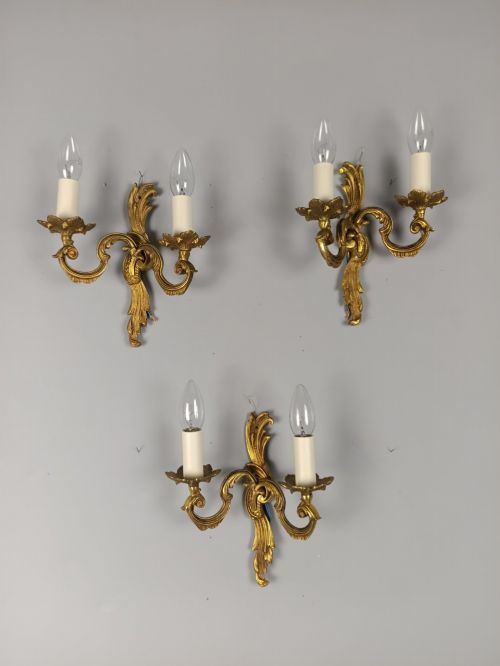


Classic Brass Sconces
Classic brass sconces bring structural warmth to a room, offering rich metalwork and period illumination for hallway or parlour walls.
Classic Brass Sconces
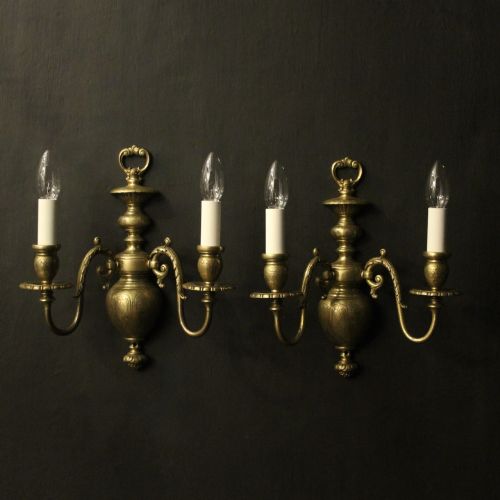
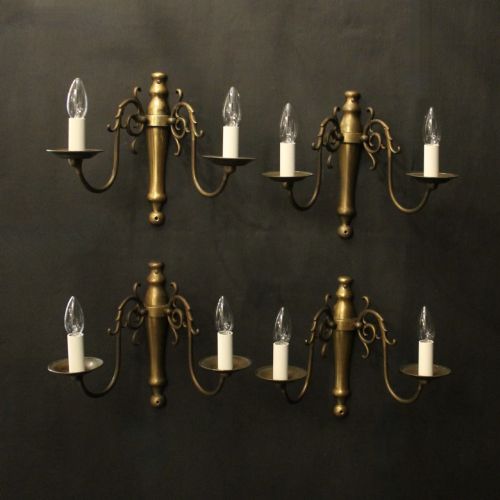
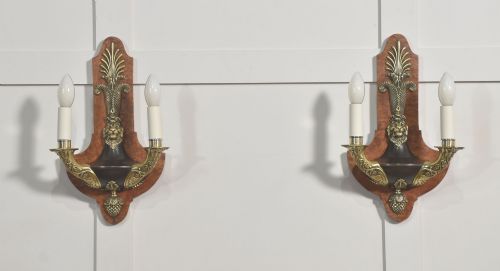
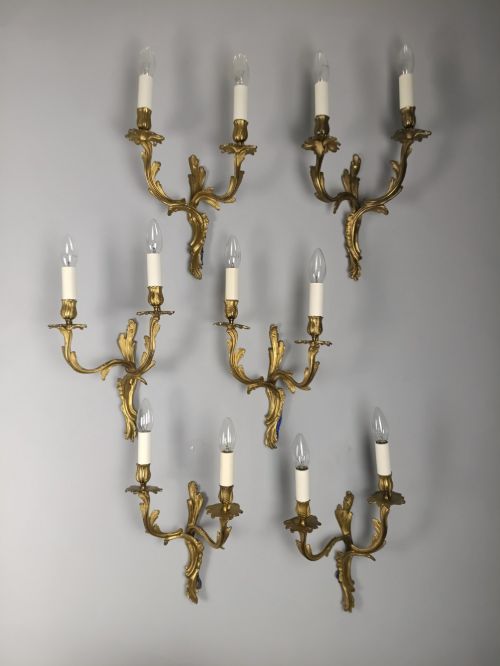
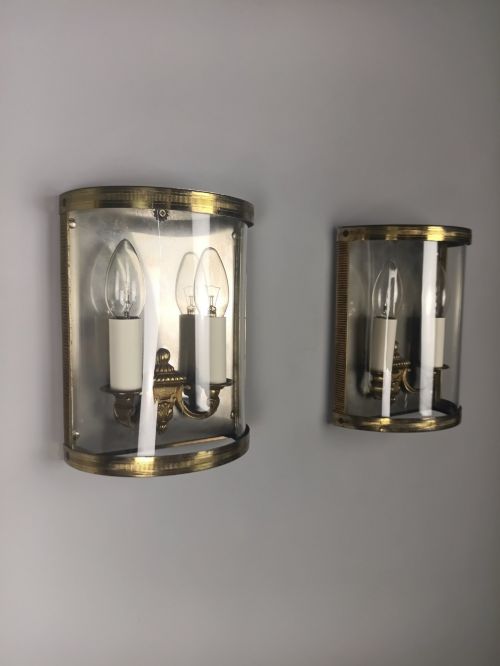
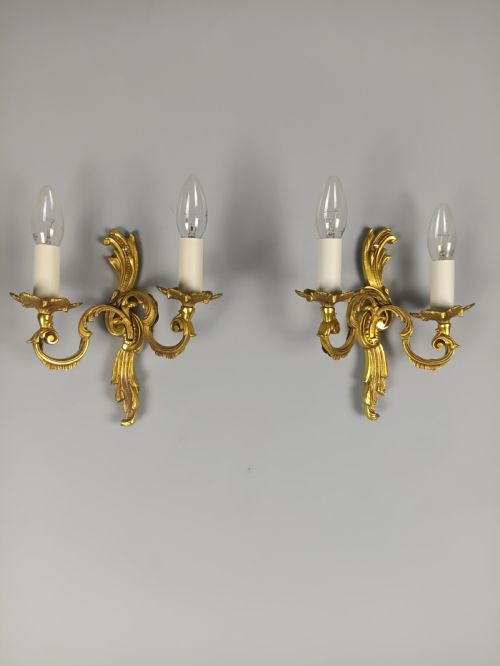
The selection on this page draws heavily from the nineteen-thirties, nineteen-twenties, and Edwardian eras, alongside earlier nineteenth-century examples. These fixtures span English country simplicity and ornate French styles including Rococo, Neoclassical, and Empire designs.
Materials and construction
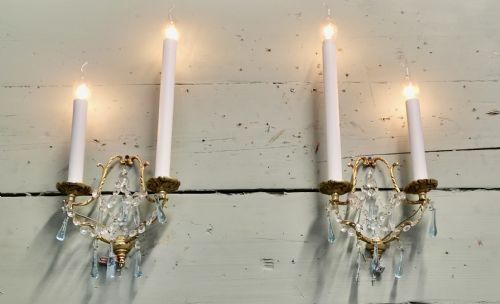
Makers shaped these fixtures primarily from cast brass, gilt bronze, and standard brass, frequently applying surface gilding or silverplating to enrich the metal finish. Secondary materials such as glass panels and crystal drops appear on lantern and chandelier variants to refract the light.
Construction techniques combine foundry casting for arms and backplates with hand-finishing, utilising wood elements like mahogany and burr walnut in specific backing boards and candlesticks.
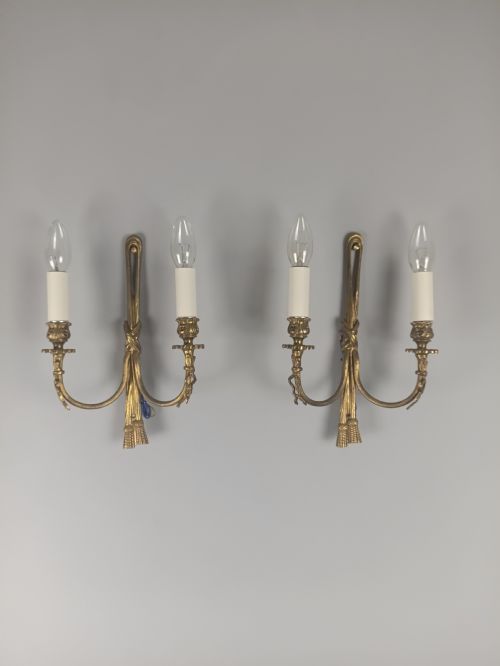
Several pairs feature delicate ribbon motifs frozen in solid bronze, proving that even eighteenth-century French monarchs appreciated a well-tied bow.
Assessing quality and craftsmanship
Quality in these wall lights rests upon the crispness of the casting detail and the depth of the original gilding or bronze patination. Finer examples display deeply chased ornamentation on French Louis XVI or Empire motifs, whereas simpler pieces rely on clean geometric lines.
The integrity of structural joints, the weight of the metal components, and the presence of matching original glass or crystal elements distinguish superior sets from standard production.
The Classic Brass Sconces Glossary
- Gilt bronze
- Bronze that has been treated with a thin layer of gold, often referred to as ormolu in French pieces. This finish provides a warm, enduring metallic sheen.
- Wall sconce
- A wall-mounted lighting fixture designed to project illumination into a room. These pieces attach directly to wall surfaces via a backplate.
- Twin-arm
- A lighting configuration featuring two distinct branching arms extending from a central plate. Such designs often hold dual candles or bulbs per fixture.
- Convex half lantern
- A wall-mounted light enclosed partially by curved glass panels. This form protects the flame or bulb while casting diffused light outward.
- Louis XVI inspiration
- A neoclassical design style characterised by symmetry, straight lines, and classical motifs like ribbons and urns. It gained significant popularity in nineteenth-century French metalwork.
Classic Brass Sconces: Frequently Asked Questions
How do I install antique wall sconces?
Antique wall sconces generally require professional wiring to integrate safely with modern electrical circuits. Many older pieces were originally designed for candles and have been adapted for electricity over time.
Installers should secure the backplate firmly to wall studs or use appropriate heavy-duty fixings to support the weight of cast brass and bronze components.
Are these sconces wired for electricity?
Most listings on this page represent pieces that have undergone conversion for electrical use during their lifetime or more recently. Buyers should review individual listings to confirm current wiring standards.
Original candle sconces and candlesticks may require specialist adaptation if electrical illumination is desired for daily use.
How do I clean gilt brass safely?
Cleaning gilt brass requires a gentle approach to avoid stripping the delicate gold surface layer. Use a soft, dry cloth to remove dust rather than harsh chemical polishes.
Moisture should be kept away from antique finishes and any integrated crystal or glass components during routine maintenance.
How do I identify French versus English styles?
French sconces frequently display elaborate casting, such as Rococo curves, Neoclassical ribbons, or Empire motifs in gilt bronze. These decorative choices emphasise ornate surface detail.
English pieces tend to favour understated brass forms, simpler arm configurations, and sturdy traditional construction suited for country houses.