



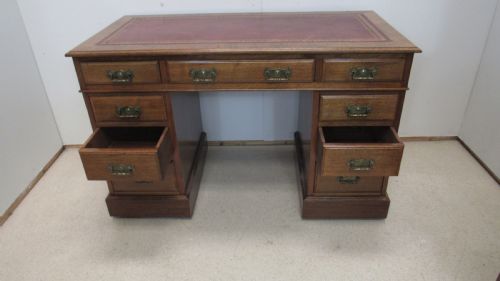


Classic Partners Desk
A classic antique partners desk offers double-sided workspace and twin pedestals, designed for two people to work face-to-face in a library or study.
Classic Partners Desk
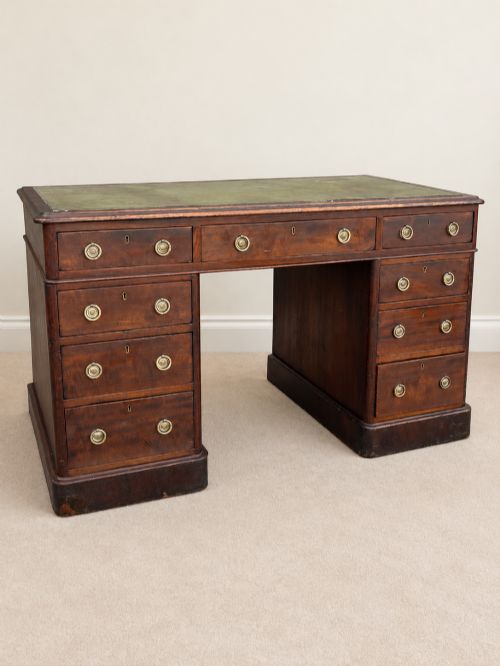
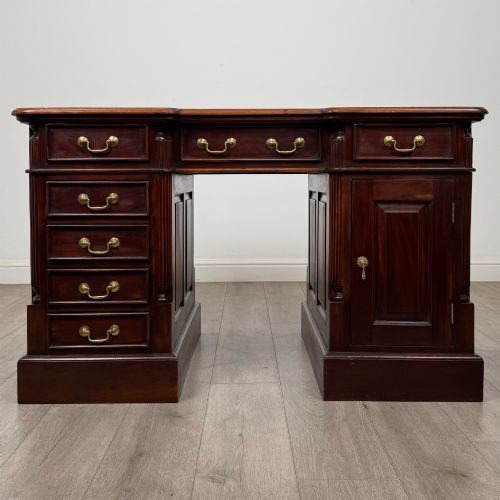
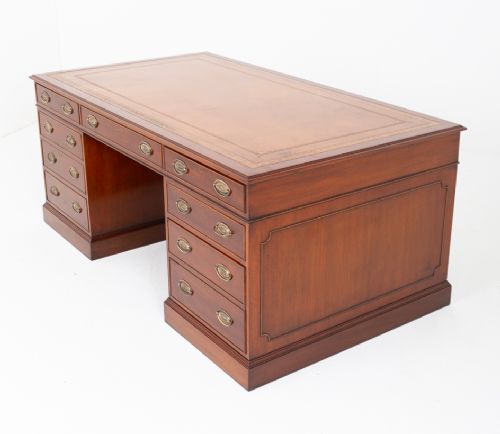
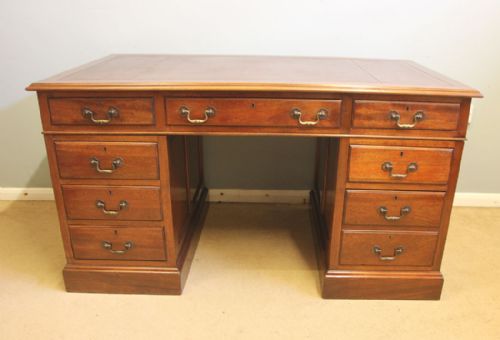
A classic antique partners desk provides working surfaces on both sides, traditionally featuring banks of drawers and cupboards arranged in twin pedestals beneath a wide top. These pieces date across the Victorian, Edwardian, and Georgian Revival periods, spanning the nineteenth and twentieth centuries.
The most common examples met here are constructed in rich mahogany, often paired with inset leather writing surfaces and brass hardware. Buyers encounter formats ranging from standard pedestal desks to grander breakfront and kneehole variations influenced by Chippendale and Sheraton styles.
How they were made
Cabinet makers built these desks using solid timbers and veneers such as mahogany, burr walnut, and satinwood over sturdy carcases. Working surfaces were frequently lined with tooled leather, whilst mounts and handles utilised cast brass and ormolu.
Joinery techniques focused on robust pedestal construction, accommodating multiple drawers and panelled cupboards on both the front and reverse sides. French polishing finished the wood, sealing the grain while highlighting the natural figure of the timber.
Classic Partners Desk Retail Price Guide 2026
Typical asking prices for classic partners desk among the pieces listed under this phrase on Sellingantiques today, from the lower quarter to the upper quarter. They describe what is for sale here now, not the wider market.
Listings feature mahogany, burr walnut, and satinwood pieces spanning the Victorian, Edwardian, and Georgian periods.
What varies in quality
Quality rests upon the selection of timber figures, such as matched mahogany grains or burr walnut veneers, and the crispness of carved details like those found in Chippendale and Sheraton Revival pieces. Finer examples display meticulous attention to secondary timbers and uniform drawer linings.
Proportion and scale dictate the visual balance of the desk, separating standard utility pieces from those designed with finer architectural lines and superior brass or ormolu mounts.
Maple and Co
The Classic Partners Desk Glossary
- Partners desk
- A large double-sided desk designed with drawers and cupboards on both the front and reverse, allowing two people to work opposite one another.
- Pedestal desk
- A freestanding desk comprising a rectangular top supported by two independent columns of drawers or cupboards.
- Breakfront
- A piece of furniture where the central section projects forward from the flanking pedestals or wings.
- Ormolu
- Gilded bronze used for decorative mounts and fittings, frequently seen on French Empire and nineteenth-century revival pieces.
- Burr walnut
- Timber taken from the wart or growth on a walnut tree, prized for its swirling, highly figured grain pattern used in veneering.
Classic Partners Desk: Frequently Asked Questions
What is a partners desk?
A partners desk is a large double-sided piece of furniture featuring drawers and cupboards accessible from both the front and the back. This layout allowed two people, traditionally business partners or associates, to sit and work opposite each other.
These desks were staples of grand libraries, studies, and administrative offices throughout the nineteenth and early twentieth centuries, offering substantial surface area and deep storage pedestals.
How do I date a partners desk?
Dating relies on examining the secondary timbers used inside the drawer construction, the style of the brass hardware, and the overarching aesthetic period. Pieces from the Victorian era often display heavy mahogany construction and classic proportions, whilst Edwardian and revival pieces draw on earlier Georgian and Sheraton motifs.
Construction methods also provide clues, as machine-sawn timbers gradually replaced hand-sawn boards towards the later nineteenth and early twentieth centuries.
Are all partners desks double sided?
True partners desks feature functional drawers or cupboards on both sides, meaning two people can sit facing each other with kneehole space on both the front and the reverse. Some single-sided pedestal desks resemble partners desks from the front but have dummy drawers or panelled backs on the reverse.
Checking both sides of the pedestals clarifies whether the piece was built for dual use or intended to sit flat against a wall.
What woods were used?
Mahogany is the predominant timber found in these desks, appreciated for its durability and deep reddish-brown tone. Cabinet makers also utilised burr walnut, satinwood, and red walnut, often incorporating figured veneers across the drawer fronts and top.
Secondary woods like oak or pine were typically employed for internal drawer carcases and framing out of sight.