



Cityscape Canvas Art
Cityscape canvas art brings the character of historic urban streets, bustling ports and quiet canals directly onto interior walls.
Cityscape Canvas Art
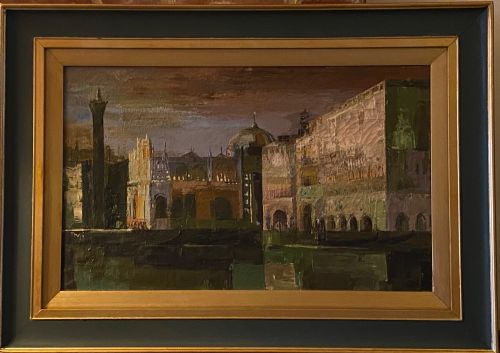
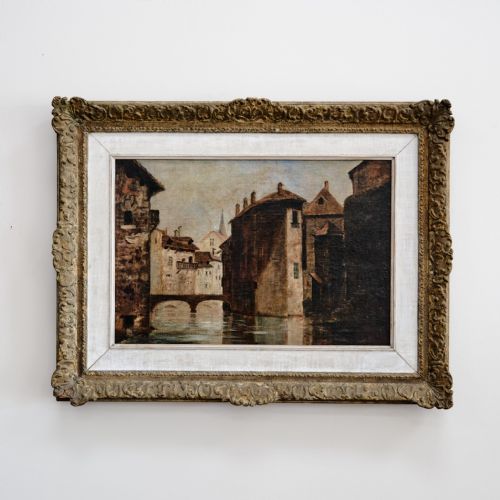
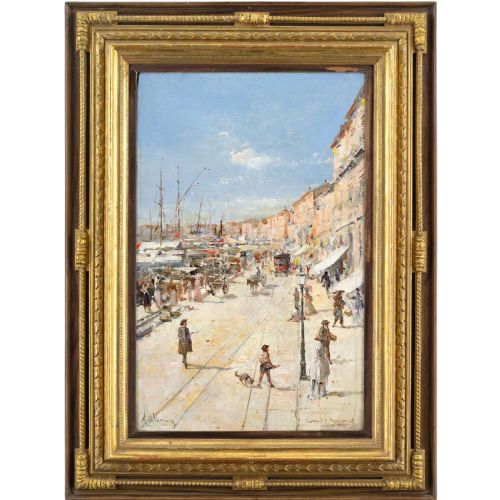
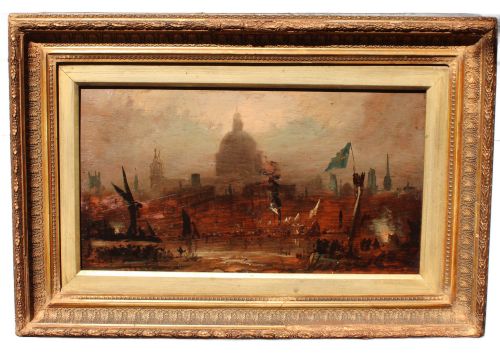
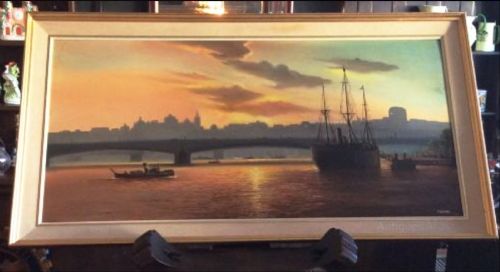
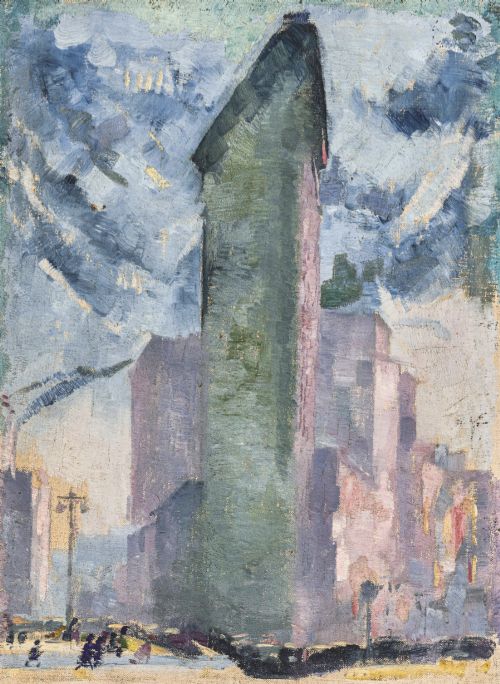
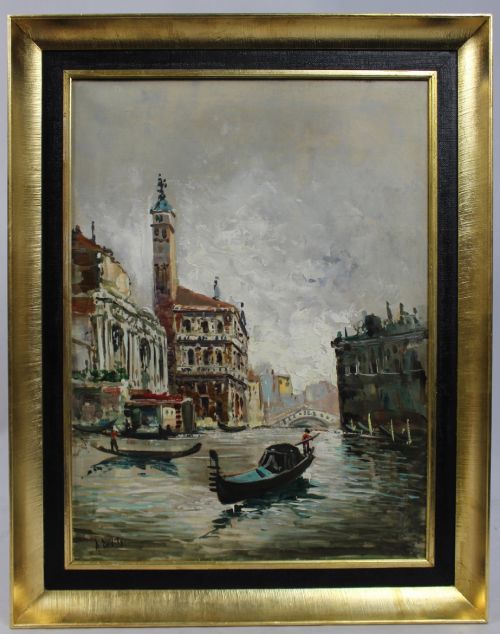
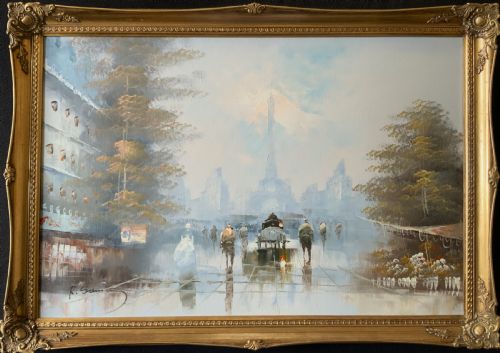
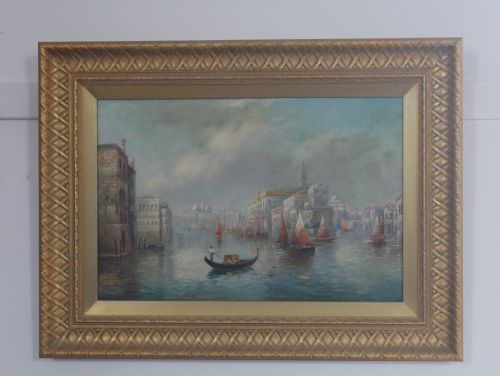
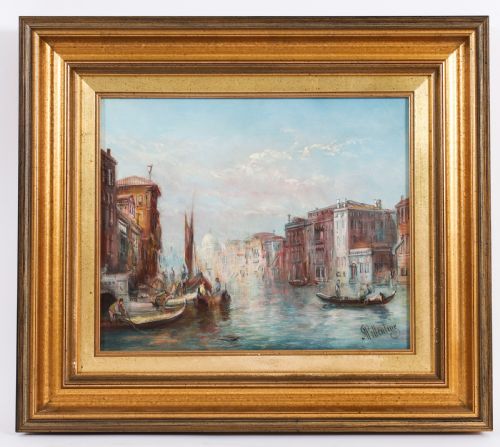
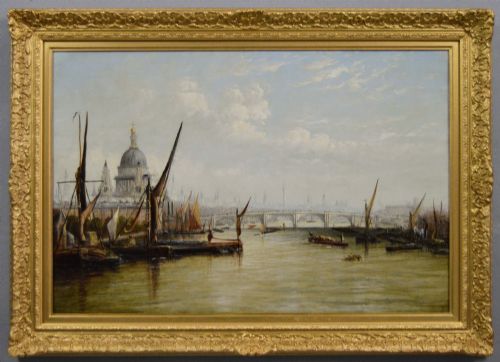
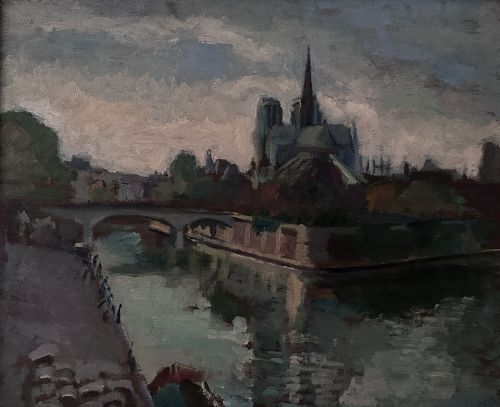
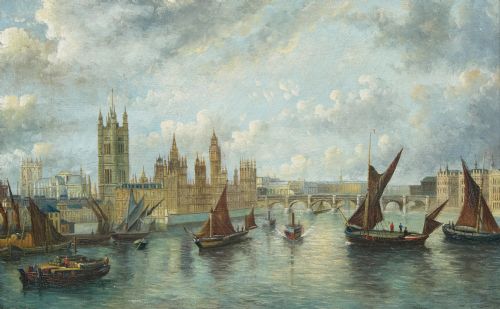
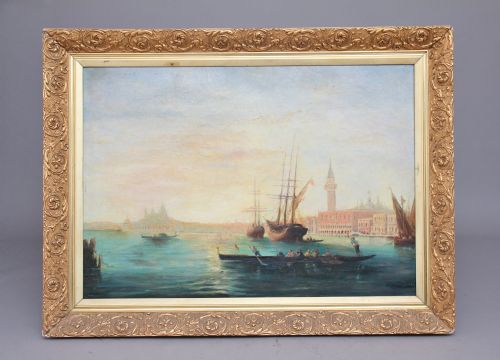
Cityscape canvas art captures architectural scenes, bridges and river views painted primarily in oil on canvas across multiple centuries. Buyers encounter works ranging from early nineteenth-century topographical studies to mid-century impressionist street scenes of Paris and Venice.
The subjects span panoramic marine seascapes, cathedral squares and grand canal vistas recorded by British, French, Italian and Dutch painters. Many compositions depict recognizable landmarks such as the Thames, Notre Dame or the Grand Canal executed in styles from romanticism to mid-century modern.
Materials and construction
These works utilise oil paint applied to woven canvas stretched over wooden supports, capturing light and atmosphere through layered brushwork and impasto technique. Many examples retain their original period framing finished in giltwood, gesso and gold leaf.
Artists built depth using oil pigments combined with supportive grounds on fabric supports, subsequently housing the finished paintings within carved or moulded wooden frames.
Cityscape Canvas Art Retail Price Guide 2026
Typical asking prices for cityscape canvas art among the pieces listed under this phrase on Sellingantiques today, from the lower quarter to the upper quarter. They describe what is for sale here now, not the wider market.
Listings feature oil paintings on canvas spanning the nineteenth century through the mid-twentieth century, including works by British, French, and Italian artists.
What separates the best examples
Quality rests upon the confidence of the brushwork, the accuracy of perspective and the atmospheric handling of light across architectural surfaces. Superior pieces demonstrate distinct painterly control over complex urban geometries and water reflections rather than mechanical reproduction.
The integrity and preservation of the original canvas surface, combined with the harmonious pairing of period gilt frames, elevate the standing of individual works.
Sushila Singh·Augusto Alberici·Alfred Pollentine·Antonio DeVity·Francis Moltino·Alfred Wolmark·Caroline Burnett·Paul-Jean Anderbouhr·Gabriel Dauchot·Merio Ameglio·Cornelis Christian Dommersen·Ron Folland·Claude Jousset·Frederick Tully Lott·William George Meadows·William Raymond Dommersen·Marc Aldine
The Cityscape Canvas Art Glossary
- Impasto
- Paint applied thickly to a canvas, standing out in relief from the surface and adding tactile dimension to architectural elements.
- Gesso
- A plaster-like mixture applied to wooden frames as a base for gilding, providing a smooth surface for gold leaf.
- Topographical
- Representing specific physical locations and buildings with precise architectural detail rather than purely imagined settings.
- Impressionism
- A style of painting emphasising transient effects of light, loose brushstrokes and everyday urban subjects.
Cityscape Canvas Art: Frequently Asked Questions
How do I date an oil painting?
Dating relies upon stylistic evidence, canvas preparation techniques, stretcher frame construction and biographical dates of the recorded artist. Historic inscriptions or labels on the reverse wooden components also assist in establishing a timeframe.
Examination of the pigment application and the surrounding frame style further contextualizes the period of production, aligning the work with nineteenth-century or mid-century movements.
Where should I hang these paintings?
These works suit reception rooms, studies or hallways where adequate wall space allows the architectural perspective to draw the eye. Stable interior environments away from direct sunlight and damp conditions protect both the canvas and the wooden frame.
Positioning the artwork at eye level ensures the brushwork and impasto details can be observed clearly under balanced ambient lighting.
What is an impressionist city view?
An impressionist city view captures the fleeting atmosphere of urban life, focusing on street illumination, weather effects and general movement rather than rigid architectural drafting. Artists working in this manner utilised broken brushstrokes to convey the energy of Paris, London or Venice.
Such scenes often portray boulevards, bridges and river banks during specific times of day, emphasising light playing over wet pavements or stone facades.
How do I care for canvas art?
Preservation involves keeping the canvas free from dust using a soft, dry brush while avoiding liquid cleaners or chemical solvents. Maintaining consistent indoor humidity prevents the wooden stretchers and canvas support from warping or cracking.
Checking the tension of the fabric and the security of the frame fixings periodically helps maintain the structural stability of the piece over time.