



Circular Wood Coffee Table
A circular wood coffee table brings warmth and proportion to a room, offering a functional centrepiece crafted in walnut, mahogany, teak, and oak.
Circular Wood Coffee Table
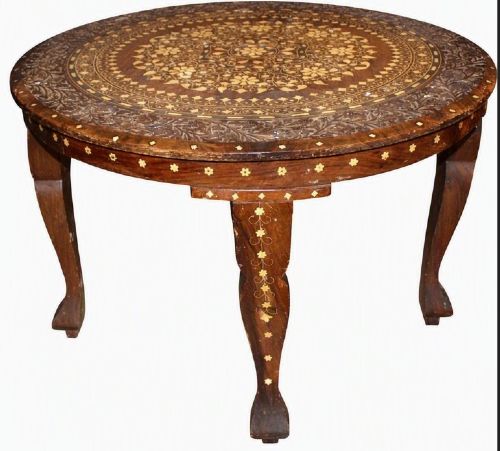
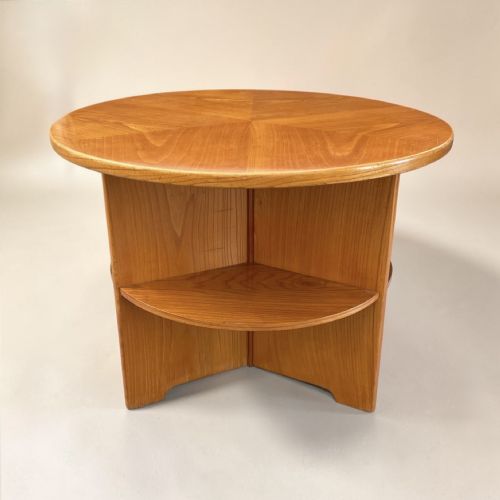
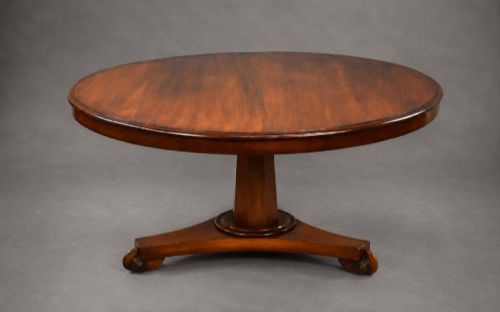
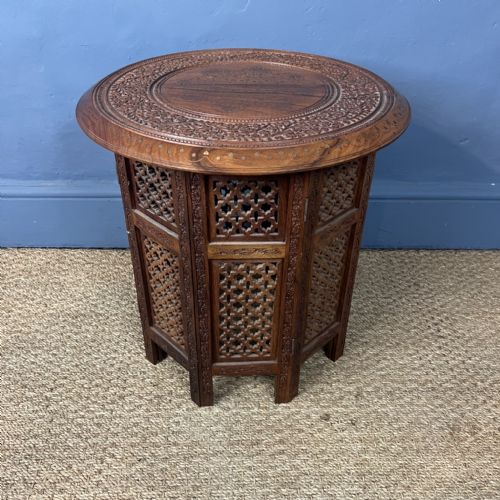
A circular wood coffee table spans multiple periods and styles, including Victorian, Edwardian, Art Deco, and Georgian designs. These low tables range from simple turned pedestal bases to elaborately carved Anglo-Indian, Chinese export, and Moroccan forms.
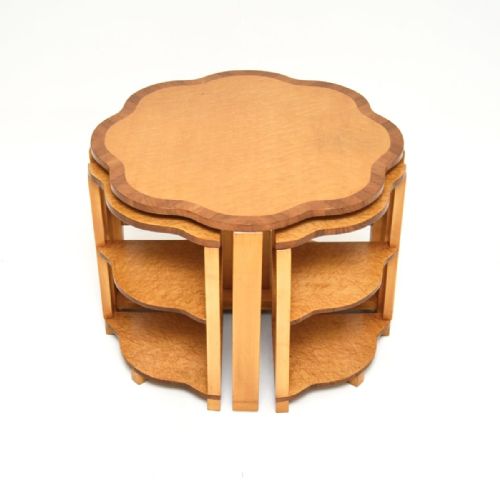
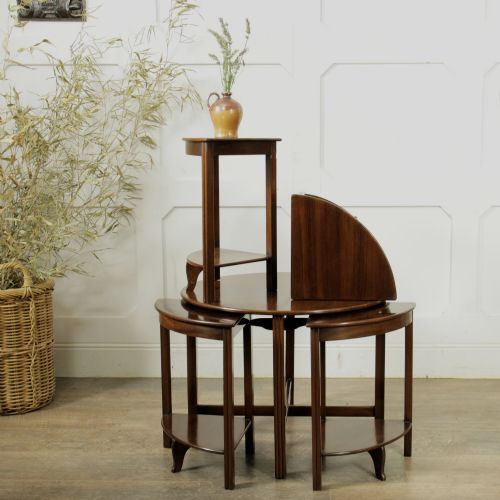
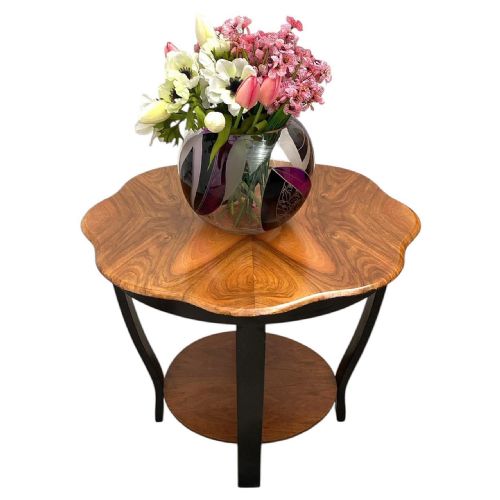
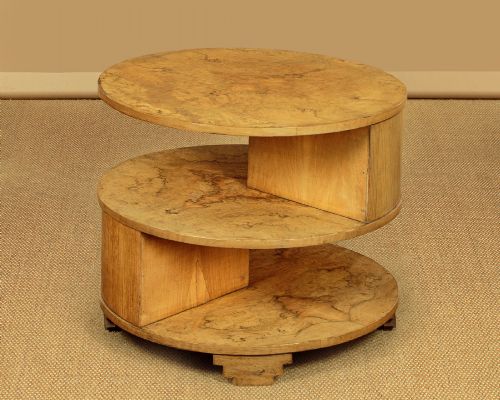
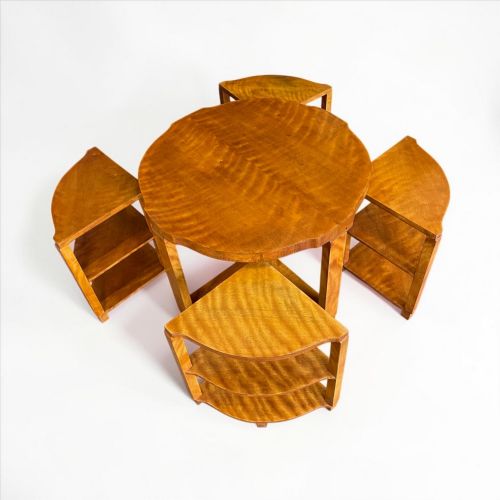
Buyers will encounter many variations on this page, from Burr Walnut Art Deco creations to mahogany wine tables and nests of tables. The selection includes occasional tables, side tables, and low coffee tables adapted from earlier forms.
How they were made
Cabinetmakers utilised dense timbers such as mahogany, walnut, teak, oak, and elm, often applying figured veneers like burr walnut and birds eye maple to create rich surface patterns. Some pieces incorporate marquetry, bone inlay, or brass trays.
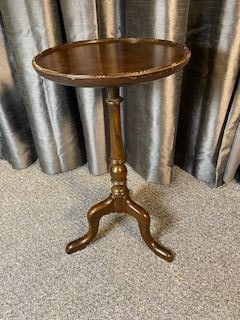
Construction techniques include pedestal tripod bases, turned legs, and hand-carved frames. Regional workshops in Britain, Scandinavia, India, and China employed traditional joinery appropriate to each style, from Georgian dish tops to Oriental low tables.
What varies in quality
Quality rests upon the selection of timber, the precision of the veneer work, and the crispness of any hand-carving. Figured grain, marquetry detail, and well-executed bone or brass inlay distinguish finer examples from plain utilitarian pieces.
Structural integrity and the retention of original surfaces also determine worth. Tables with stable pedestal bases, well-fitted tiers, and patinated timber finishes sit at the upper end of the range.
Liberty & Co
The Circular Wood Coffee Table Glossary
- Burr walnut
- A figured timber taken from the growth excrescences of walnut trees, prized for its swirling, decorative grain patterns on tabletops.
- Tripod base
- A support structure featuring three legs radiating from a central column, common on occasional and wine tables.
- Marquetry
- The art of applying pieces of veneer to a structure to form decorative patterns and pictures.
- Dish top
- A tabletop with a raised, concave rim carved directly from the solid wood, designed to prevent items from sliding off.
- Pietra dura
- An inlay technique using cut and fitted polished coloured stones to create images on a stone tabletop surface.
Circular Wood Coffee Table: Frequently Asked Questions
How do I style a circular coffee table?
A round table softens linear room layouts and allows for easy movement around seating areas. Balance the central surface with low books, a small tray, or a decorative bowl.
Keep the arrangement uncluttered to showcase the timber grain or inlaid surface details of the table itself.
Are these tables solid wood or veneered?
Makers used both solid timbers and veneers depending on the period and style. Art Deco examples often feature decorative veneers like burr walnut over a stable core.
Earlier Georgian and Victorian pieces frequently utilise solid mahogany, oak, or elm for tops and structural elements.
How do I identify an Art Deco table?
Art Deco coffee tables from the 1930s typically feature geometric forms, stepped bases, and striking veneers such as birds eye maple or figured walnut. They often incorporate two tiers or nesting designs.
These pieces reflect the modern design movements of Britain, Sweden, and France from the interwar period.
What is an Anglo-Indian table?
Anglo-Indian tables are pieces made in India during the colonial period, often combining traditional local carving with British furniture forms. They frequently feature intricate floral motifs and bone inlay.
Some examples bear retailer stamps, linking them to firms that imported exotic furniture to Britain.