
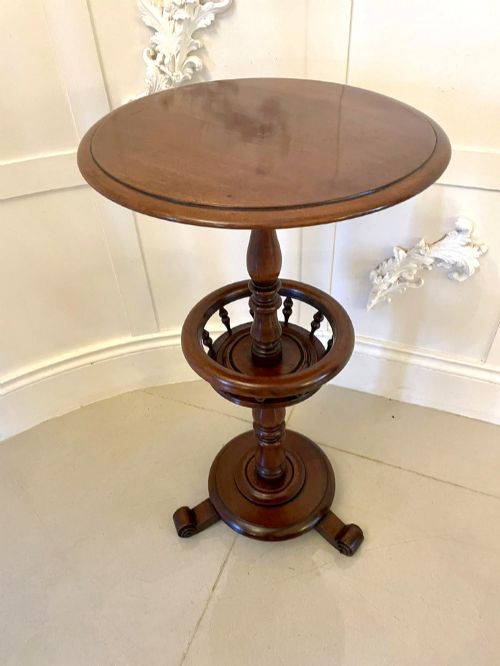
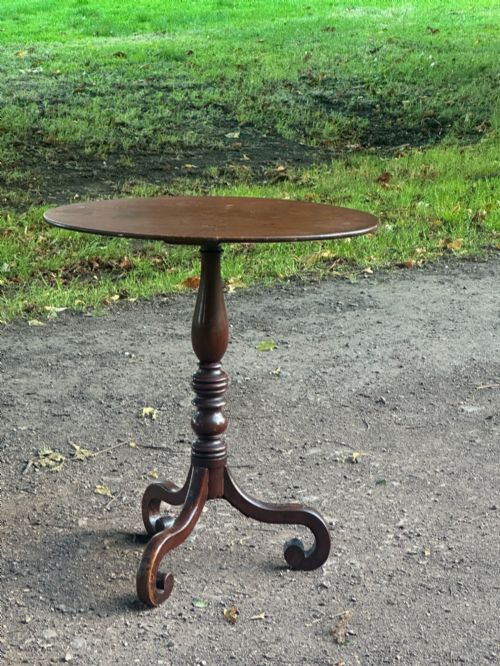
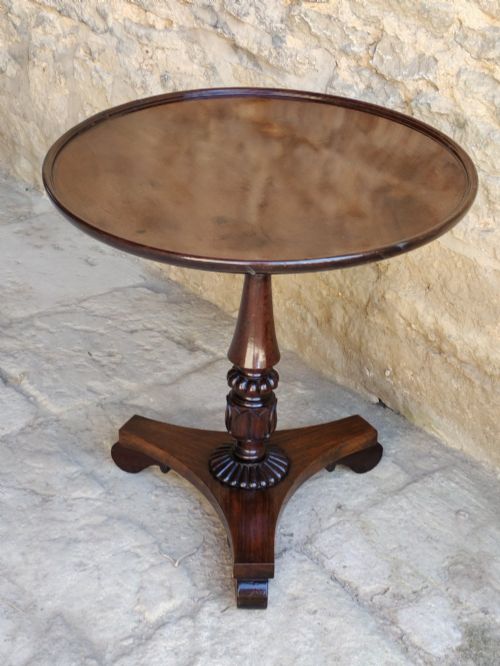
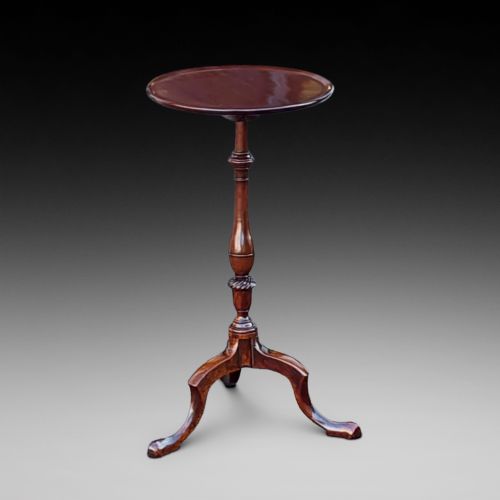
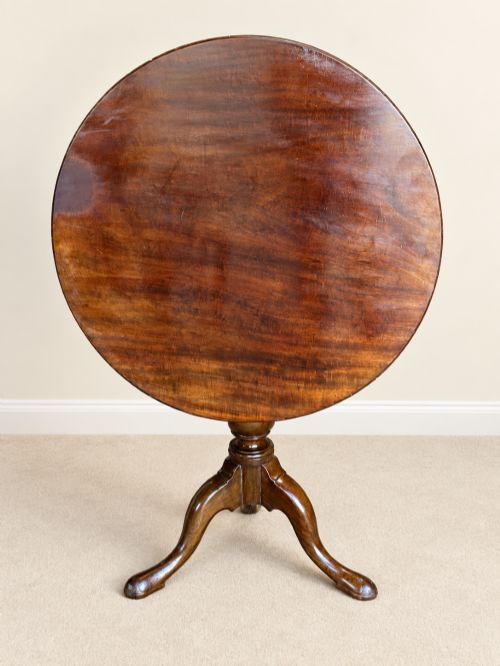
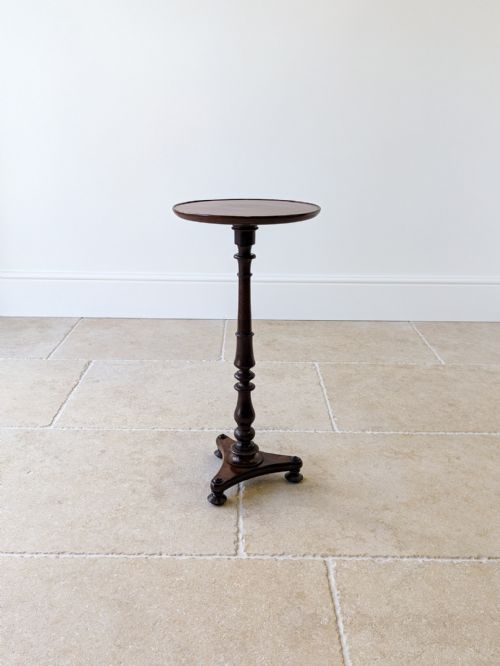
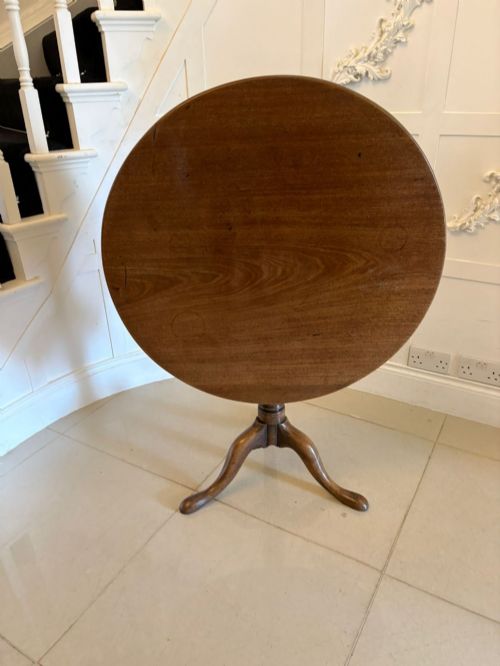
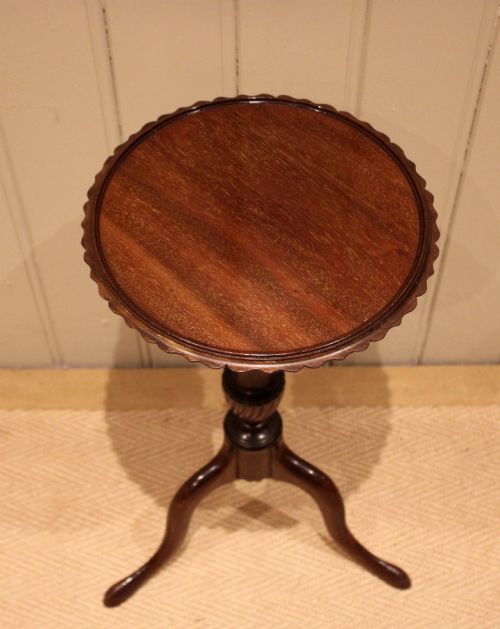


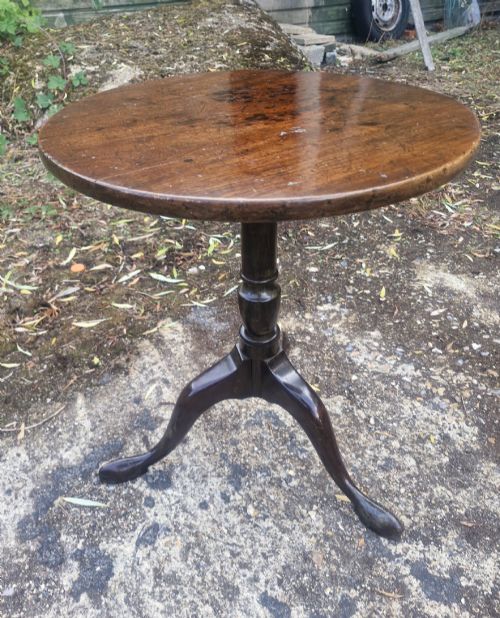
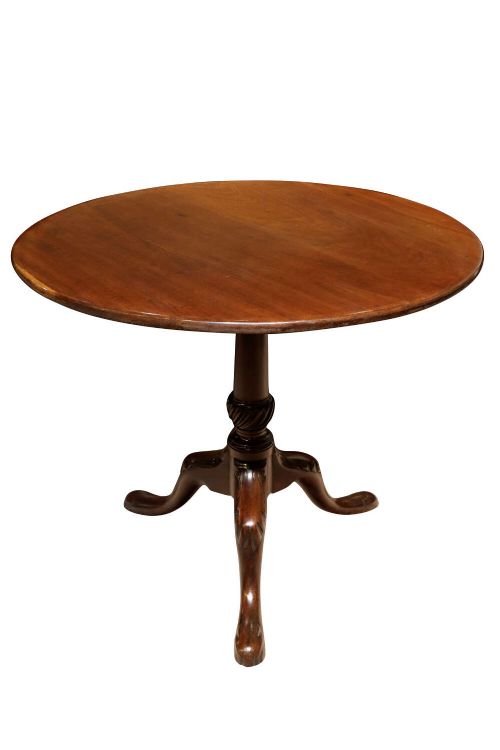
Circular Mahogany Wine Table
A circular mahogany wine table brings compact elegance to a corner, offering a stable resting place for a glass or lamp.
Circular Mahogany Wine Table
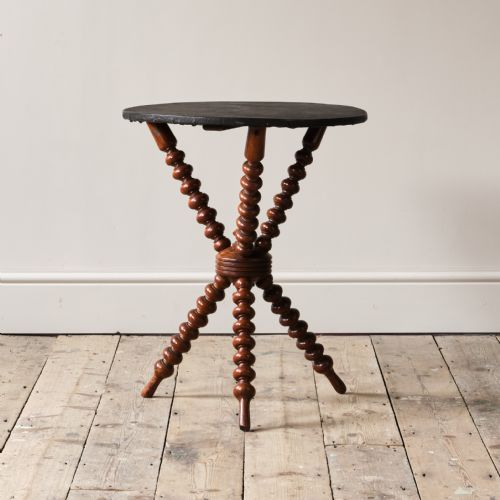
A circular mahogany wine table is a compact pedestal piece designed for portability and daily use in reception rooms. Buyers encounter these versatile stands in forms spanning the Georgian, Regency, and Victorian eras, often featuring single pillar supports.
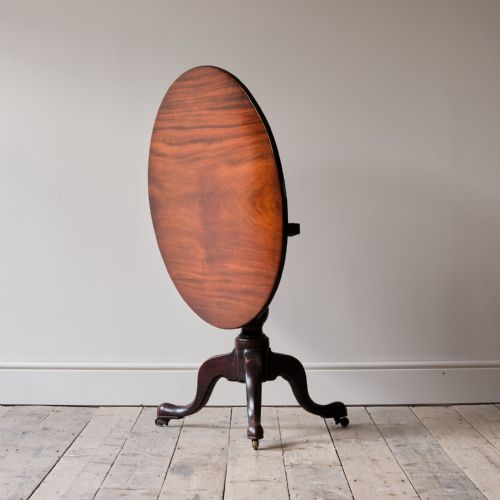
Many examples incorporate a tilt-top mechanism, allowing the surface to fold vertically when not in use. Tripod bases dominate the selection, providing balanced support across three splayed legs.
The category overlaps closely with occasional, lamp, and tea tables, sharing similar proportions and circular tops. Pieces range from plain utilitarian surfaces to sophisticated models with inlaid details or birdcage mechanisms.
Materials and construction methods
Makers utilised solid timber and veneers, frequently selecting dense tropical hardwoods that accepted deep polishing and carving. Flame and burr variations appear on tops to create rich grain patterns across the surface.
Tripod bases join the central pillar through sturdy tenon joints or dovetails, while tilt-top tables employ catch mechanisms and birdcage box framing beneath the surface to pivot smoothly.
Some tables tilt so secretly they wait to launch your tea cozy across the rug until you lean on the wrong edge.
Factors influencing quality
Quality rests heavily on the selection of timber and the crispness of the turning on the pillar and legs. Superior examples display thoughtful grain matching on the top and secure, unwarped joints that keep the surface level.
Refined pieces show delicate carving on the knees of the tripod legs or precise string inlay, whereas simpler iterations rely on plain turned pedestals without ornamentation.
James Shoolbred·Gillow
The Circular Mahogany Wine Table Glossary
- Tilt-top
- A hinged mechanism allowing the table surface to rotate and lock vertically for storage.
- Tripod base
- A support structure utilising three splayed legs radiating from a central turned pillar.
- Birdcage
- A wooden framework beneath the top that enables both tilting and revolving movements.
- Dish top
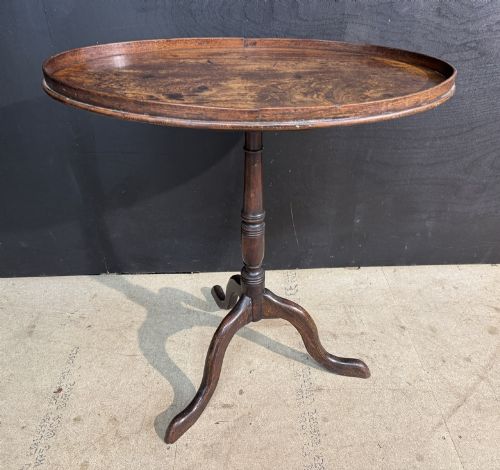
- A circular surface carved with a raised concave rim to prevent items from sliding off.
- Snap top
- An alternative term for a tilt-top table featuring a spring catch to secure the surface horizontally.
Circular Mahogany Wine Table: Frequently Asked Questions
What was a wine table used for?
These small tables were positioned beside seating to hold glasses and decanters during evening gatherings. Their portable nature allowed servants to move them easily around the room.
Over time, owners repurposed them as lamp stands or decorative occasional pieces in drawing rooms.
How do I spot a tilt-top mechanism?
Look beneath the circular surface for a wooden block or brass catch holding the top to the central pillar. When released, the top pivots flat against the stem.
This clever design saved valuable floor space in historical homes when the furniture was not actively in use.
Are these tables sturdy enough for daily use?
Tripod designs offer remarkable stability on even floors due to the three-point contact of the legs. The central pillar distributes weight effectively down to the feet.
Care should be taken not to overload the edges of tilt-top variants where the hinge mechanism bears the load.
How do I distinguish a Georgian piece from a Victorian one?
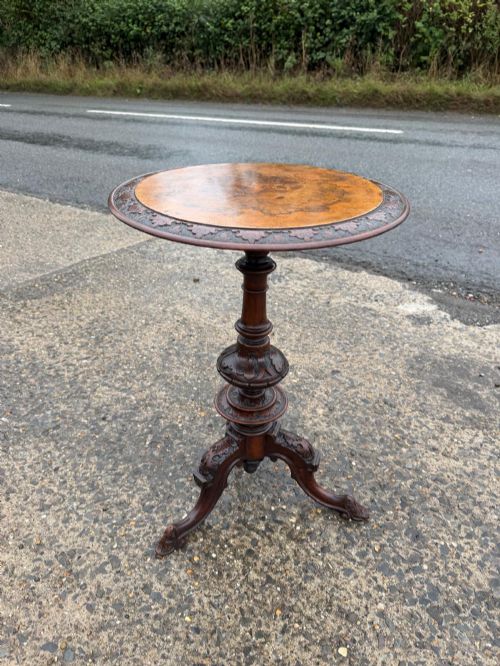
Georgian examples often exhibit restrained classical proportions, simpler tripod legs, and subtle dish tops dating back to the eighteenth century. Victorian iterations frequently introduce heavier turning, burr wood veneers, or elaborate edge mouldings.
Examining the underside for tool marks and timber ageing helps confirm the period of manufacture.