
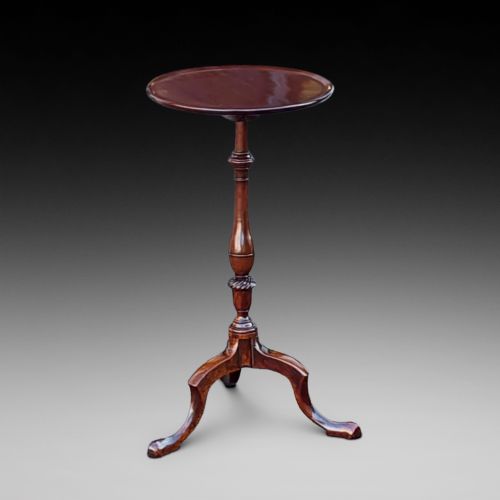
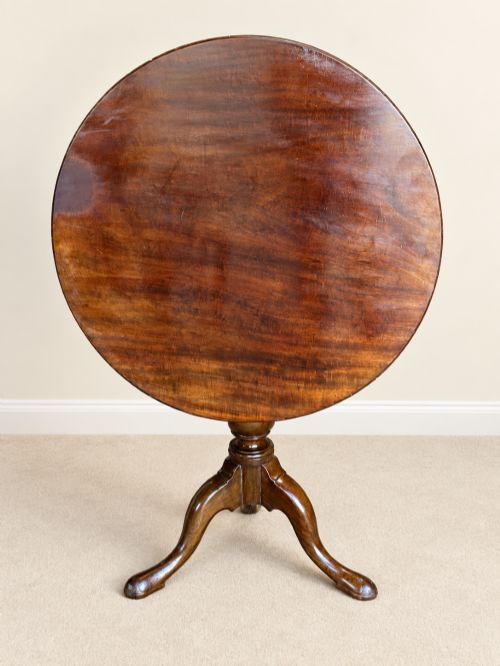
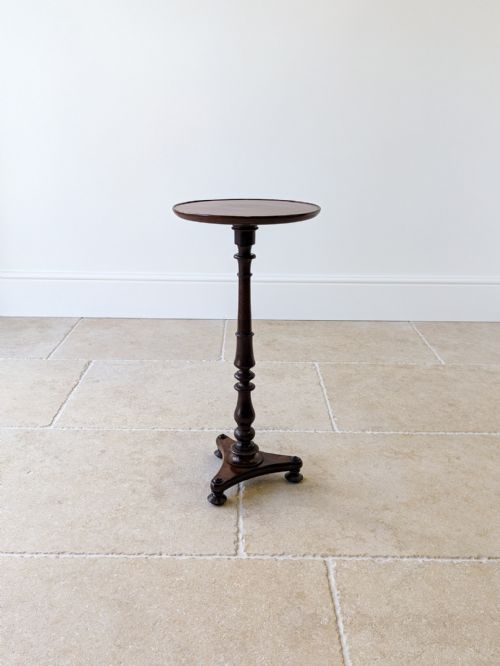
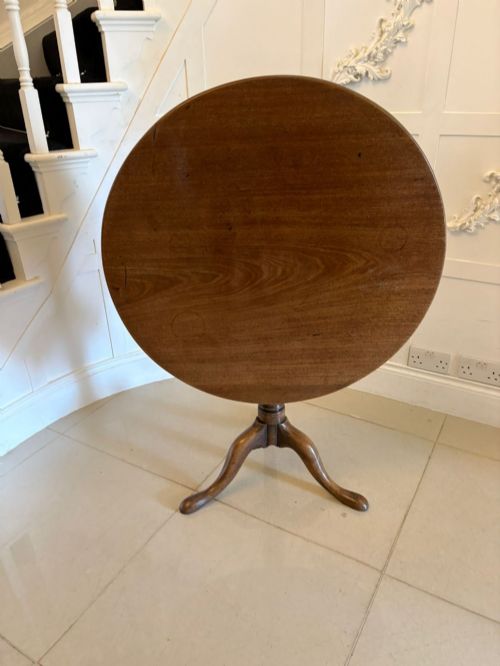
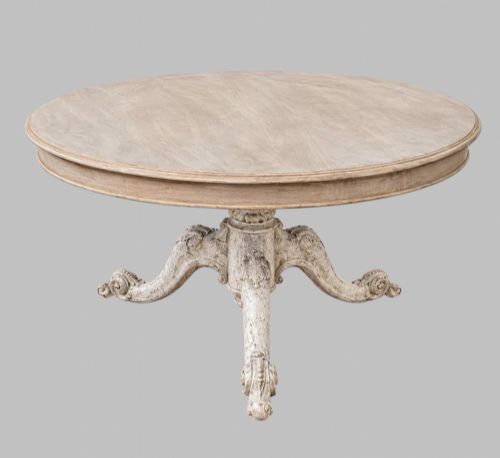
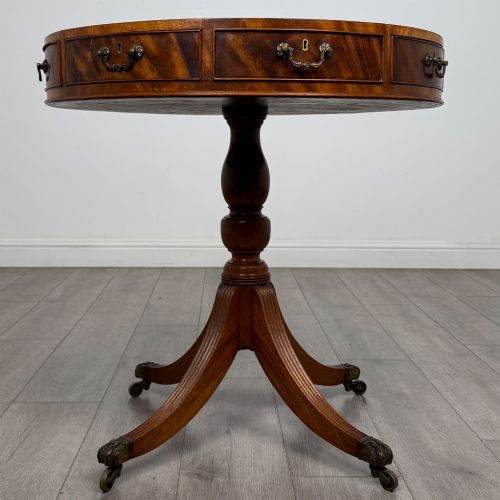
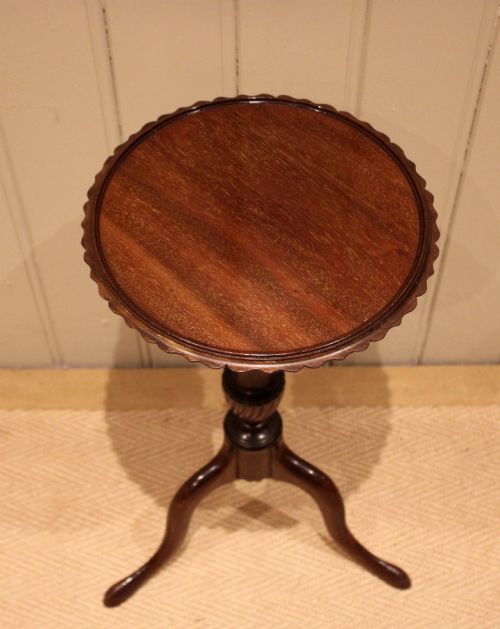
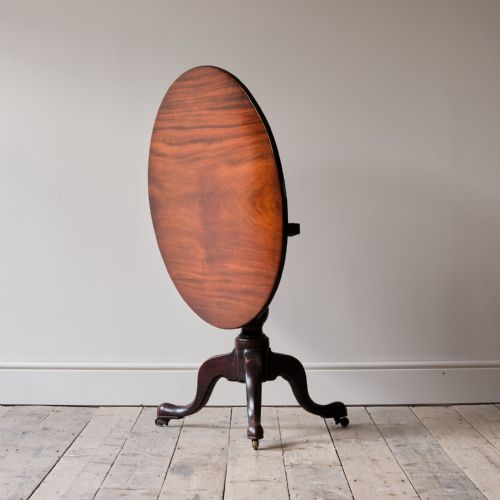


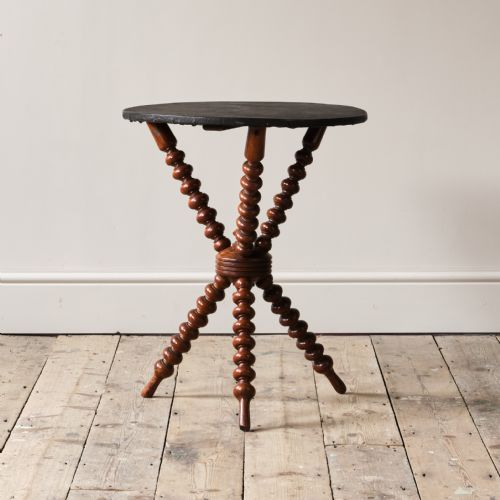
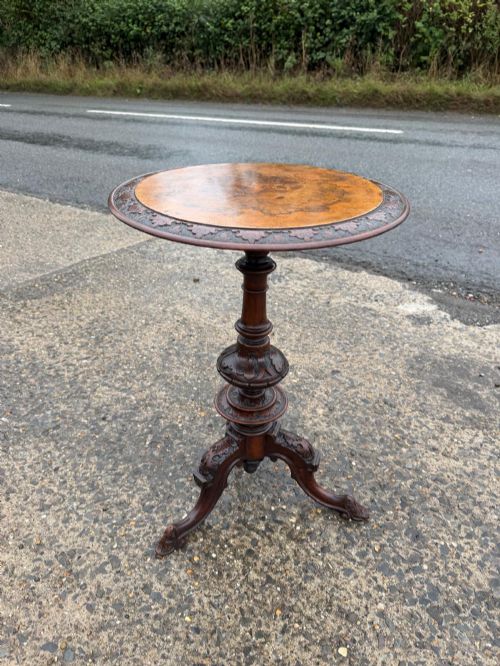
Circular Mahogany Tripod Table
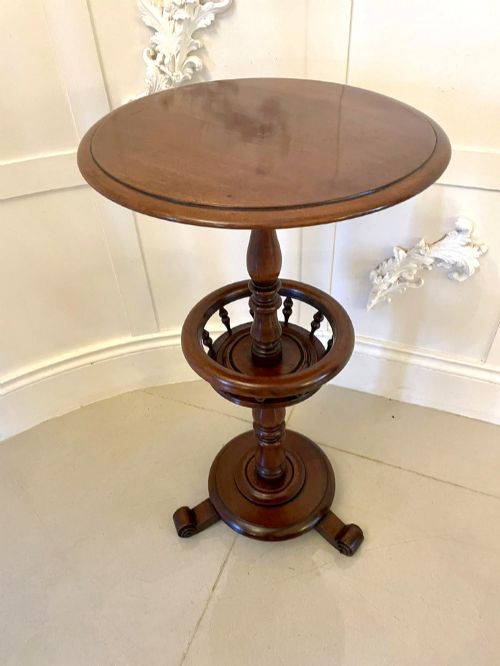
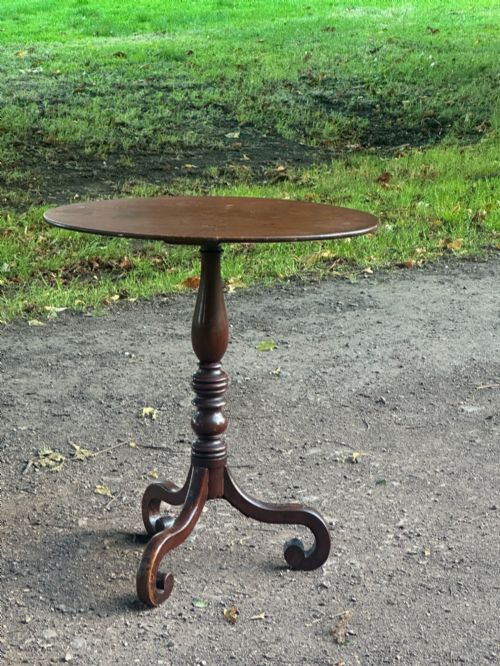
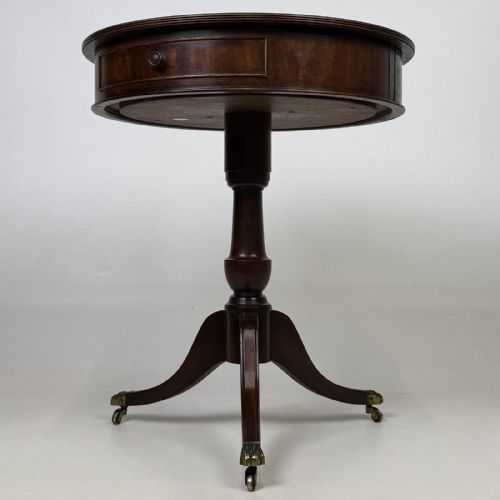
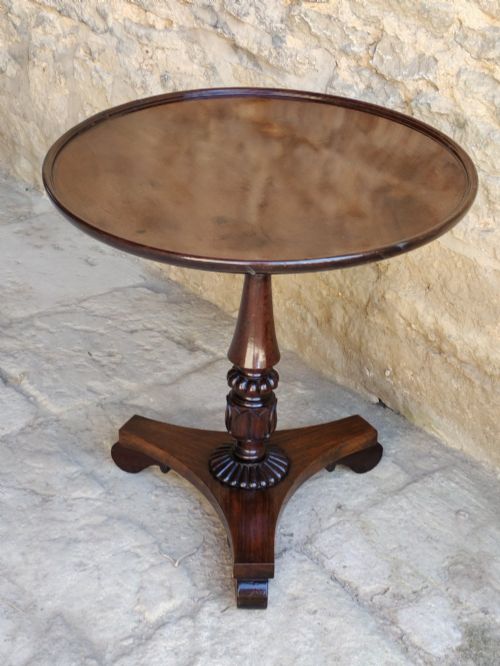
When you search for a circular mahogany tripod table, you find a versatile piece designed for stability on uneven floors.
Circular Mahogany Tripod Table
A circular mahogany tripod table brings together a round timber top supported by a central pillar and three spreading legs, a format that emerged during the Georgian period and continued through the Regency and Victorian eras. These versatile items served numerous domestic functions, appearing as wine tables, tea tables, lamp stands, and tilt-top breakfast pieces in period interiors.
The versions most commonly met on this page date from the 18th century through to the Edwardian period, reflecting styles ranging from plain George III designs to more ornate Victorian interpretations. They range from small, intimate wine tables designed to hold a single glass to larger occasional and centre tables intended for wider use.
Makers utilised native and imported timbers, creating silhouettes that could be moved easily around a room to suit changing needs throughout the day. Their enduring appeal lies in this combination of portability and stable three-legged construction.
Evaluating Quality
Quality in these pieces depends heavily on the selection of the timber and the integrity of the joinery connecting the pillar to the legs and the top. Better examples display a harmonious proportion between the diameter of the circular surface and the height of the column, along with crisp carving on the knees or column shaft.
The smoothness of the mechanical actions, such as the tilt-top catch or the rotating mechanism on a birdcage support, distinguishes superior workshop production from more utilitarian furniture.
Listings feature circular mahogany tripod tables spanning the Georgian, Regency, Victorian, and Edwardian periods, alongside styles such as Chippendale and French Empire.
Gillow
The Circular Mahogany Tripod Table Glossary
- Tilt top
- A mechanism allowing the circular tabletop to pivot vertically for compact storage against a wall when not in use. This feature was especially common on Georgian and Regency examples.
- Birdcage
- A wooden framework beneath the tabletop that permits the surface to both tilt and revolve independently on its central column. It is typically found on higher-status 18th-century tables.
- Tripod base
- A support structure comprising three radiating legs joined to a central turned pillar. This design ensures the table remains stable on uneven floorboards.
- Snap top
- An alternative term for a tilt-top table featuring a spring-loaded catch that locks the surface securely in the horizontal position.
- Gueridon
- A small decorative stand or table, usually circular and supported by a central pillar, influenced by French styling.
Circular Mahogany Tripod Table: Frequently Asked Questions
What were circular mahogany tripod tables used for?
These tables served flexible domestic roles, functioning as stands for tea services, wine glasses, lamps, or books in sitting rooms and dining spaces.
Because of their lightweight construction and stable three-legged base, servants could easily move them around the room as daily activities shifted.
How do I tell a Georgian table from a Victorian one?
Georgian examples generally display simpler, more restrained proportions with fine timber selection and subtle carving, often featuring tilt-top or birdcage mechanisms.
Victorian pieces frequently incorporate heavier scrolling legs, sometimes with added castors, and may utilise more heavily figured veneers like burr wood.
What is a birdcage mechanism?
A birdcage is an ingenious assembly of small wooden turnings placed directly beneath the tabletop that allows the surface to both rotate and tilt.
This construction method required precise woodworking and is typically associated with better-quality 18th-century production.
Can I use a tilt-top table every day?
These tables are designed for everyday domestic use, though the tilt mechanism should be handled with care when pivoting the surface.
Placing them away from direct heat sources helps protect the mahogany polish and prevents the circular top from warping over time.