
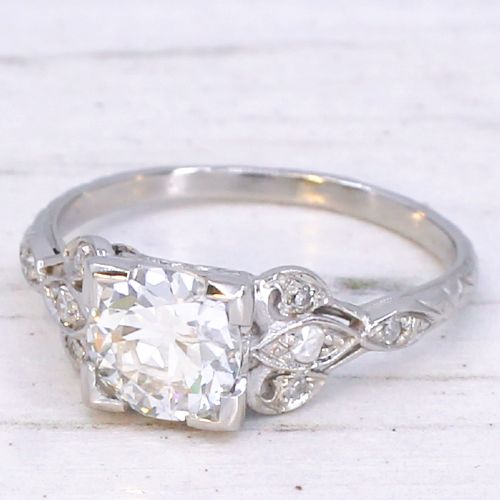
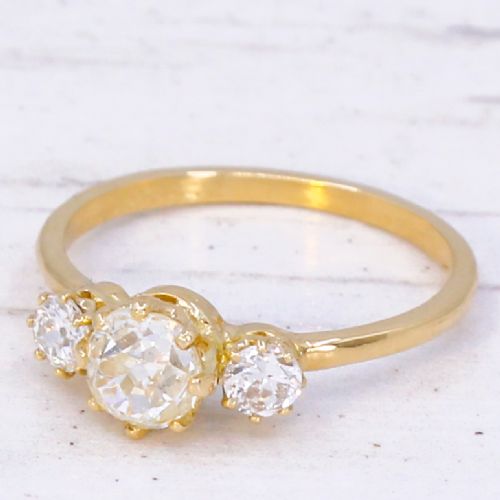


Circa 1910 Gold Ring
Choosing a circa 1910 gold ring brings Edwardian elegance and delicate platinum settings paired with old cut diamonds directly to the hand.
Circa 1910 Gold Ring
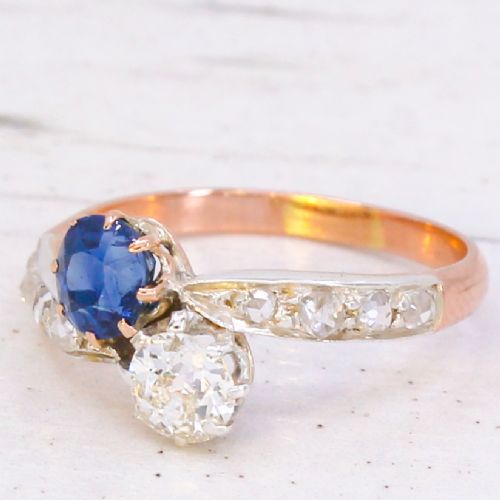
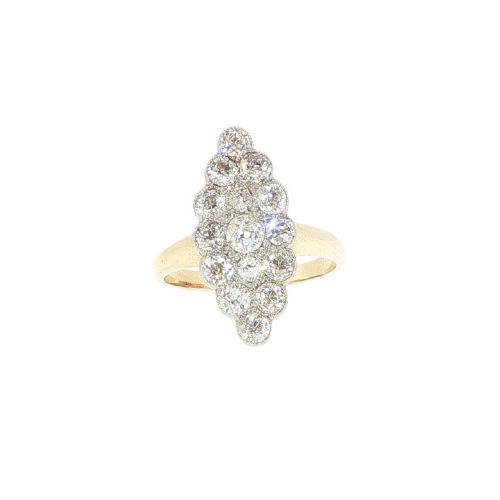
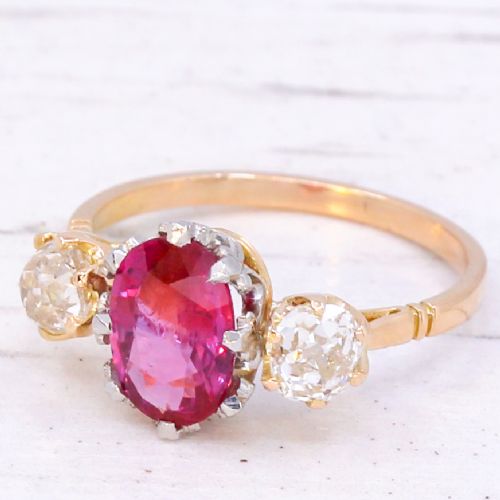
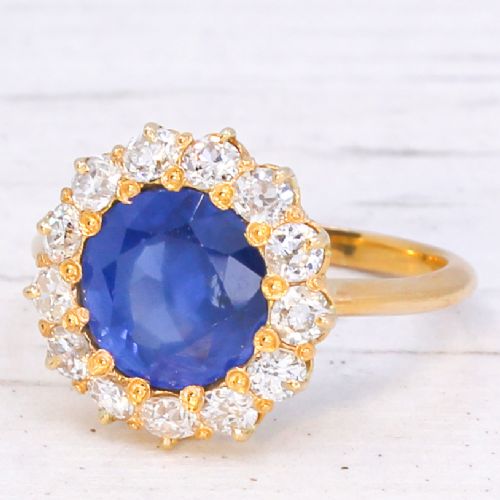
A circa 1910 gold ring represents the height of Edwardian and Belle Epoque design, spanning periods around nineteen ten, nineteen hundred, and nineteen twenty. These pieces take forms such as clusters, solitaires, daisies, navettes, and toi et moi crossover rings.
The materials recorded in these listings combine yellow gold, white gold, and platinum with gemstones including diamonds, sapphires, rubies, pearls, emeralds, opals, jadeite, and bloodstone. Buyers searching for a circa 1910 gold ring encounter engagement rings and dress rings shaped by early twentieth century aesthetics.
Materials and technique
These rings utilise combinations of yellow gold, white gold, and platinum, often pairing an eighteen carat gold shank with a platinum top to hold stones securely. Platinum gained popularity in this era for its strength, allowing metalworkers to create fine, lace-like settings without bulk.
Gemstones feature old cut, old European, old mine, and rose cut diamonds alongside natural pearls and unheated coloured stones. Stones are set carefully within clusters, navettes, and delicate crossover motifs characteristic of Edwardian craftsmanship.
Some Edwardian rings tucked tiny natural pearls alongside old cut diamonds just to catch the eye.
What varies in quality
The distinction between tiers rests upon the choice and matching of central gemstones, such as large unheated sapphires or substantial old cut diamonds, balanced against the delicacy of the surrounding platinum work. Finer examples maintain crisp millegrain edges and well-preserved structural integrity in the combined gold and platinum mounts.
Proportion and stone selection dictate the character of each piece, from modest seed pearl clusters to heavy carat zircon or jadeite solitaires. The harmony between the metalwork and the specific cut of the diamonds determines the visual depth of the design.
The Circa 1910 Gold Ring Glossary
- Old cut
- A diamond cut from the late nineteenth or early twentieth century featuring a small table, high crown, and open culet, designed to catch candlelight.
- Toi et moi
- A ring style featuring two main stones placed side by side, translating from French as you and me.
- Navette
- A boat-shaped ring setting that tapers to points at either end, also known as a marquise shape.
- Platinum
- A dense, durable white metal utilised in Edwardian jewellery to create fine settings that securely hold diamonds.
- Millegrain
- A decorative technique involving a row of small metal beads along the edges of a setting.
Circa 1910 Gold Ring: Frequently Asked Questions
How do I care for an Edwardian gold ring?
Clean the ring gently with warm soapy water and a soft brush, avoiding harsh chemical dips that might harm softer gems like pearls or opals.
Store the piece separately in a fabric-lined box to protect the platinum settings and delicate old cut diamonds from scratching.
Were these rings worn as engagement rings?
Many of these pieces served as engagement rings, particularly solitaire and three-stone diamond designs from the Edwardian era.
Cluster and crossover styles were also chosen to mark betrothals or significant occasions during the early twentieth century.
What is the difference between old cut and modern diamonds?
Old cut diamonds feature hand-cut facets with smaller tables and deeper pavilions, producing a softer, warmer scintillation under low light.
Modern brilliant cuts are engineered with precise mathematical angles to maximise direct light return and colourlessness.
How do I identify an Edwardian ring style?
Edwardian rings typically combine yellow gold bands with platinum-topped settings, showcasing lace-like openwork and millegrain detailing.
Motifs often include floral clusters, daisies, navettes, and paired stones such as toi et moi crossover designs.