

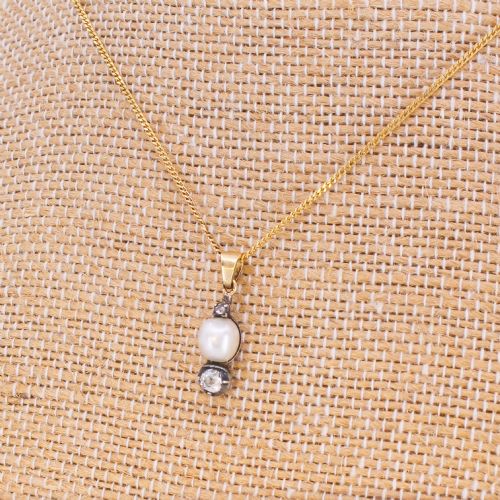
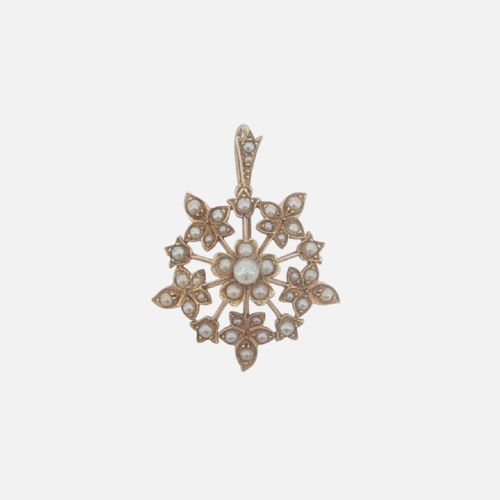


Circa 1900 Necklace
A circa 1900 necklace offers delicate craftsmanship from the turn of the twentieth century, combining period gemstones with enduring precious metals.
Circa 1900 Necklace
A circa 1900 necklace encompasses pendants, watch chains, and longuard chains originating from the turn of the twentieth century. These pieces capture the transition between late Victorian sentimentality, Edwardian elegance, and the fluid lines of Art Nouveau.
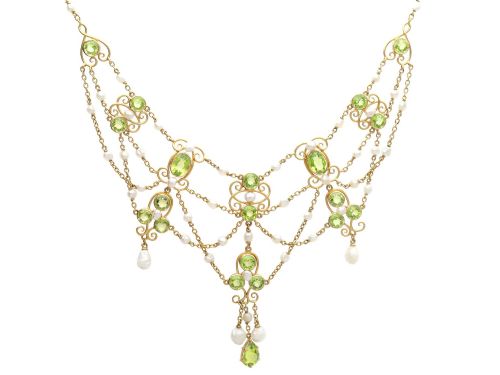
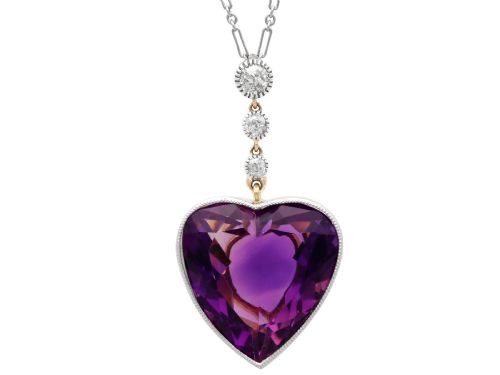
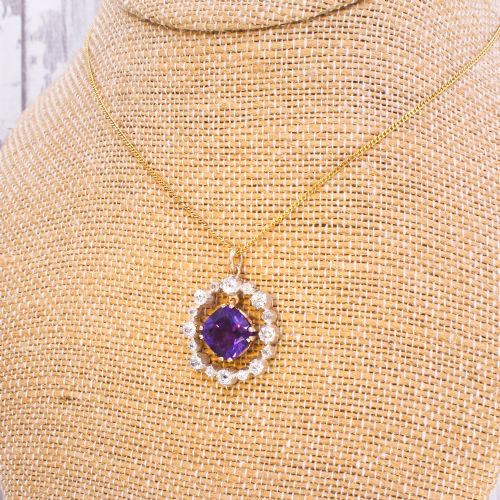
The most common formats on this page are pendants suspended from fine chains, alongside convertible pendant brooches and substantial yellow gold watch chains. Gems such as amethyst, peridot, opal, and natural pearl frequently anchor the designs.
Makers of this era embraced diverse aesthetic movements, ranging from British Arts and Crafts and French antique work to Maori tribal bone carving. Buyers encounter a rich variety of regional expressions within the same chronological period.
Materials and construction
Goldsmiths of this period primarily utilised yellow gold in fifteen-carat and fourteen-carat purities, alongside platinum for specific diamond-set mountings. Natural pearls, seed pearls, and old-cut diamonds provide the primary sparkling and luminous accents.
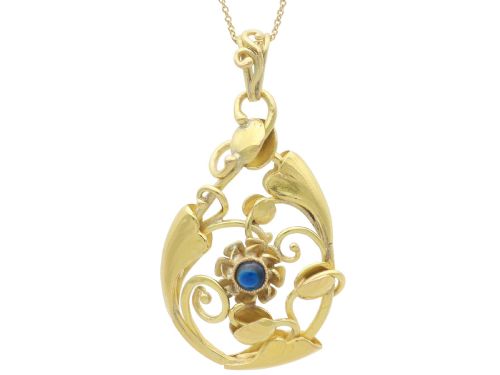
Enamelling techniques such as plique-à-jour appear alongside detailed bezel and claw settings to secure coloured stones like peridot, amethyst, and sapphire. Bone carving and shell inlay represent the artisanal methods used in non-Western or tribal pieces of the same decades.
Circa 1900 Necklace Retail Price Guide 2026
Typical asking prices for circa 1900 necklace among the pieces listed under this phrase on Sellingantiques today, from the lower quarter to the upper quarter. They describe what is for sale here now, not the wider market.
Current listings span Art Nouveau, Edwardian, and Arts and Crafts styles, utilising both precious gemstones and organic materials like bone.
Factors of quality
The distinction between standard pieces and superior examples lies in the finesse of the metalwork and the originality of the design. Art Nouveau and Arts and Crafts pieces demand high skill in hand-forming intricate organic curves and enamel cells.
Stone selection significantly alters the character of a necklace, with well-matched natural pearls, clean old-cut diamonds, and vibrant transparent amethysts or peridots elevating the overall artistry. Convertible items like pendant brooches reflect advanced functional design when their mechanisms integrate seamlessly.
The Circa 1900 Necklace Glossary
- Plique-à-jour
- An enamelling technique where enamel is applied to open cells without a backing, resembling miniature stained glass. This method allows light to pass directly through the translucent colours.
- Old-cut diamond
- A hand-faceted diamond shape typical of the period, featuring a smaller table and wider facets. These stones produce a softer candlelight sparkle compared to modern brilliant cuts.
- Seed pearl
- A very small natural or saltwater pearl used extensively in clusters or delicate swags. They give turn-of-the-century jewellery a soft, textured lustre.
- Longuard chain
- A long necklace length originally designed to hold a pocket watch or lorgnette securely. These versatile chains were often doubled over the neck for daily wear.
- Pendant brooch
- A dual-purpose ornament equipped with both a pin fitting and a hidden loop. This allows the piece to be worn interchangeably on fabric or suspended from a neck chain.
Circa 1900 Necklace: Frequently Asked Questions
How do I wear a circa 1900 necklace today?
Pendants from this era suit modern necklines easily when hung from fine gold chains of an appropriate length. Longuard chains can be doubled or layered for a more relaxed daytime look.
Convertible pendant brooches offer extra versatility if you wish to pin them to lapels or scarves rather than suspending them from the neck.
Are these necklaces made from solid gold?
The pieces recorded here typically utilise fourteen-carat or fifteen-carat yellow gold for their main structures and chains. These higher-carat standards provide a rich, warm tone distinct from modern yellow gold alloys.
Certain diamond-heavy elements may incorporate platinum for secure claw work and bright contrast against the stones.
What is the difference between Edwardian and Art Nouveau styles?
Edwardian design favours airy platinum work, lace-like motifs, and symmetric arrangements of diamonds and pearls. It projects a formal, elegant aesthetic.
Art Nouveau embraces asymmetric organic curves, whiplash lines, and colourful gemstones or plique-à-jour enamel inspired by the natural world.
Can I wear my antique watch chain every day?
Watch chains and longuard chains from this period are robustly constructed from solid gold links. With sensible care, they withstand regular daily wear.
It remains wise to check the spring rings or swivel clasps periodically to ensure the security of the chain.