




Cigar Table Lamp
A cigar table lamp brings period smoking culture to a desk or sideboard, offering a functional light source modelled on classical antiquity.
Cigar Table Lamp
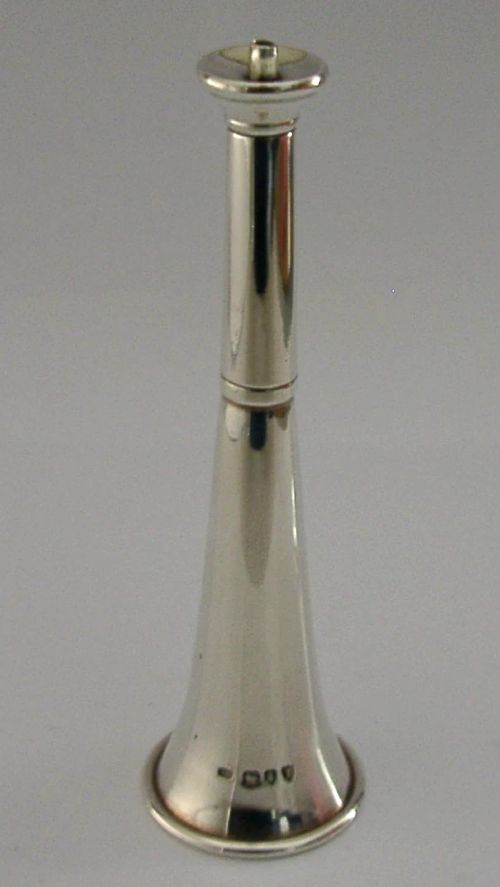
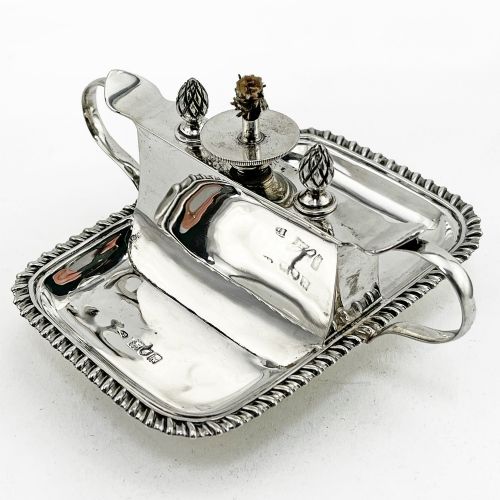
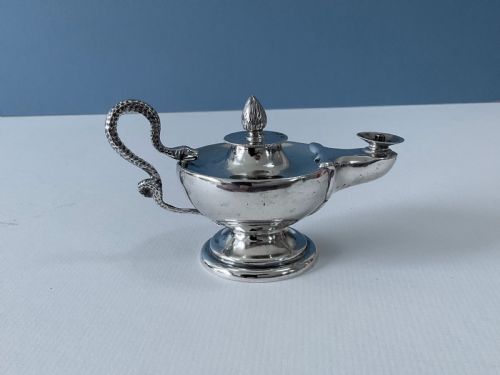
A cigar table lamp is a specialised smoking accessory designed to sit upon a desk, smoking table, or sideboard. The pieces found here span the Victorian, Edwardian, and later twentieth-century periods, taking diverse physical forms while serving the same practical purpose. Buyers searching for a cigar table lamp will encounter varied interpretations that reflect the design shifts of their respective eras.
The most common forms on this page are novelty table lighters shaped like oil lamps, classical vessels, or hunting horns. These objects date from the mid-nineteenth century through the 1930s, incorporating styles such as Classical Revival, Art Nouveau, and Art Deco. They range from utilitarian silver-plated items to substantial sterling silver specimens made by established silversmiths.
How they were made
Makers utilised sterling silver and silver plate as the primary metals for the bodies of these table lighters, shaping them through casting, raising, and smithing techniques. Components like cotton wicks were integrated into the spouts to hold the fuel and flame, while associated metals such as brass and copper appear in specific designs. Rattan and fabric elements also emerge in select compositions.
The construction relies on traditional silversmithing methods to achieve hollow forms that balance stability on a table with a lightness of handling. Details such as handles, feet, and lids were soldered or riveted to the main body, with maker marks and assay stamps punched directly into the silver surfaces.
Listings feature Victorian, Edwardian, and 1920s pieces in sterling silver and silver plate, alongside cotton and brass components.
What varies in quality
Quality in a cigar table lamp rests on the crispness of the casting and the weight of the metal used in its construction. Substantial gauge silver and well-defined novelty details distinguish the finer examples from simpler production pieces. Maker attribution also plays a role, as items bearing marks from known silversmiths demonstrate superior craftsmanship.
The integrity of the form and the preservation of original mounts or burner components affect the overall standard of the object. Pieces that retain their structural balance and clear hallmarks present a higher grade of historical manufacture.
Braham·Jan Eisenlöffel·WMF·Elkington·Goldsmiths & Silversmiths Co·Gorham·Collingwood & Co·John Wilmin Figg
The Cigar Table Lamp Glossary
- Sterling silver
- An alloy of silver containing 92.5% by mass of silver and 7.5% of other metals, usually copper. This standard is frequently found stamped with hallmarks on nineteenth and twentieth-century table lighters.
- Silver plate
- A layer of silver applied to a base metal such as copper or brass. This technique allowed manufacturers to produce decorative smoking accessories at a lower cost than solid silver.
- Table lighter
- A portable device designed to remain on furniture surfaces to provide a flame for cigars and pipes. These objects often took sculptural or novelty shapes.
- Hallmark
- A mark or series of marks struck on items made of precious metals, indicating the standard of purity, the maker, and the year of assay.
Cigar Table Lamp: Frequently Asked Questions
How do I use a cigar table lamp?
These pieces function by filling the internal reservoir with lighter fluid and lighting the cotton wick protruding from the spout. They sit steadily on a desk or table to provide a ready flame for lighting cigars.
Many examples feature a snuffer cap attached by a small chain to extinguish the flame safely after use.
Are these lighters safe for daily use?
While originally designed as functional smoking accessories, many buyers today treat them primarily as decorative objects or historical artefacts. Using them requires checking the condition of the fuel reservoir and wick.
Modern safety considerations often lead collectors to display them un fuelled rather than operating them regularly.
How do I date a silver table lighter?
Dating relies on reading the hallmarks stamped onto the metal, which indicate the assay office, date letter, and maker's mark. Stylistic indicators like Art Nouveau curves or Victorian revival motifs also help place the piece in a specific decade.
Comparing the form to documented pieces from makers like Elkington or Gorham narrows down the period of manufacture.
What is the difference between silver and silver plate?
Solid silver items consist of precious metal throughout, often meeting the sterling standard of purity, and bear standard assay hallmarks. Silver-plated pieces use a thin coating of silver over a base metal such as brass or copper.
Plated items generally show base metal beneath worn areas, whereas solid silver maintains its composition through any surface wear.