







Church Pew Panels
Church pew panels comprise the robust timber elements salvaged from ecclesiastical seating, offering buyers enduring architectural character and rustic seating heritage for modern interiors.
Church Pew Panels
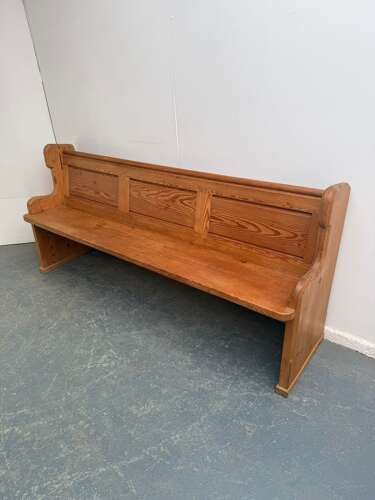
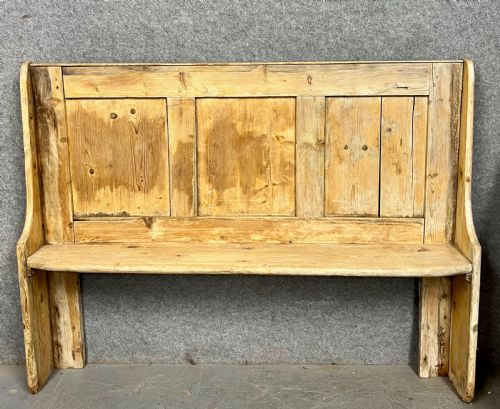
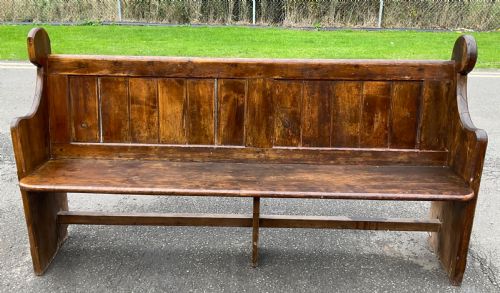
When you search for church pew panels, you are examining architectural timbers derived primarily from historic pews, benches, and settles. These elements often manifest as solid timber backs, ends, or partition sections salvaged from chapels and churches.
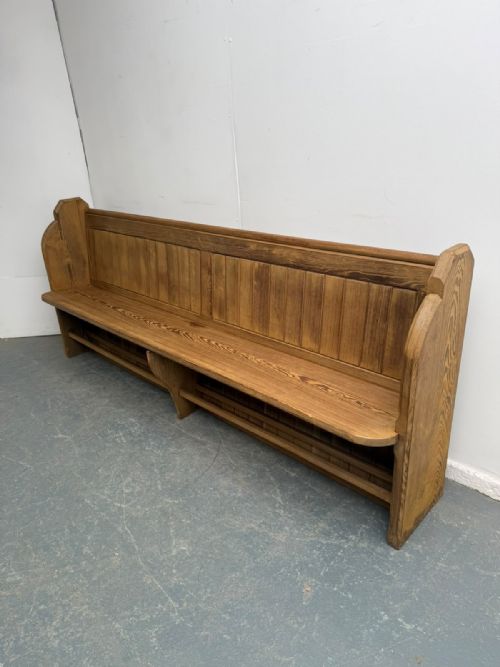
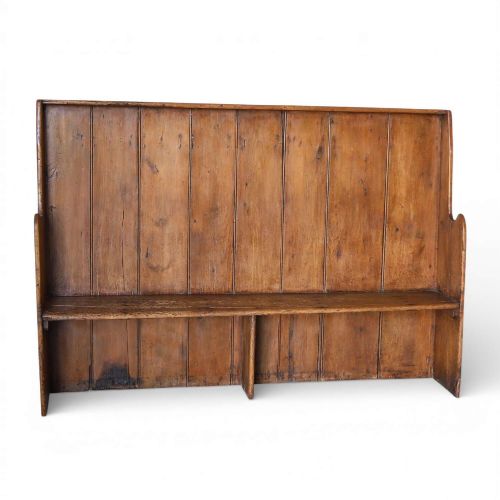
The versions most frequently encountered on this page stem from the nineteenth and eighteenth centuries, constructed in sturdy woods like pine, pitch pine, and oak. Many pieces retain their original bench or settle configurations, reflecting traditional English, Welsh, and French rural forms.
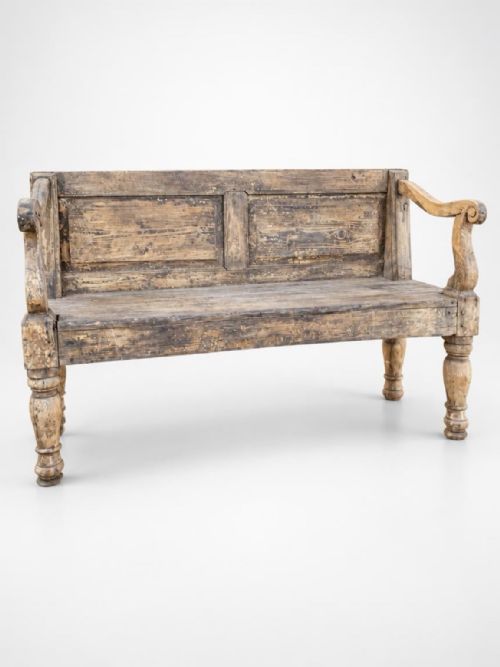
Makers and workshops utilised durable indigenous timbers to create functional seating for ecclesiastical and domestic interiors alike. Buyers encounter these forms ranging from simple chapel pews to high-back settles with honey brown patinas or painted finishes.
Materials and construction methods
Carpenters constructed these elements primarily from solid oak, pine, and pitch pine, selecting timbers renowned for structural longevity. Surfaces were frequently treated with traditional wax or paint finishes to protect the wood while developing deep patinas over decades of use.
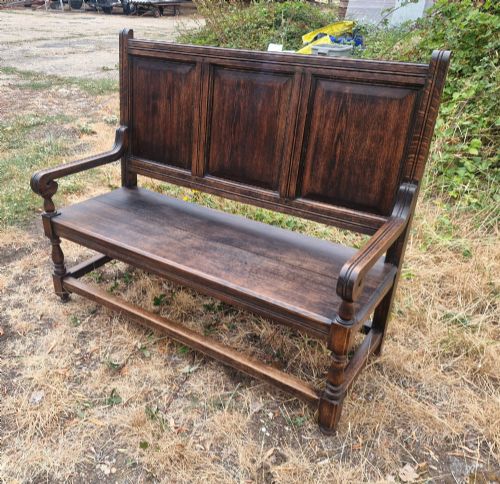
Joinery techniques relied on sturdy panelled construction, utilising pegged mortise and tenon joints to withstand heavy communal seating demands. Original board seats and high-back frameworks demonstrate utilitarian craftsmanship tailored for both rural farmhouses and ecclesiastical settings.
Church Pew Panels Retail Price Guide 2026
Typical asking prices for church pew panels among the pieces listed under this phrase on Sellingantiques today, from the lower quarter to the upper quarter. They describe what is for sale here now, not the wider market.
Assessing quality in antique seating elements
The distinction between ordinary and superior pieces rests largely on the integrity of the timber and the depth of the patination. Examples displaying rich honey brown patinas or untouched painted surfaces command greater appreciation than those stripped of their historic finishes.
Structural completeness also dictates standing, with pieces retaining original board seats, high backs, and ecclesiastical provenance offering stronger historical context. The choice between plain pine and substantial eighteenth-century oak further establishes the hierarchy among these functional furnishings.
The Church Pew Panels Glossary
- Settle
- A wooden bench with a high back, solid arms, and often a storage compartment beneath the seat. This form provided draught protection in traditional domestic halls.
- Pitch pine
- A durable resinous timber frequently utilised for nineteenth-century church seating and architectural joinery. It exhibits a distinctive dense grain pattern.
- Patina
- The surface sheen and colour developed by timber over years of handling, waxing, and ageing. A desirable patina indicates genuine historic use.
- Mortise and tenon
- A traditional woodworking joint where a projecting tenon fits snugly into a matching mortise hole, securing timber panels without metal fasteners.
- Chapel pew
- Long ecclesiastical seating designed for religious services, commonly constructed from pine or oak and occasionally salvaged as architectural panels.
Church Pew Panels: Frequently Asked Questions
What are church pew panels?
Church pew panels are solid timber sections salvaged from historic ecclesiastical seating and settles.
They showcase traditional craftsmanship from periods spanning the eighteenth to the twentieth centuries in oak and pine.
How were these wooden settles used?
Historic settles and pews served as communal and domestic seating in churches, chapels, and public houses.
Their high backs were originally designed to shield occupants from draughts in large, unheated rooms.
How do I care for antique pine furniture?
Maintain waxed pine surfaces by occasionally applying natural beeswax to nourish the dry historic timber.
Keep these wooden pieces away from direct heat sources and sudden humidity changes to prevent splitting.
How can I tell eighteenth-century oak apart?
Eighteenth-century oak pieces generally display deeper patination, heavier board construction, and traditional pegged joinery.
Later Victorian interpretations often utilise pitch pine or feature machine-planed elements distinct from earlier rural workshop output.