





Church Painting Canvas
Church painting canvas works bring historic ecclesiastical architecture and rural parishes into domestic interiors through oil and canvas.
Church Painting Canvas
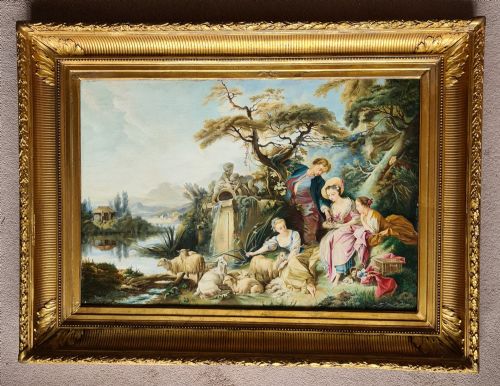
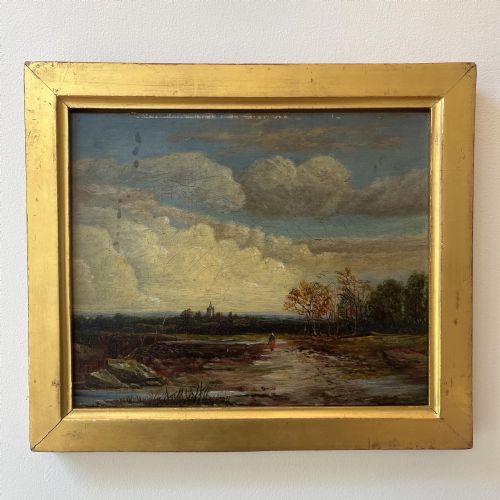
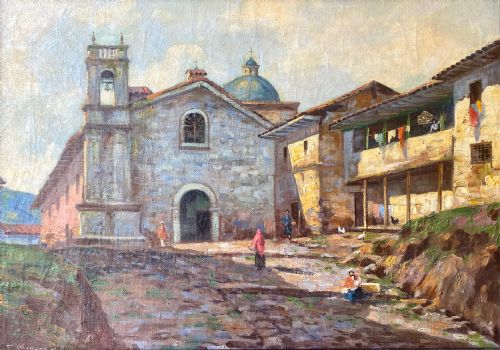
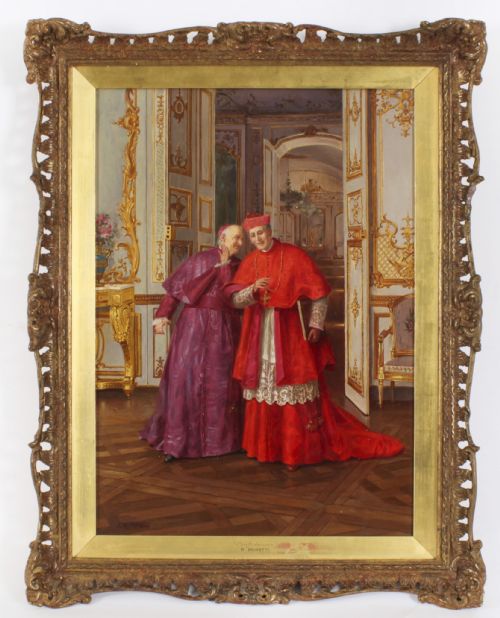
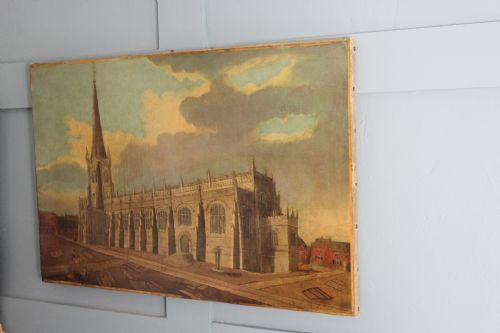
A church painting canvas captures ecclesiastical buildings, village parishes, and cathedral facades within oil on canvas compositions. These works range from Victorian and Edwardian landscapes to mid-twentieth-century street scenes and rural vistas.
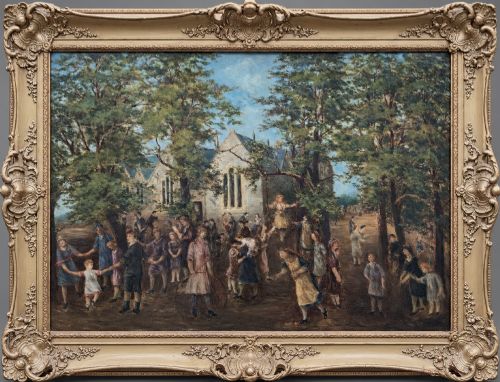
The most common examples on this page date from the nineteenth and twentieth centuries, often framed in wood or gilded wood. They depict specific local churches, village gatherings, and moonlit architectural studies by named artists and regional schools.
Materials and construction
These works are executed in oil paint directly onto woven canvas supports, which are stretched across wooden frames. Many retain their period wooden or gilt wood frames.
Artists utilised traditional oil pigments to build texture and depth, capturing atmospheric effects like moonlight, sunlight on plazas, and overcast skies.
Church Painting Canvas Retail Price Guide 2026
Typical asking prices for church painting canvas among the pieces listed under this phrase on Sellingantiques today, from the lower quarter to the upper quarter. They describe what is for sale here now, not the wider market.
Framing materials recorded across these artworks include both plain wood and decorative gilt wood structures.
Assessing the work
Quality rests in the handling of light, atmospheric perspective, and the structural integrity of the canvas and frame. Stronger works demonstrate confident brushwork and a clear sense of place.
The distinction between standard decorative pieces and finer works lies in the depth of the composition and the preservation of the original oil surface.
William Hogarth·Renato Moretti·William Greaves·Walter Meegan·Kershaw Schofield·John Cawthorn·Jeffrey Pratt·Henri Therme·Frederick Underhill·Stephanie Cooper·William Marlow
The Church Painting Canvas Glossary
- Oil on canvas
- Pigments bound in a drying oil applied to a woven fabric support. This combination offers flexibility and longevity.
- Gilded wood
- Wood frames coated with a thin layer of gold leaf or metallic gilt. These frames often accompany nineteenth-century works.
- Post-Impressionism
- An art style following Impressionism that explores emotional and structural responses through bold colour and form. It appears in twentieth-century examples on this page.
- Academic Realism
- A style of painting produced under the influence of European academies, emphasising precise detail and traditional composition.
Church Painting Canvas: Frequently Asked Questions
What periods do these canvas paintings span?
The works span from the eighteenth century through the nineteenth and twentieth centuries, encompassing Victorian, Edwardian, and mid-century movements.
They reflect shifts in British and continental landscape painting traditions over two centuries.
How should I hang a canvas painting?
Canvas works require stable wall environments away from direct sunlight and excessive humidity. Ensure the hanging wire and wall fixings safely support the weight of the wooden frame.
Positioning the painting at eye level in a principal room allows the details of the architecture and landscape to be properly appreciated.
Are these paintings signed by the artists?
Many works on this page carry signatures, attributions, or inscriptions naming specific locations such as Wakefield Cathedral or Christ Church in Doncaster.
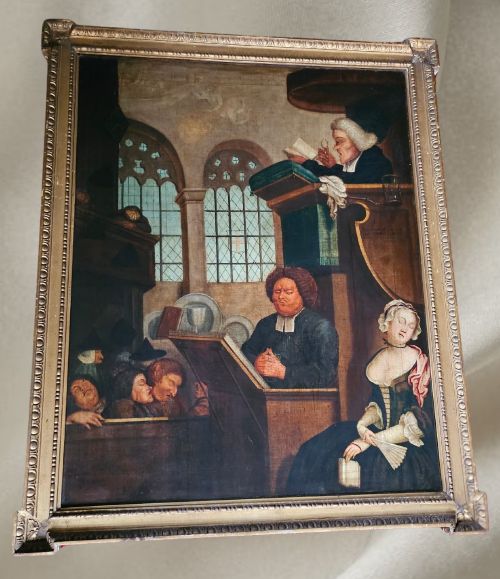
Others are attributed to specific schools or followers of known painters like William Hogarth and William Marlow.
What subjects typically appear alongside the churches?
Compositions often feature surrounding village landscapes, rectories, churchyards with stone masons, and local figures attending village fetes or holiday gatherings.
Some examples focus strictly on architectural studies under moonlight or atmospheric weather conditions.