
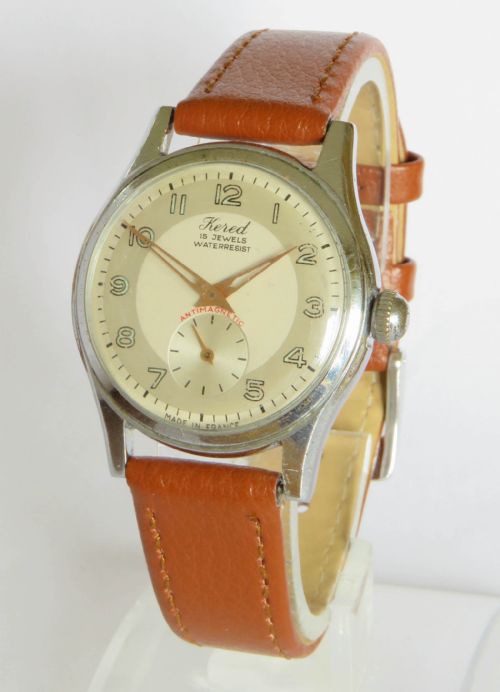


Chrome Mechanical Wristwatch
A chrome mechanical wristwatch brings wearable mid-century and Art Deco design to the wrist, offering dependable manual movements.
Chrome Mechanical Wristwatch
A chrome mechanical wristwatch represents a category of timepieces dating from the 1930s to the 1950s. These items encompass gents and ladies models, including military issues and tank styles.
The options span distinct design movements such as Art Deco, Mid-Century Modern, and 1940s Military. Buyers most frequently encounter manual wristwatches featuring square or round dials from these eras.
Originating across different decades, these watches combine traditional mechanical calibres with utilitarian or decorative housings. They suit collectors seeking wearable history from the mid-twentieth century.
How they were made
Cases utilise chrome, chrome plate, stainless steel, and white metal to house the mechanical movements. Glazing protects the dial faces while leather straps secure the watches to the wrist.
Manufacturing methods from the 1930s through to the 1950s relied on manual assembly and mechanical gear trains. Watchmakers fitted jewelled movements to reduce friction within the timekeeping mechanism.
Materials recorded across the inventory include leather, glass, chrome, stainless steel, chrome plate, and white metal.
What varies in quality
The standard of execution depends heavily on the preservation of the case finish and the complexity of the movement. Pieces retaining original unpolished plating and serviced internal components stand apart from heavily worn examples.
Dial legibility and the presence of specialised configurations, such as square dials or military specifications, dictate the standing of individual specimens. Original elements like specialised hands and untouched dials elevate the overall integrity of a timepiece.
Kered·Roamer·Sperina·Elgin·Smiths·Bulova
The Chrome Mechanical Wristwatch Glossary
- Chrome plate
- A thin layer of chromium electroplated onto a base metal to provide a shiny, reflective exterior. This finish protects the underlying metal from corrosion while giving a bright metallic appearance.
- Mechanical movement
- A timekeeping mechanism powered by a mainspring and regulated by a balance wheel rather than a battery. These movements require manual winding to store energy for the gear train.
- Tank style
- A rectangular watch case design inspired by military combat vehicles of the First World War. This geometric shape gained immense popularity during the Art Deco period.
- New old stock
- Unused vintage merchandise remaining unsold long after its initial production period. These items often retain their original packaging or factory condition.
- Manual wristwatch
- A portable timepiece worn on the arm that relies on a hand-wound spring mechanism. The wearer must wind the crown periodically to keep the watch running.
Chrome Mechanical Wristwatch: Frequently Asked Questions
How do I wind a mechanical watch?
Rotate the crown clockwise between your thumb and forefinger until you feel gentle resistance. Stop turning immediately when the spring feels tight to avoid damaging the internal components.
Wind the watch at the same time each day to maintain consistent tension on the mainspring. This simple daily habit keeps the internal gear train moving accurately.
Can I wear a vintage watch daily?
Many examples from the 1930s to the 1950s handle regular daily wear if they have received recent servicing. Check that the mechanical movement runs reliably before adopting it into a daily rotation.
Keep these items away from water and excessive moisture since vintage seals lack modern waterproofing standards. Treat them with care during physical activities to preserve the delicate case finish.
How do I tell Art Deco from mid-century styles?
Art Deco pieces from the 1930s typically feature geometric symmetry, stepped cases, and stark numerals. Tank styles and square dials dominate this decorative era.
Mid-century designs from the 1950s favour cleaner, understated layouts with round dials and minimalist markers. Military issues from the 1940s prioritise absolute legibility and utilitarian stainless steel or chrome housings.
What does newly serviced mean?
A recently serviced timepiece has undergone professional cleaning, oiling, and adjustment of its internal mechanical parts. A watchmaker dismantles the movement to remove old lubricants and inspect every gear.
This maintenance ensures the mechanical components interact smoothly and keep accurate time. Servicing is essential for maintaining the longevity of vintage movements.