




Chippendale Style Piecrust Table
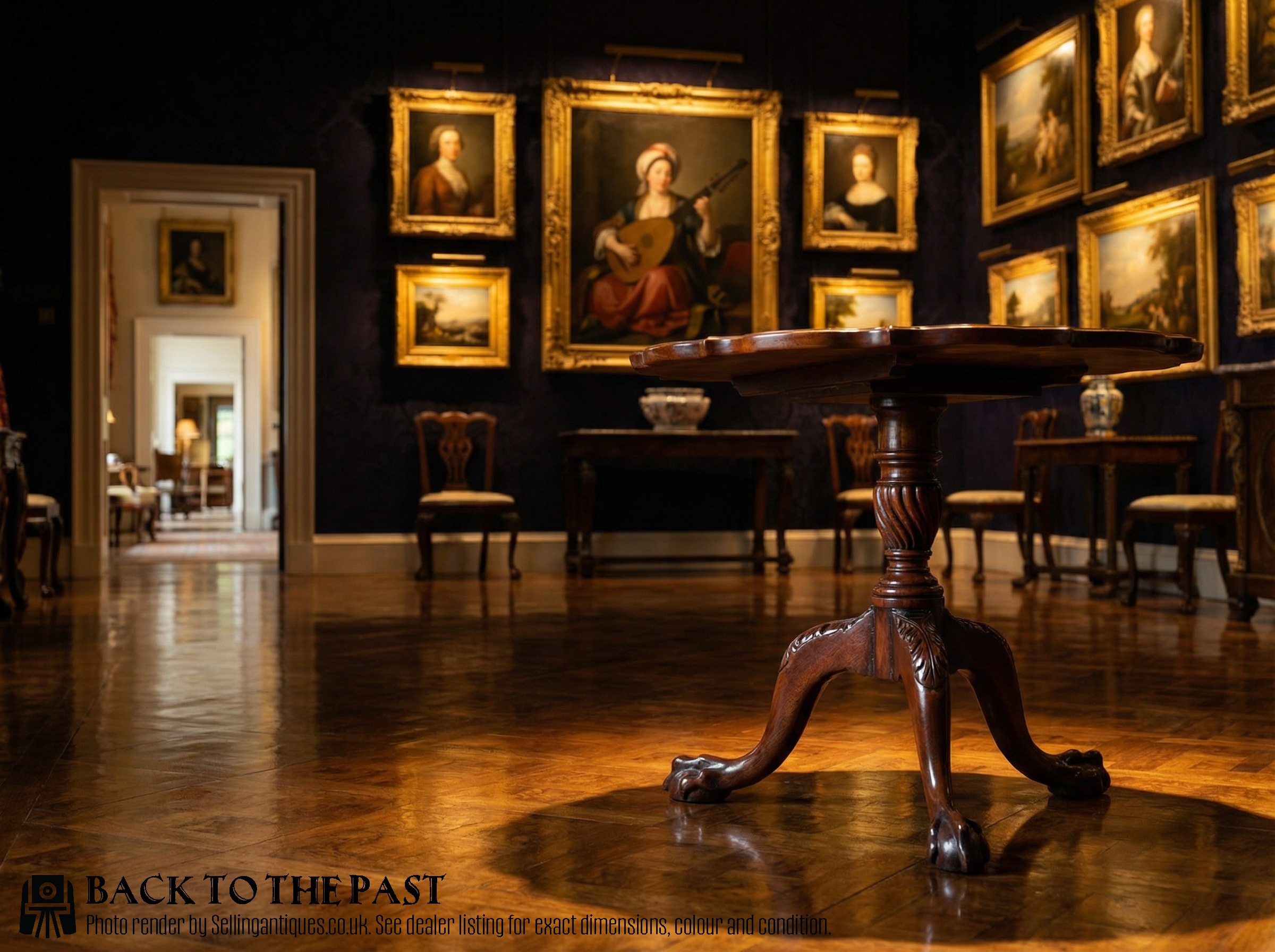
These chippendale style piecrust table examples bring eighteenth-century carving to domestic spaces through tilting mahogany tops and tripod bases.
Chippendale Style Piecrust Table
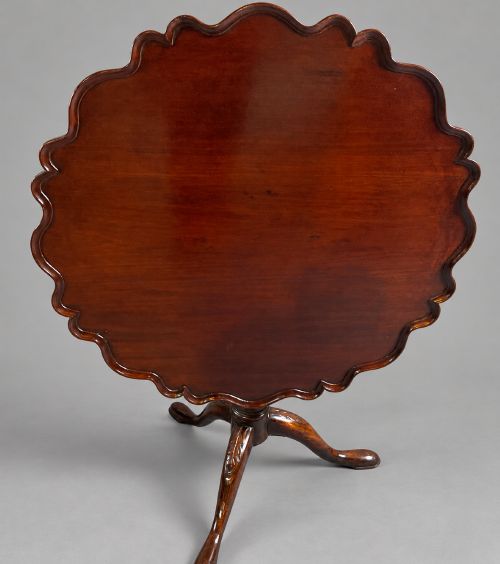
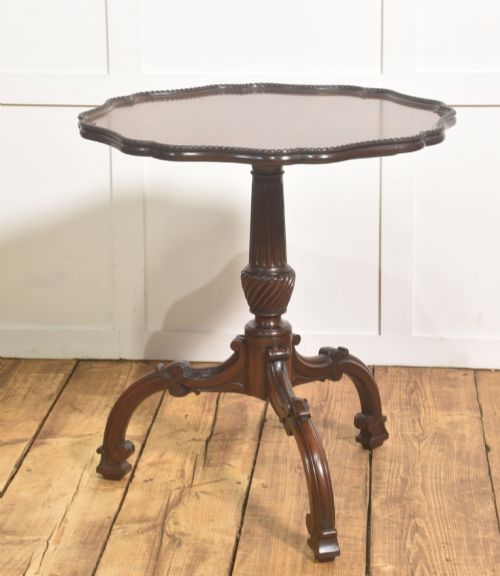
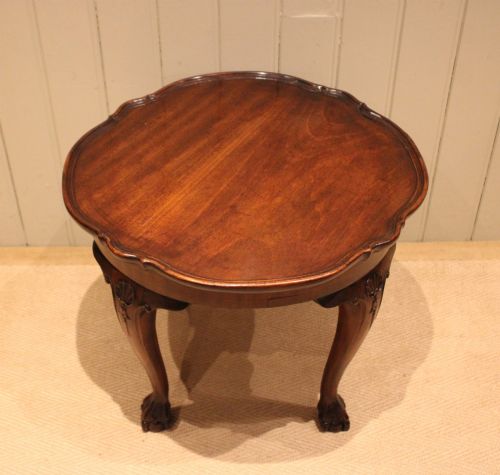
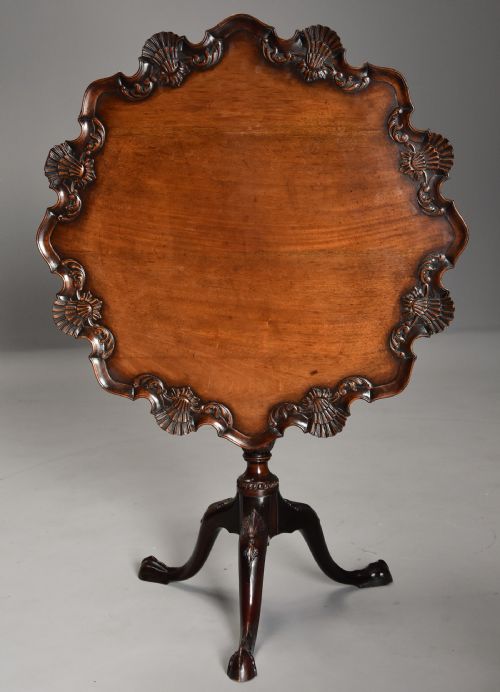
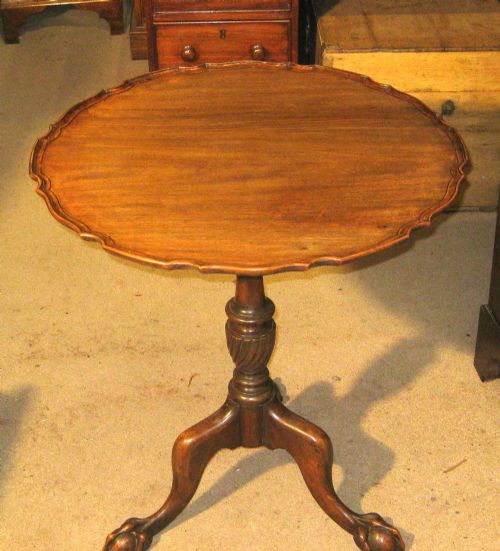
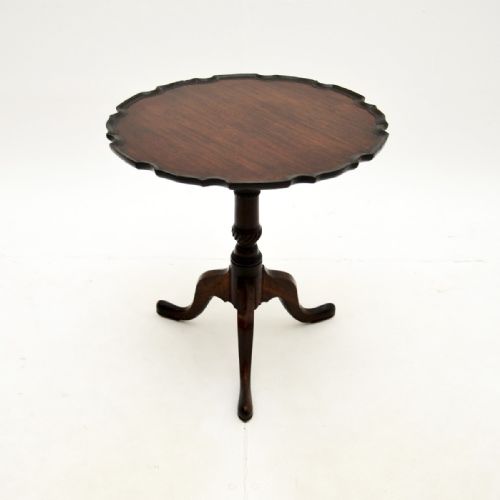
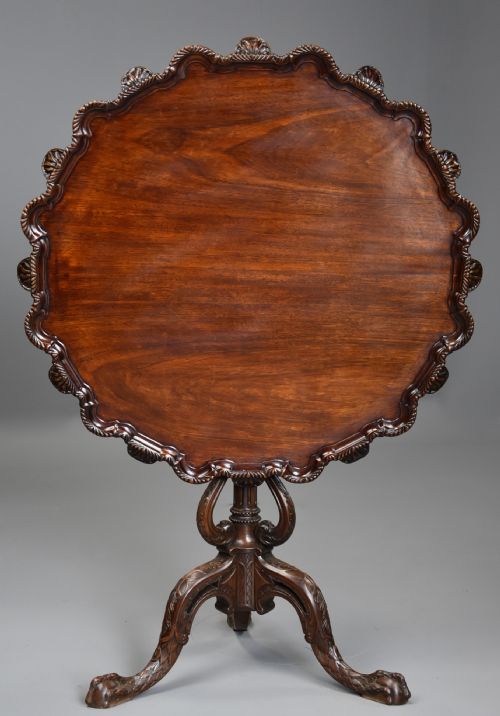
A chippendale style piecrust table brings together specific tabletop mouldings and pillar supports, appearing most frequently across eighteenth-century Georgian origins and later revival periods. Buyers searching for a chippendale style piecrust table encounter formats ranging from compact wine and lamp tables to occasional tables and larger dining centre pieces. The form relies on a circular top finished with raised, scalloped carved borders that resemble pastry crusts.
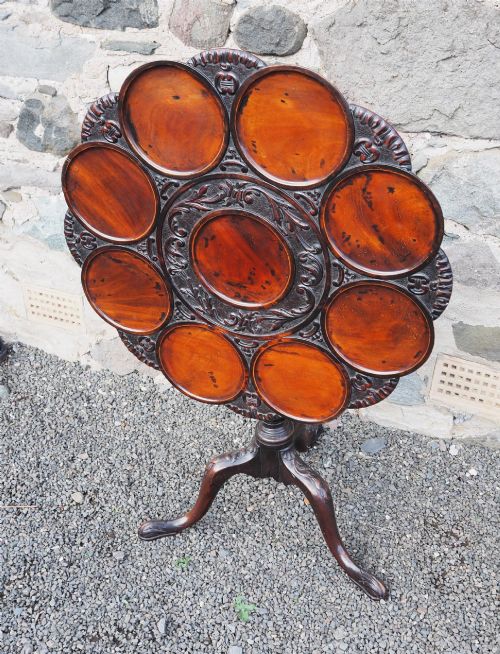
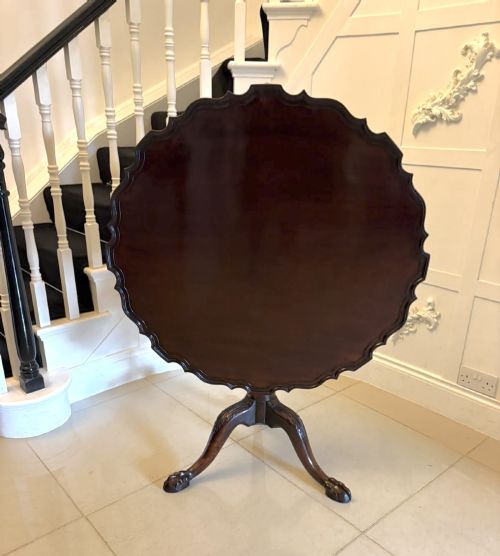
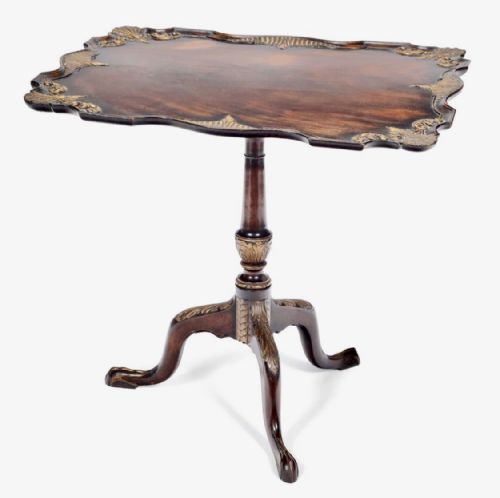
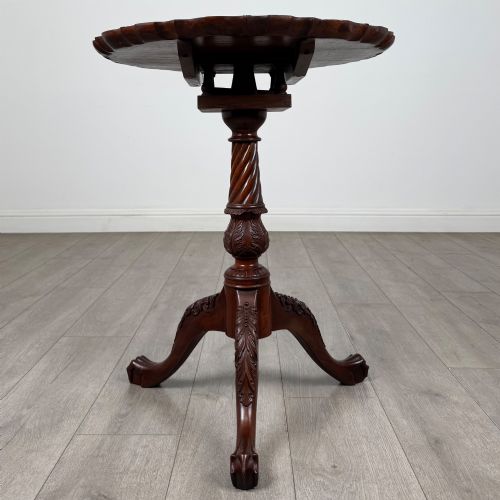
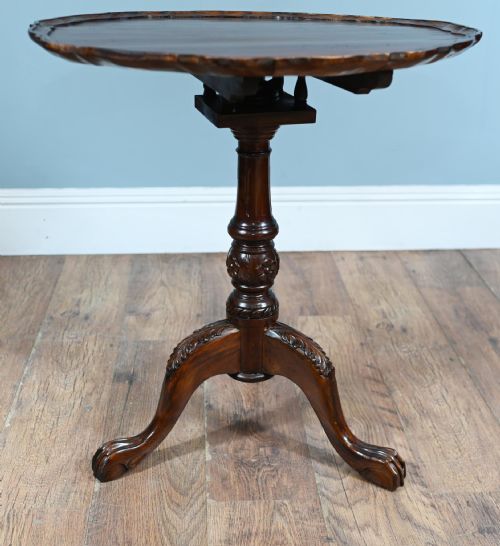
Most specimens on this page emerge from the Georgian and George III eras alongside later nineteenth and early twentieth-century revivals. These tables often incorporate tilt-top mechanisms, sometimes featuring birdcage supports beneath the surface to allow the top to rotate and fold vertically when not in use. Tripod legs terminating in claw and foot motifs anchor the central pillar, creating a stable platform for tea service or display.
Materials and construction methods
Makers constructed these tables primarily from solid and figured mahogany, occasionally utilising walnut or oak alongside brass components and parcel gilt highlights. Timber selection determined the weight and grain movement of the top, which required careful seasoning to prevent warping across the circular surface.
Carvers shaped the characteristic piecrust edge directly from the solid timber of the tabletop, cutting and chiselling the raised moulding by hand. Central pedestals join tripod legs through traditional jointing methods, while tilt-top mechanisms employ hinged blocks and catch pins to secure the surface.
Chippendale Style Piecrust Table Retail Price Guide 2026
Typical asking prices for chippendale style piecrust table among the pieces listed under this phrase on Sellingantiques today, from the lower quarter to the upper quarter. They describe what is for sale here now, not the wider market.
Object types recorded across the inventory include wine tables, occasional tables, coffee tables, and dining centre pieces.
Assessing quality and execution
Quality separates tables by the crispness of the carved border moulding and the proportion of the tripod legs relative to the column height. Superior examples display deep, deliberate chisel work along the piecrust rim and refined claw details on the feet.
The sophistication of the internal tilt mechanism and the integration of birdcage supports also mark the distinction between standard production and master execution. Heavier timber selection and balanced grain patterns in the mahogany surface elevate the overall presence of the piece.
S and H Jewell London
The Chippendale Style Piecrust Table Glossary
- Piecrust edge
- A raised, carved moulding along the perimeter of a circular tabletop featuring alternating curves and indentations. This decorative border defines the classic tea table silhouette.
- Tilt top
- A hinged mechanism allowing the tabletop to pivot into a vertical position. This function enabled tables to be stored flat against walls when not in active use.
- Birdcage
- A framework of small wooden spindles situated beneath the tabletop. This structure permits the surface to both rotate and tilt independently.
- Tripod table
- A freestanding support consisting of three legs radiating from a central turned pillar. The design ensures stability on uneven historical floor surfaces.
- George III period
- The stylistic era spanning the reign of King George III, noted for refined mahogany furniture and classical carving influences. Many foundational pieces date to this span.
Chippendale Style Piecrust Table: Frequently Asked Questions
What is a piecrust table used for?
These tables served primarily as tea tables or occasional surfaces in eighteenth-century drawing rooms, holding porcelain and small vessels during social gatherings.
Today, buyers utilise them as lamp tables, wine stands, or decorative centrepieces in living spaces where surface area is at a premium.
What is a birdcage mechanism?
The birdcage is an assembly of small turned wooden posts and plates positioned between the central pillar and the underside of the table.
It permits the top to spin horizontally in addition to tilting, adding mechanical versatility to the tripod form.
How do I distinguish eighteenth-century originals from revivals?
Eighteenth-century examples display natural timber oxidation, hand-cut joinery marks, and wear patterns consistent with extended domestic use over generations.
Revival pieces from the Victorian, Edwardian, and later periods often exhibit machine-assisted turning and distinct finishing techniques characteristic of their specific manufacture era.