



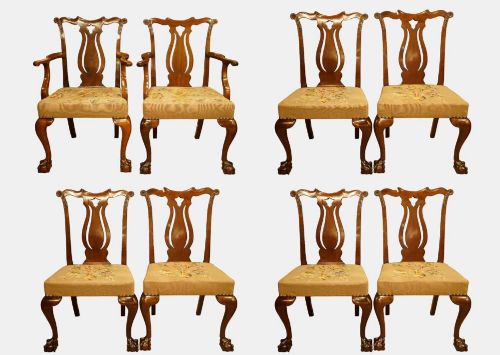


Chippendale Revival Carver Chairs
Chippendale revival carver chairs bring mid-eighteenth-century grandeur into later interiors through robust mahogany frames and scrolling arms.
Chippendale Revival Carver Chairs
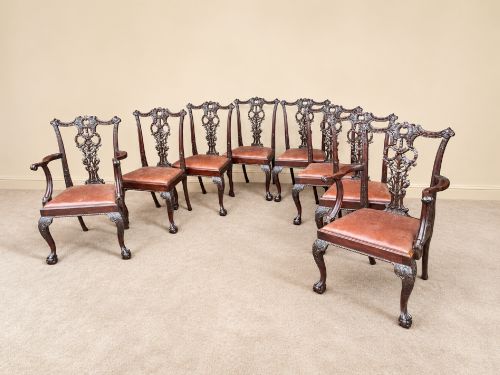
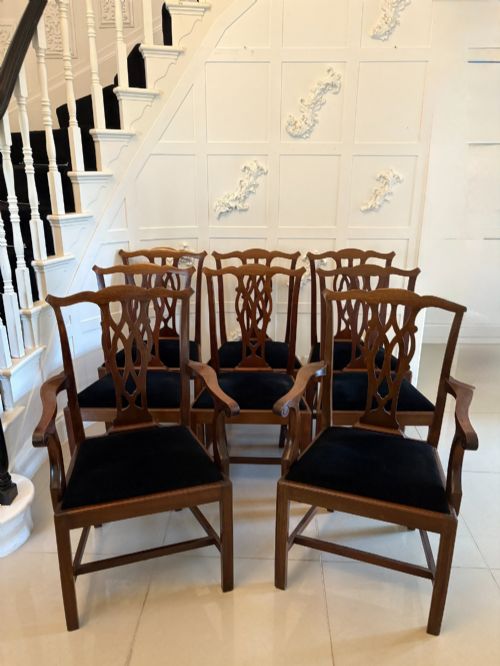
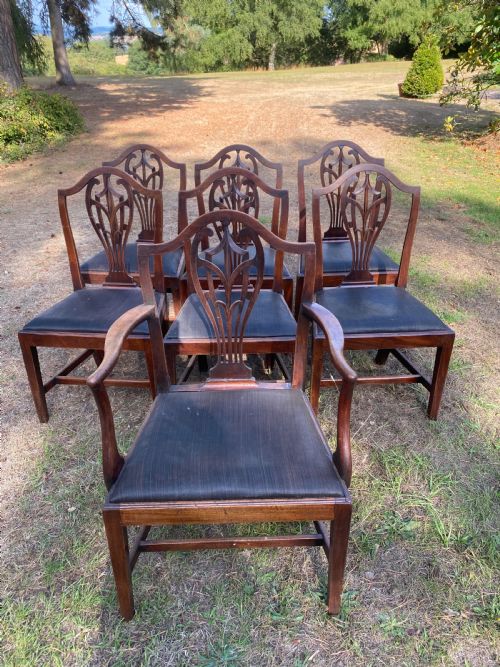
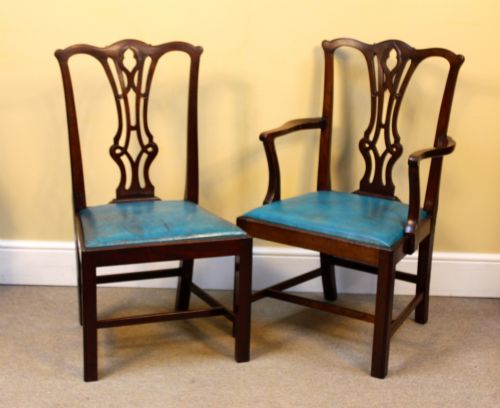
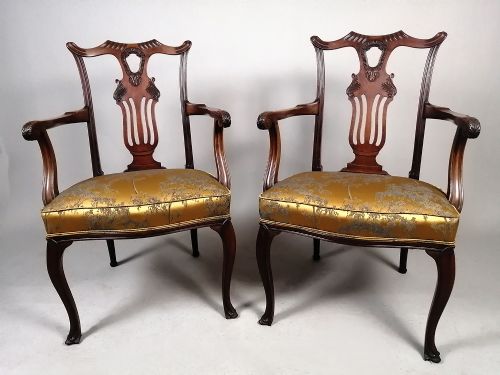
Chippendale revival carver chairs draw on the elaborate seating designs popular during the eighteenth century, reinterpreted by makers from the Victorian era onward. When searching for chippendale revival carver chairs, buyers encounter pieces intended for dining rooms, libraries and studies, taking the form of open armchairs, elbow chairs and desk chairs.
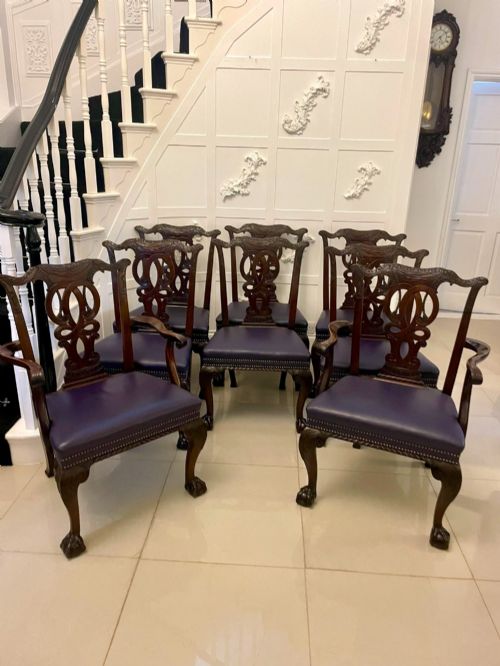
The selections on this page stem predominantly from the nineteenth and early twentieth centuries, spanning Victorian, Edwardian and later revival periods. They appear both as isolated pairs and as larger dining sets that include matching armchairs alongside single chairs.
How They Were Made
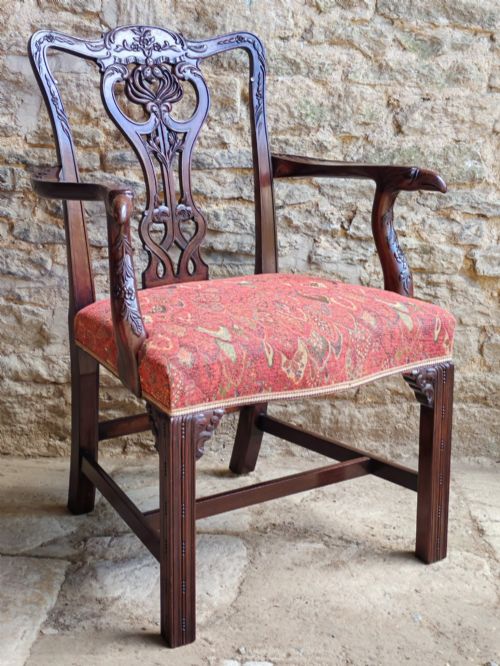
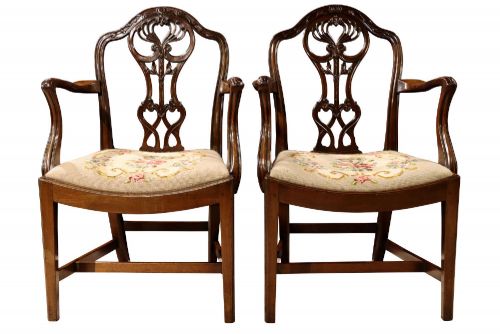
Cabinet makers constructed these frames primarily in solid mahogany, utilising its dense grain to support deep carving along the top rails and splats. Many examples incorporate upholstered drop-in seats or fixed pads covered in fabric, leather, velvet or tapestry.
Secondary materials such as brass fastenings and webbing provide internal support for the upholstered components. Workshops applied hand-polished finishes to the timber to accentuate the natural figure of the mahogany.
Chippendale Revival Carver Chairs Retail Price Guide 2026
Typical asking prices for chippendale revival carver chairs among the pieces listed under this phrase on Sellingantiques today, from the lower quarter to the upper quarter. They describe what is for sale here now, not the wider market.
Children's open arm chairs appear among the seating, offering exact miniature proportions for younger household members.
What Varies in Quality
The distinction between standard commercial seating and finer cabinet work lies in the depth and precision of the timber carving. Superior examples exhibit crisp relief work along the knuckle arms, cabriole legs and ball-and-claw feet.
The architectural proportions of the frame also determine quality, with better examples maintaining balanced stability across the arms and back. Integration of original upholstery materials and traditional stuffing methods further separates standard workshop output from exceptional commissions.
Howard and Sons·Warings·Robert Strahan Dublin·Jas Shoolbred
The Chippendale Revival Carver Chairs Glossary
- Carver
- An armchair, usually designed to sit at the head of a dining table or function as a desk chair. These seats feature prominent open arms.
- Splat
- The vertical wooden strip down the centre of a chair back. In these revival pieces, splats often display interlaced ribbon or pierced ladderback designs.
- Cabriole leg
- A furniture leg that curves outward at the knee and tapers inward toward the ankle, ending in a pad or claw foot. This form derives from classical Chinese and European furniture traditions.
- Tapestry
- A heavy hand-woven or machine-woven textile used for seat upholstery. Many period chairs retain these textured coverings on their drop-in pads.
Chippendale Revival Carver Chairs: Frequently Asked Questions
What is a carver chair?
A carver is an armchair designed with open wooden elbows, traditionally placed at the ends of a dining table. These seats provide broader proportions than standard single chairs.
In revival sets, makers produced carvers to match smaller side chairs while offering additional arm support for daily use.
How do I date these chairs?
Dating relies on timber characteristics, construction joints and stylistic revival markers associated with late nineteenth and early twentieth-century workshops. Victorian and Edwardian interpretations often blend mid-Georgian motifs with contemporary finishing techniques.
Examining the underside of the seat frame and the wear on the mahogany helps establish the age of the piece.
Are these chairs suitable for daily dining?
Solid mahogany construction and supportive upholstered pads make these chairs durable for regular seating around a dining table. Their sturdy timber frames withstand everyday movement without losing structural integrity.
Owners should inspect the internal webbing and upholstery periodically if the seating receives heavy daily use.
Can I mix these with modern tables?
The rich tones of dark mahogany and traditional carved details create a strong contrast when paired with contemporary dining tables. Placing armchairs at the head and foot of a modern table adds architectural weight to the room.
Scale and seat height remain the primary considerations when pairing antique carvers with non-period furniture.