





Chippendale Office Desk
A chippendale office desk brings centuries of cabinet-making heritage into a modern workspace through robust timber and classic carving.
Chippendale Office Desk
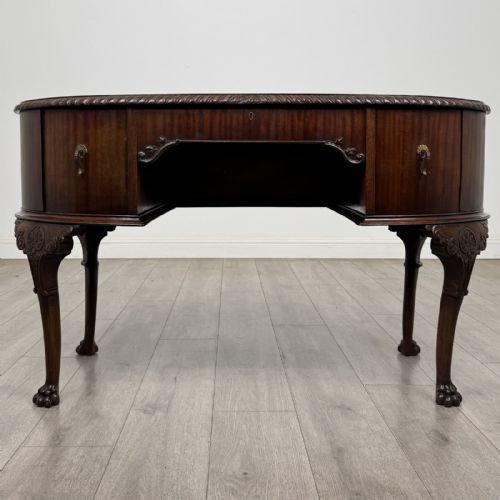
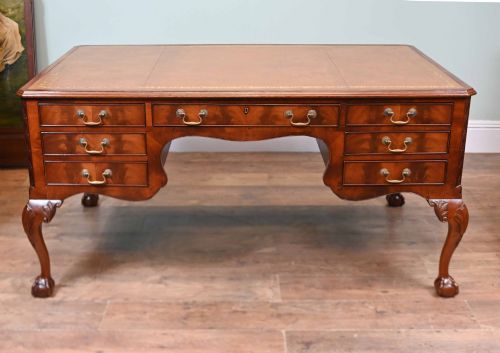
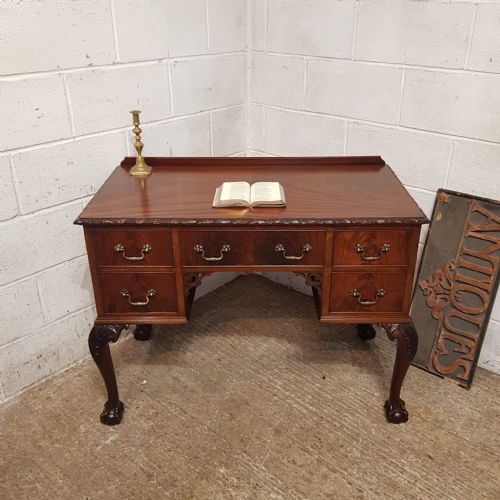
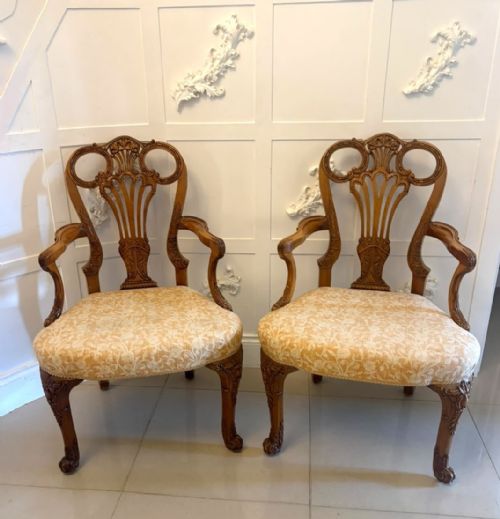
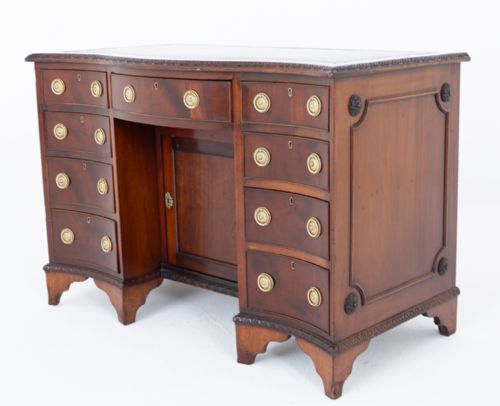
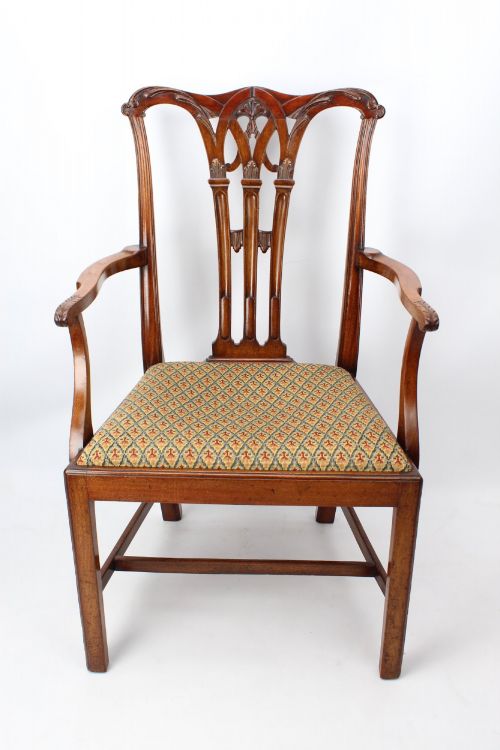
A chippendale office desk encompasses substantial pedestal partners desks, kneehole variants and writing tables, often accompanied by matching armchairs and desk chairs. These pieces span from the original eighteenth-century Georgian period through Victorian interpretations to later revival pieces from nineteen hundred and nineteen twenty.
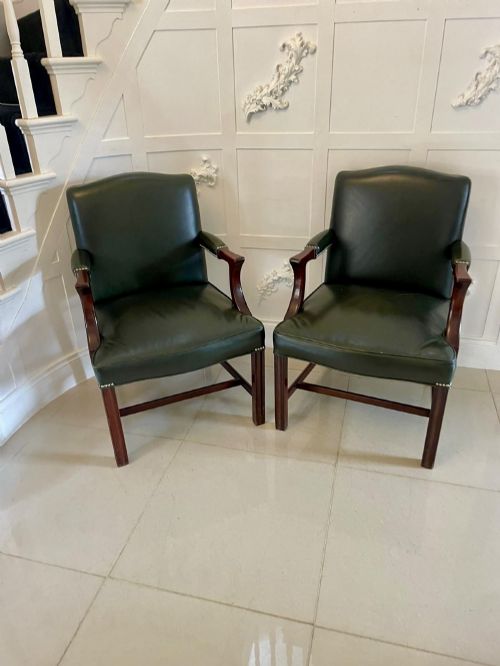
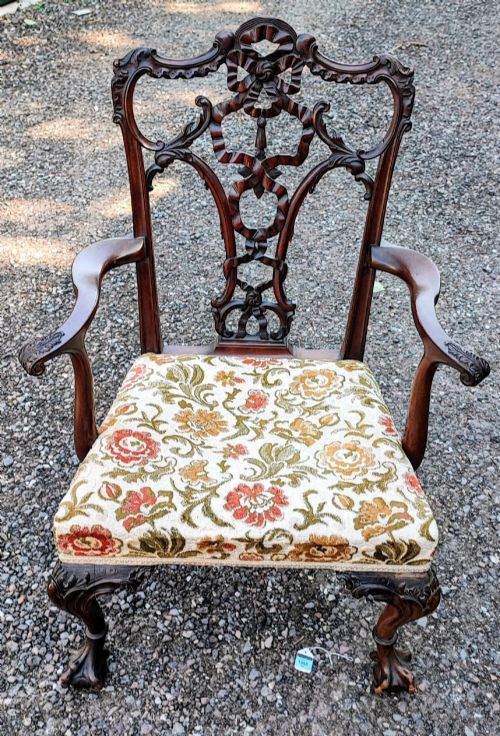
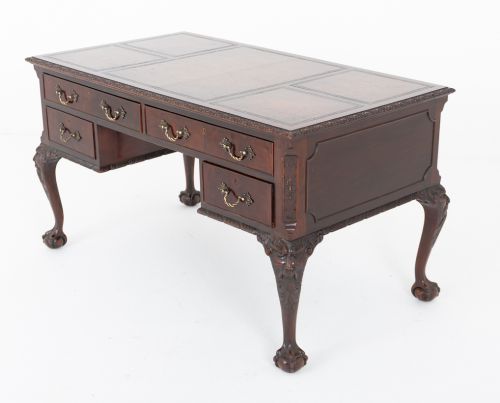
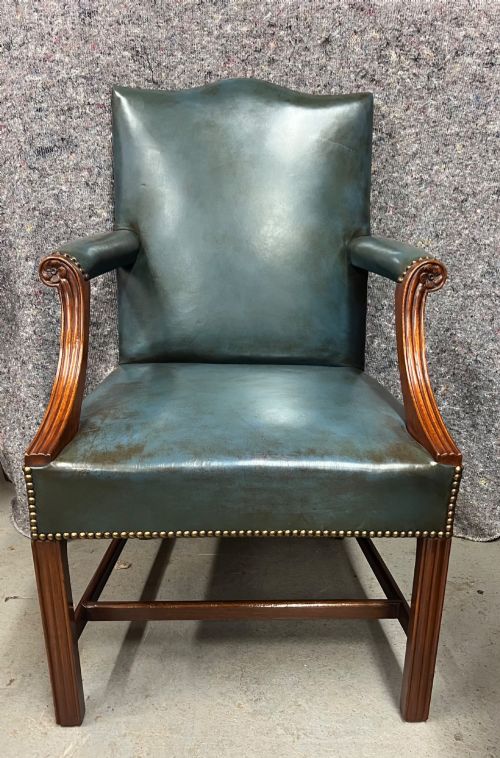
The most frequent encounters on this page include mahogany writing tables and pedestal desks built in the Chippendale revival style, alongside upholstered office armchairs finished in leather or velvet.
Materials and construction
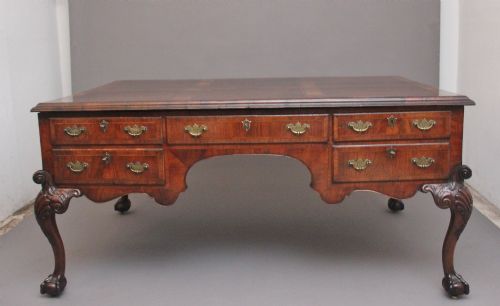
Solid mahogany forms the primary structural timber across these items, complemented by occasional walnut surfaces and brass hardware fittings. Timber frames receive detailed hand carving, particularly along chair splats and desk friezes.
Writing surfaces integrate inset leather or fabric panels, while seating options feature supportive upholstery secured with traditional stuffing techniques.
Chippendale Office Desk Retail Price Guide 2026
Typical asking prices for chippendale office desk among the pieces listed under this phrase on Sellingantiques today, from the lower quarter to the upper quarter. They describe what is for sale here now, not the wider market.
A sturdy clerk's desk survived centuries of ink splatters and ledger entries to find a peaceful retirement in the modern home office.
Cabinet-making standards
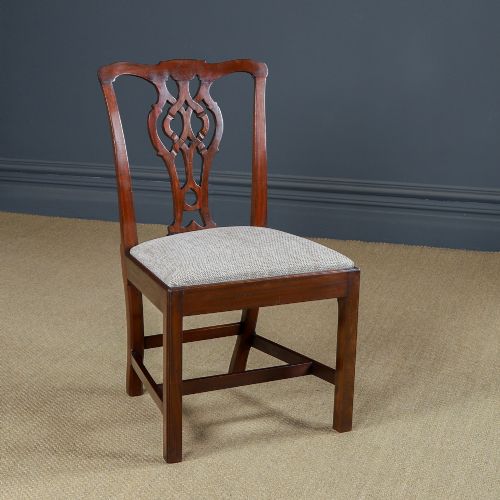
The standard of carving distinguishes standard production from superior examples, where intricate ribbon backs and pierced splats show crisp hand tool work rather than soft moulding. Timber selection plays a part too, with figured mahogany grain patterns elevating the visual weight of large partners desks.
Structural integrity depends on drawer construction and timber seasoning, which prevents warping in large pedestal forms over decades of daily use.
Thomas Chippendale·Gillows·Edwards and Roberts
The Chippendale Office Desk Glossary
- Chippendale Style
- A design vocabulary drawing on eighteenth-century pattern books, characterised by scrolling leaf motifs, cabriole legs and interlaced ribbon splats. Revival versions reinterpret these forms in later eras.
- Partners Desk
- A large double-sided desk designed for two people to work opposite one another, featuring drawers and cupboards on both faces.
- Kneehole Desk
- A compact freestanding desk featuring a central recessed space for the legs, flanked by pedestals of stacked drawers.
- Ribbon Back
- A chair back design where the wooden splat mimics the folds and twists of fluttering fabric ribbons.
Chippendale Office Desk: Frequently Asked Questions
What is a partners desk?
A partners desk is built to be used from both sides simultaneously, featuring matching banks of drawers or cupboards facing front and back. These large pieces were originally designed for business colleagues or banking partners.
Today they function effectively as freestanding centrepieces in large home studies, offering generous workspace and storage accessible from any angle.
How do I care for the leather top?
Leather writing surfaces require gentle cleaning with a damp cloth and occasional treatment with appropriate leather balms to maintain flexibility. Avoid harsh chemical cleaners or excessive moisture.
Keep these desks away from direct heat sources to prevent the leather from drying out and the timber beneath from splitting.
Are these desks suitable for daily work?
These historical pieces provide sturdy construction and ample surface area for modern computing and writing equipment. Their solid timber frames handle daily office tasks with ease.
Consider the kneehole clearance height before purchase to ensure comfortable seating alignment with your office chair.
How do I distinguish revival pieces from earlier periods?
Distinguishing original eighteenth-century furniture from later revival pieces requires examining timber seasoning, internal drawer construction methods, and tool marks. Revival items often reflect Victorian or Edwardian manufacturing techniques.
Examining secondary woods inside the drawers provides reliable clues regarding the actual date of manufacture.