

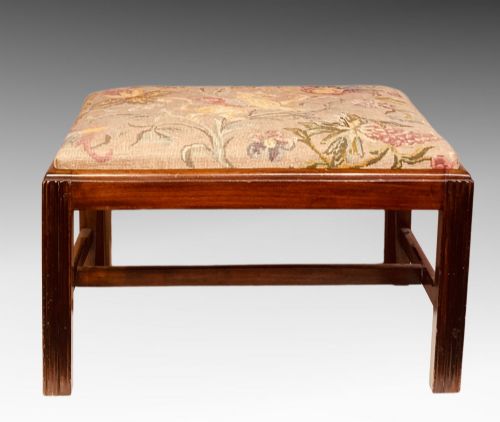
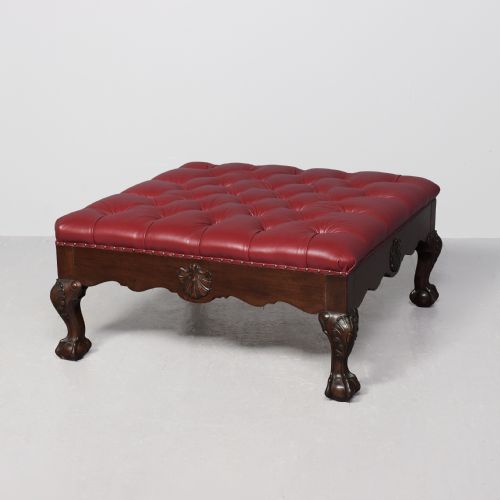
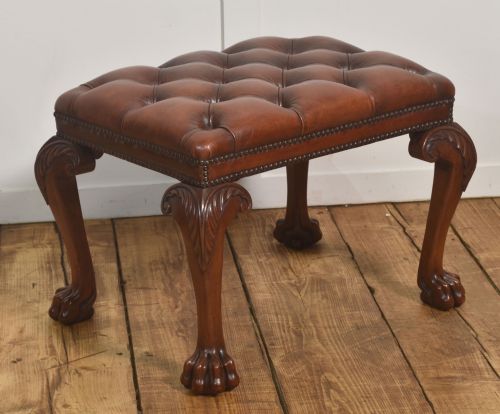
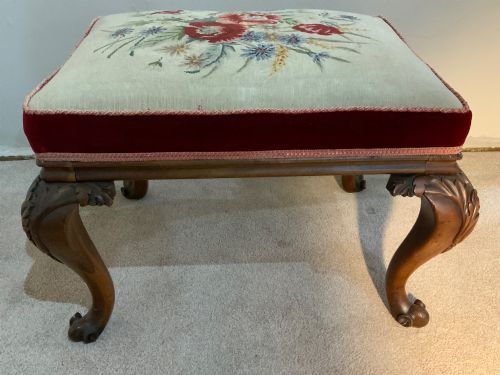




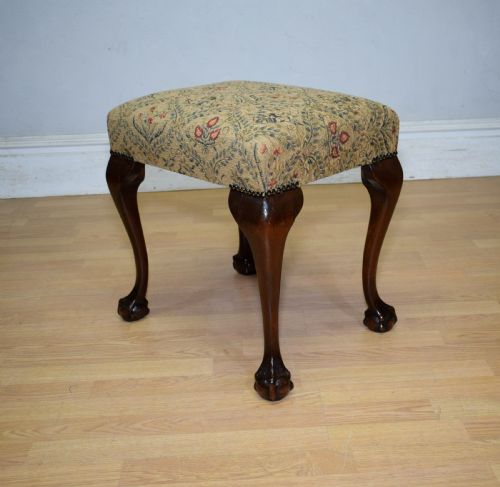

Chippendale Mahogany Footstool
A chippendale mahogany footstool brings solid timber frames and classic carved detail to a traditional room, and collectors prize them for their sturdy presence.
Chippendale Mahogany Footstool
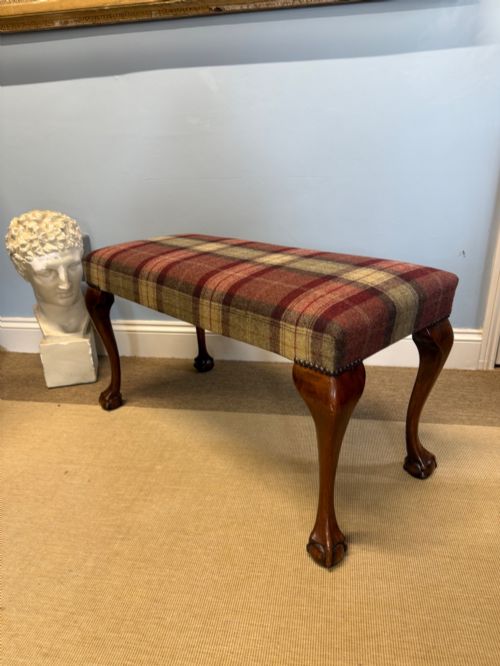
A chippendale mahogany footstool is a low seating piece constructed primarily from dense tropical timber, appearing in forms ranging from compact foot-stools to large centre benches and dressing stools. The selection spans authentic eighteenth-century examples alongside Victorian iterations and later revivals from the nineteenth and twentieth centuries.
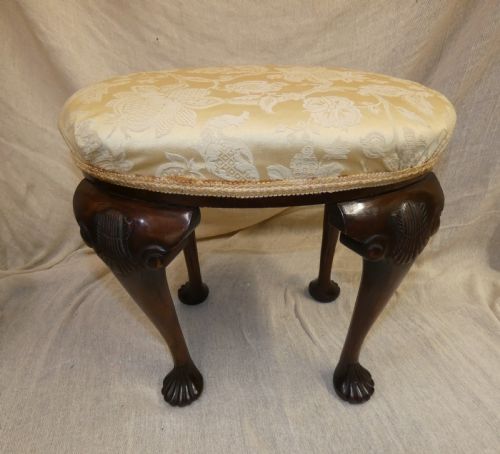
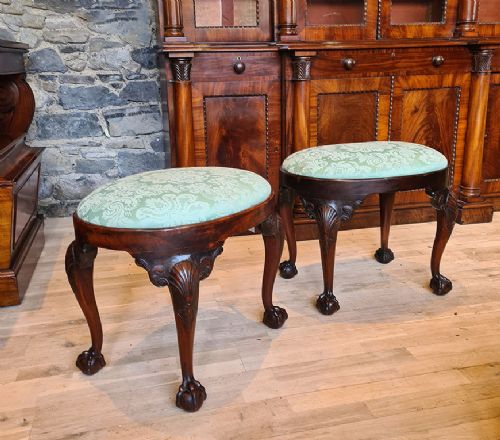
Buyers encountering this group will frequently find revival pieces produced during the Victorian and Edwardian eras, mirroring earlier Georgian proportions. These items often feature carved wooden frames paired with upholstered surfaces in fabric, leather, velvet, wool, tapestry, or damask.
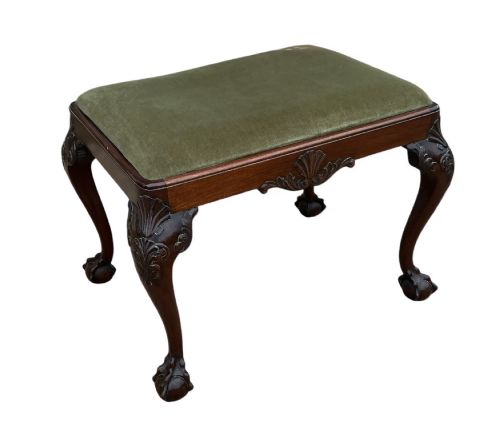
The objects serve multiple interior functions, operating as traditional foot supports, dressing furniture, or freestanding centre stools within period rooms. Their structural variety encompasses serpentine shapes, oval configurations, and frames resting upon ball and claw feet.
Materials and Construction
Makers fashioned the structural frames from solid mahogany, utilising its dense grain to support intricate hand-carving along the rails and legs. Workshops applied traditional joinery techniques to secure the wooden components before mounting upholstered pads directly to the upper frame.
The top surfaces received coverings of textile or hide, secured with brass tacks where appropriate to hold materials such as leather, velvet, wool, tapestry, and damask in place. Carved ornamentation on the wood included motifs executed directly into the mahogany timber during production.
Chippendale Mahogany Footstool Retail Price Guide 2026
Typical asking prices for chippendale mahogany footstool among the pieces listed under this phrase on Sellingantiques today, from the lower quarter to the upper quarter. They describe what is for sale here now, not the wider market.
Upholstery choices recorded in the inventory include leather, velvet, wool, tapestry, damask, and standard fabric.
Factors That Determine Quality
Quality rests upon the crispness of the timber carving and the architectural proportion of the frame, where deeply articulated woodwork separates superior examples from plain variants. The integrity of the solid mahogany timber and the precision of the joinery dictate the overall structural merit.
The choice and execution of the upholstery materials further define the tier of the piece, with fine hides, damasks, and tapestries reflecting higher original commissioning standards. Age also plays a role, distinguishing eighteenth-century originals from subsequent revival interpretations.
The Chippendale Mahogany Footstool Glossary
- Chippendale Style
- A design classification drawing upon eighteenth-century aesthetic conventions associated with Thomas Chippendale, featuring carved wooden details. These pieces often incorporate elements like ball and claw feet.
- Serpentine Shape
- An undulating contour applied to the wooden frame of a stool, creating a distinct curved outline along the edges. This profile appears frequently on mid-eighteenth-century examples.
- Centre Stool
- A large freestanding seating form designed to sit in the middle of a room rather than against a wall. Such pieces often measure larger than standard footstools.
- Damask
- A reversible figured fabric used for upholstery, traditionally woven with intricate patterns that catch the light. It appears on revival stools from the nineteenth century onwards.
- Ball and Claw
- A furniture foot motif depicting a bird talon grasping a spherical ball, carved directly into the timber. This detail characterises many revival and Georgian pieces.
Chippendale Mahogany Footstool: Frequently Asked Questions
How do I date a footstool?
Dating relies on examining the timber seasoning, tool marks left by woodworking implements, and the style of the carving on the mahogany frame. Eighteenth-century pieces exhibit different construction tightness compared to later revival items.
The upholstery materials and webbing can also offer clues, though many pieces have been re-covered over the decades to maintain usability in contemporary settings.
Are these stools suitable for daily use?
Most frames possess robust mahogany construction designed to withstand regular weight when used as foot supports or occasional seating. Checking the internal joinery ensures the timber remains stable.
Delicate carved details require careful placement to avoid accidental impact, but the underlying frames generally endure standard household activity well.
What is the difference between a footstool and a centre stool?
Footstools are smaller items designed primarily to support the feet while seated in an armchair, whereas centre stools are substantially larger freestanding pieces. Centre stools often function as independent decorative seats.
Both share similar mahogany framing and upholstery treatments, but their proportions dictate their placement within a room layout.
How should I care for the leather upholstery?
Leather surfaces benefit from periodic treatment with appropriate conditioning creams to prevent the hide from drying out or cracking over time. Keeping the material away from direct sunlight preserves its colour.
Regular dusting with a soft, dry cloth prevents particulate accumulation in the textured grain and around the brass securing tacks.