




Chippendale Double Chest
A chippendale double chest brings commanding presence and tiered storage to a room, offering the architectural authority of eighteenth-century case furniture.
Chippendale Double Chest
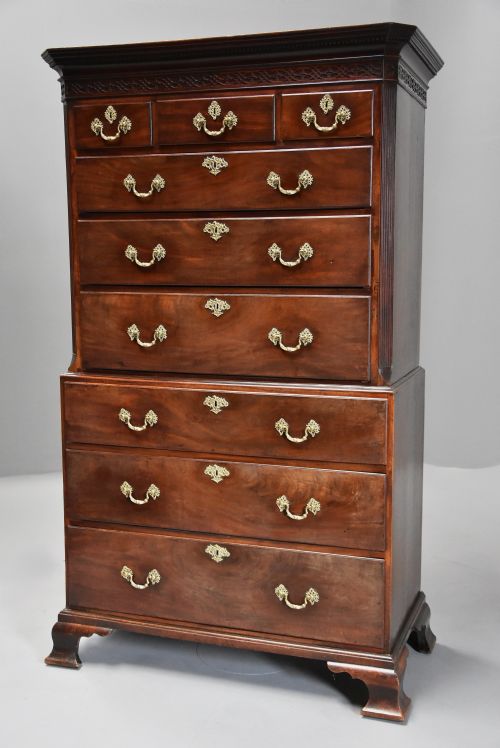
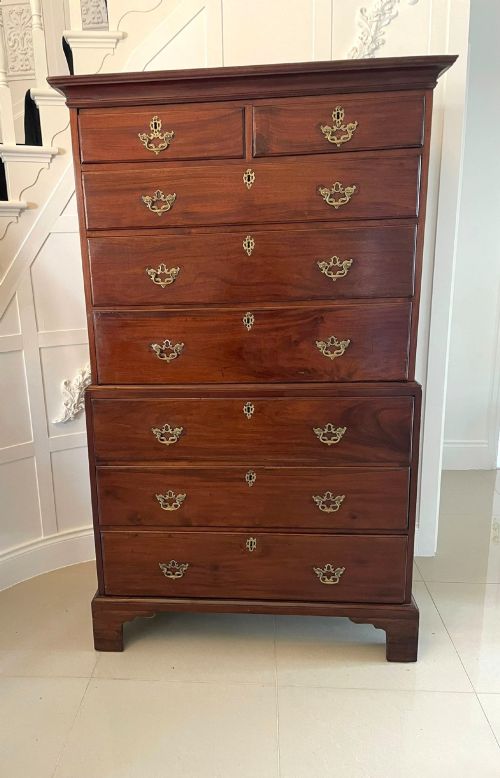
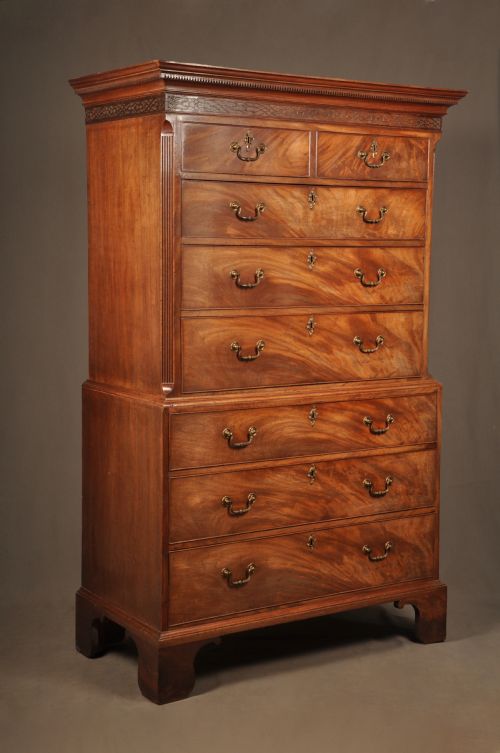
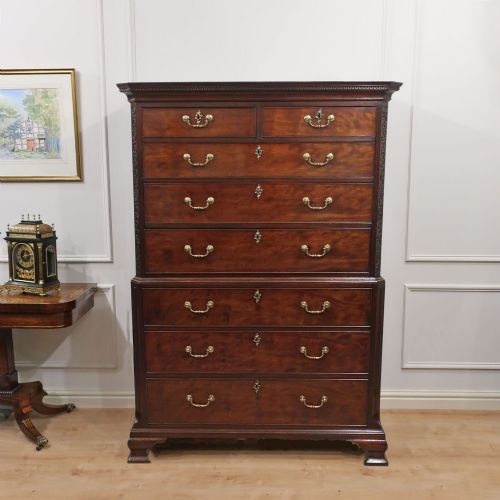
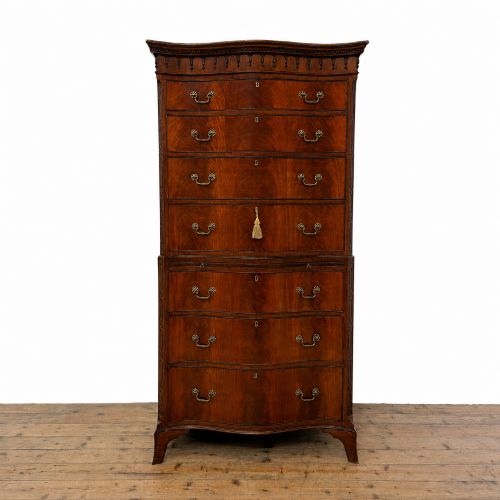
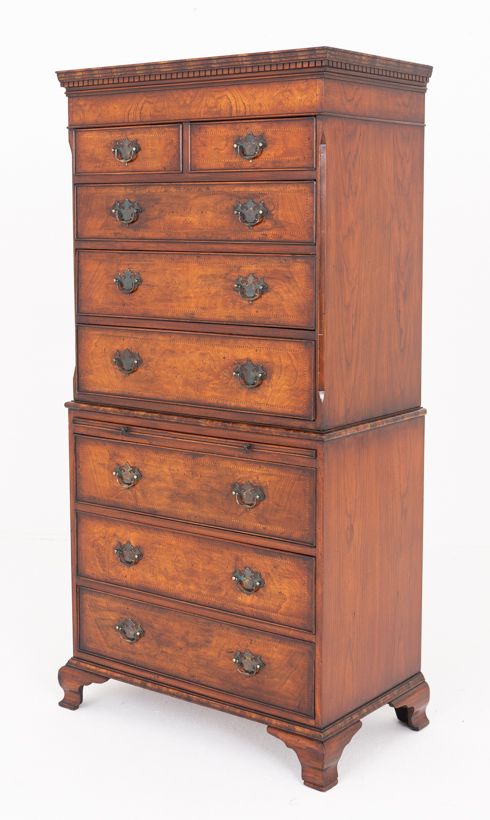
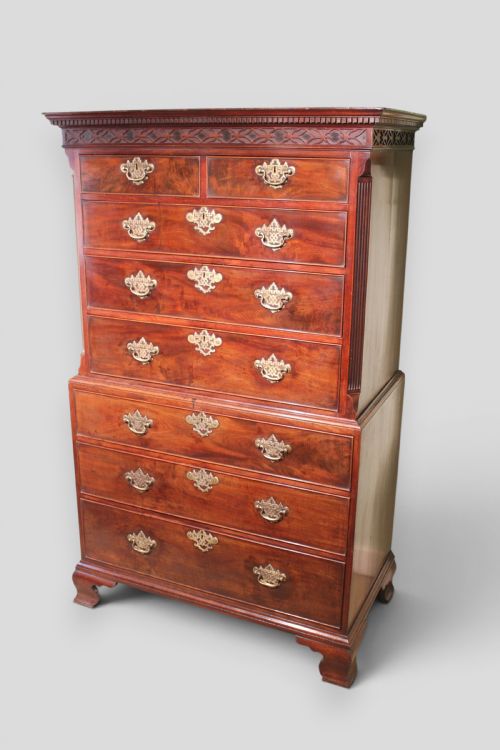
When you search for a chippendale double chest, you encounter a towering piece of case furniture designed to maximise vertical storage. These pieces combine a lower chest of drawers with an upper section, creating tall silhouettes often known as tallboys or chests on chests.
The examples available range from authentic eighteenth-century Georgian items dating back to seventeen fifty through to later twentieth-century revivals. Mahogany dominates the selection, though variations in figured timber, elm, and red walnut appear across different periods.
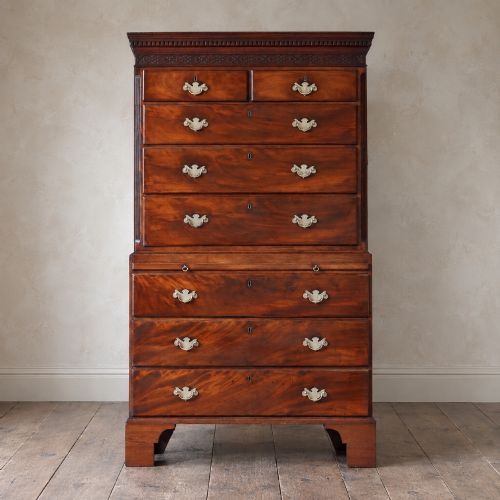
Many of these multi-tiered chests incorporate functional additions such as brushing slides, secretaire drawers, or upper bookcase cabinets. They serve as substantial focal points in traditional interiors, offering deep compartmentalised storage.
Materials and Construction
Cabinetmakers constructed these pieces primarily using solid mahogany, flame mahogany veneer, and supporting secondary timbers like oak and pine. The exterior surfaces often display carefully selected figured wood grains that highlight the natural patterns of the timber.
Brass hardware, including original swing handles and escutcheons, secures the drawers and accents the dark wood tones. Structural integrity relies on traditional joinery methods that allow the large stacked sections to fit securely together.
Chippendale Double Chest Retail Price Guide 2026
Typical asking prices for chippendale double chest among the pieces listed under this phrase on Sellingantiques today, from the lower quarter to the upper quarter. They describe what is for sale here now, not the wider market.
Several chests hide secret writing compartments behind innocent drawer fronts, proving eighteenth-century furniture makers loved a clever hiding spot.
Craftsmanship and Proportion
Quality in these double chests rests on the crispness of carved details, the choice of timber figurations, and the preservation of original surfaces. Pieces featuring well-figured mahogany veneers and intact period brasses command greater interest from collectors.
Proportion and scale distinguish finer workshops from more utilitarian production. A neat-sized chest with balanced upper and lower sections demonstrates superior cabinetmaking skill compared to heavier, less refined iterations.
The Chippendale Double Chest Glossary
- Chest on Chest
- A tall storage unit formed by stacking one smaller chest of drawers directly on top of a wider lower chest. This configuration provides substantial capacity without taking up excessive floor space.
- Brushing Slide
- A pull-out wooden shelf integrated between drawer tiers, originally utilised for folding clothes or resting items temporarily. It sits flush within the cabinet frame when closed.
- Secretaire
- A specialised drawer fitted with a drop-front writing surface and small interior compartments for stationery. It conceals a compact desk space behind a standard drawer facade.
- Tallboy
- An alternative term for a tall chest of drawers, frequently applied to double chests and linen presses. It emphasises the vertical height characteristic of these eighteenth-century designs.
- Patina
- The surface sheen and deep coloration developed by aged timber over decades of use and waxing. It reflects the natural ageing process of antique wood.
Chippendale Double Chest: Frequently Asked Questions
What is a chippendale double chest?
A chippendale double chest is a tall, two-part storage unit featuring stacked sets of drawers dating predominantly from the eighteenth century. These pieces combine decorative stylistic elements with practical vertical storage capacity.
Cabinetmakers built them to stand prominently in bedrooms and dressing rooms, utilising rich timbers like mahogany and walnut to create lasting household furnishings.
How do I use a tallboy in a modern room?
A tallboy provides exceptional vertical storage for folded clothing, linens, or personal items while occupying a minimal floor footprint. It functions effectively as a primary drawer unit in a bedroom.
The upper surfaces and pull-out brushing slides also offer display areas for decorative objects or convenient temporary workspace.
What is a brushing slide used for?
A brushing slide is a pull-out wooden shelf integrated into the front framework of the chest just below the top drawers. Historically, valets utilised this surface to brush garments or fold clothes.
In modern settings, it provides a handy retractable ledge for placing small items or sorting belongings without needing an extra piece of furniture.
How do I identify an eighteenth century chest?
Eighteenth-century chests display characteristic construction methods, such as hand-cut dovetails on the drawer sides and secondary woods like oak or pine inside. They often feature period brass handles and rich, aged mahogany surfaces.
Examining the proportion, joinery, and timber selection helps distinguish authentic Georgian pieces from later twentieth-century revival furniture.