

Chippendale Carver and Side
These mahogany and walnut chairs bring formal dining rooms to life with carved details.
Chippendale Carver and Side
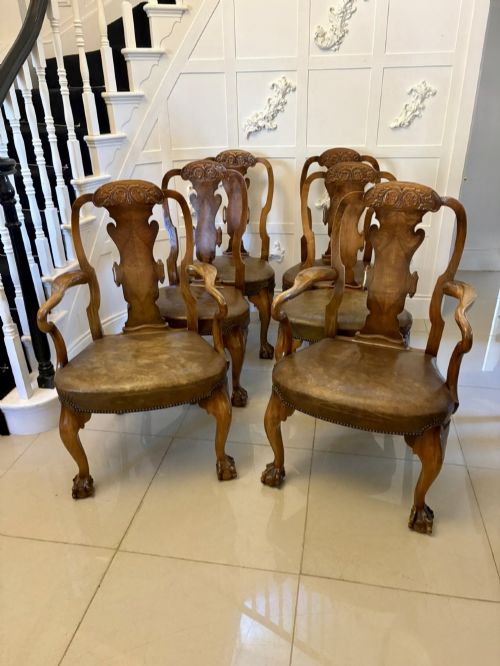
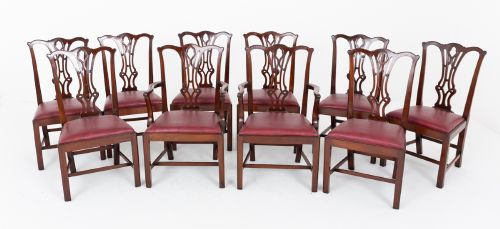
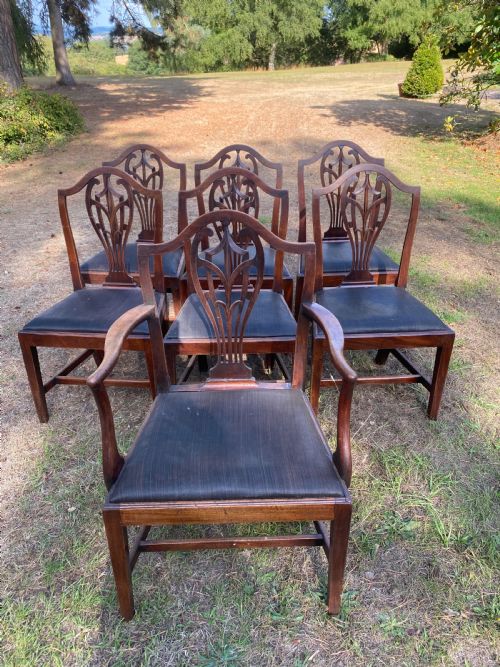
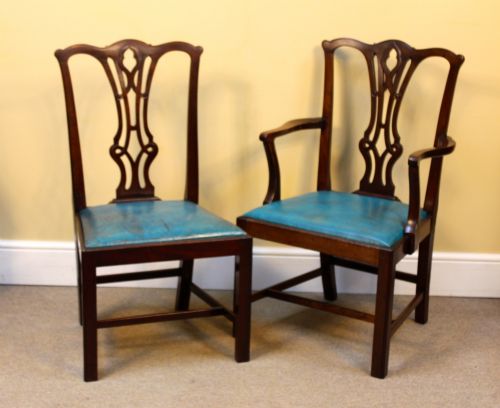
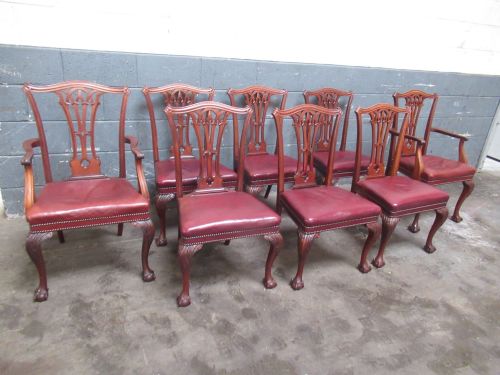
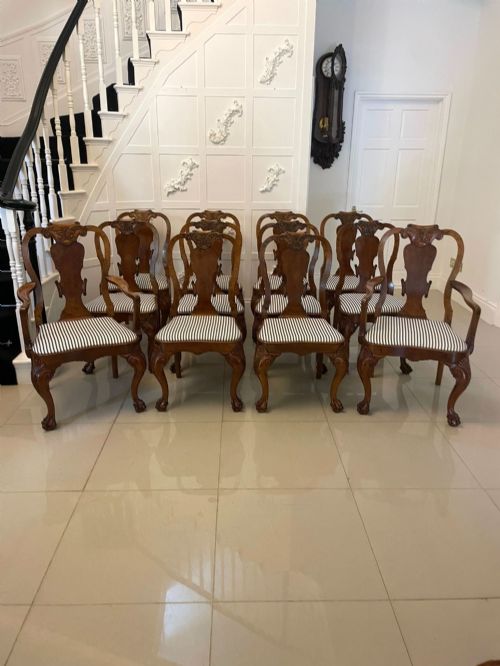
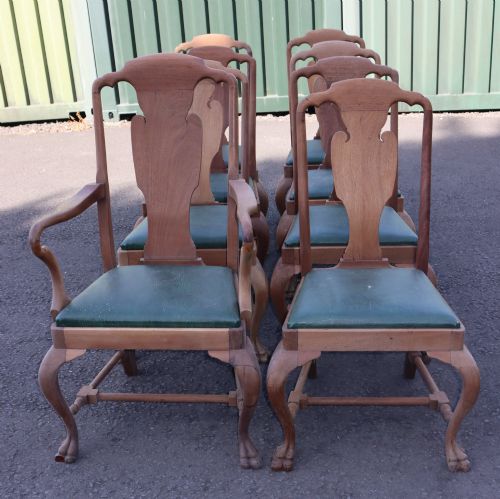
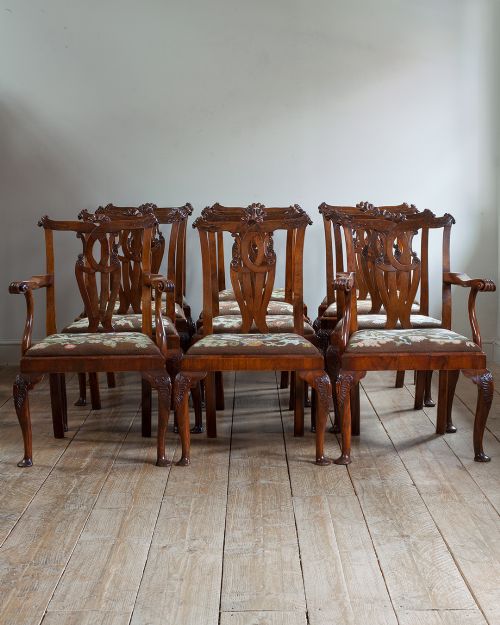
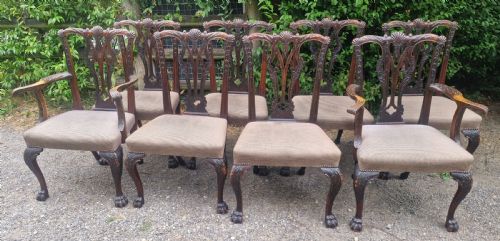
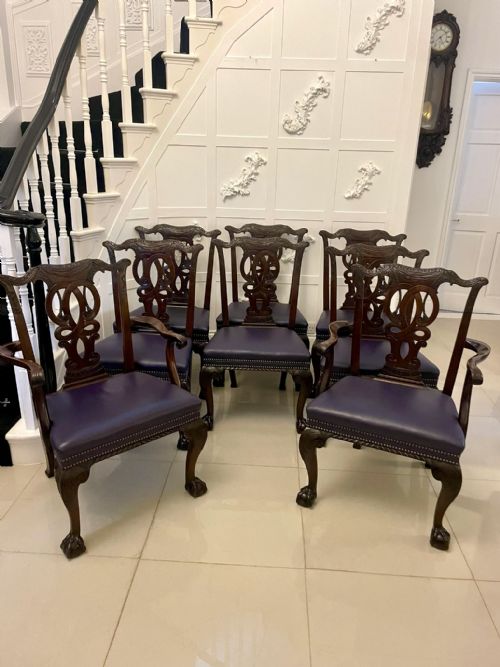
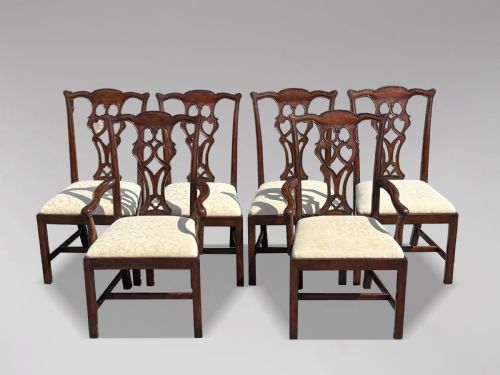
A Chippendale carver and side seating arrangement provides formal seating around a dining table, combining open armchairs for the heads of the table with side chairs for the sides. The pieces seen here span from the eighteenth century through to the nineteenth and twentieth centuries, including revival iterations from the Edwardian period and Victorian eras. These designs typically feature carved backs and sturdy frames suited to daily dining.
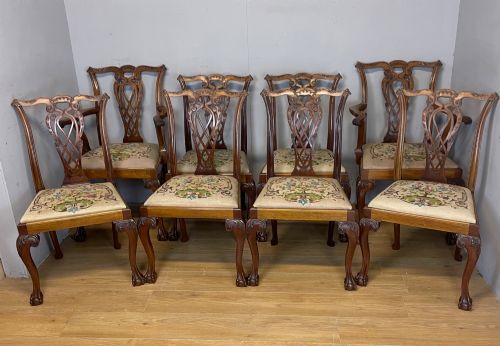
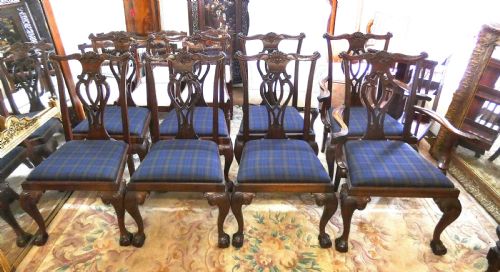
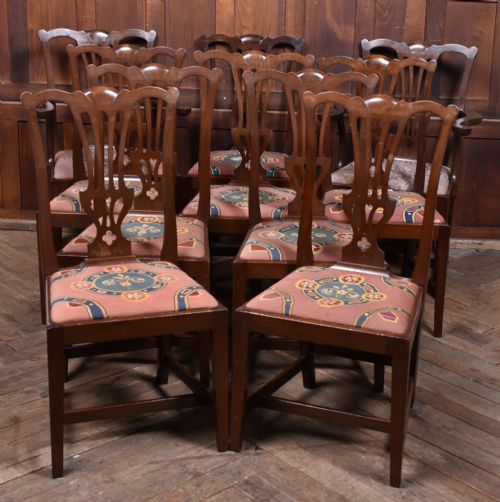
Buyers will encounter large sets alongside individual armchairs and desk chairs, predominantly constructed in mahogany or walnut. The styling draws heavily on historical Chippendale patterns, incorporating elaborate splats and detailed woodwork. Sets range from small gatherings of six up to twelve matching seats for larger dining spaces.
How they were made
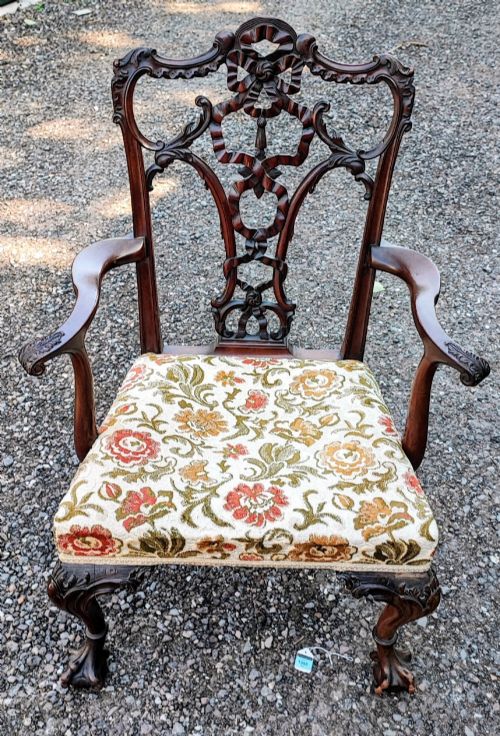
Makers shaped these chairs from dense hardwoods such as mahogany and walnut, relying on hand carving to ornament the splats, rails, and legs. Joinery methods included traditional mortise and tenon joints to ensure the frames withstood regular weight and movement over centuries.
Seats incorporated drop-in pads or fixed upholstery covered in leather, fabric, velvet, or traditional tapestry. Brass elements occasionally appeared in structural reinforcements or decorative nailheads securing the textile coverings to the wooden frames.
Listings span the eighteenth, nineteenth, and twentieth centuries, incorporating Victorian, Edwardian, and Georgian periods in mahogany and walnut.
What varies in quality
The crispness and depth of the hand carving separate standard production from superior examples, with finer pieces displaying sharply chiselled ribbon backs and detailed acanthus leaves. Timber selection also dictates the tier, where figured mahogany or burr walnut displays rich grain patterns that plain boards lack.
Structural integrity and matching uniformity across an entire set determine overall worth. Sets that retain their original upholstery fabrics, tapestry, or leather seats alongside undamaged wooden frames command greater attention from collectors.
Warings·Wheelers of Arncroach·William Walker And Sons
The Chippendale Carver and Side Glossary
- Carver
- An armchair designed for the head of a dining table, featuring supportive side arms. These match the smaller side chairs in a unified dining set.
- Side chair
- A dining chair built without arms so it fits neatly beneath the dining table edges. These form the numerical majority in most antique seating sets.
- Splat
- The vertical wooden slat positioned in the centre of the chair back. In these designs, it often displays intricate pierced or carved fretwork.
- Chippendale style
- A furniture aesthetic inspired by eighteenth-century cabinet maker designs. It utilises carved cabriole legs, ball and claw feet, and elaborate openwork back splats.
- Revival
- A nineteenth or twentieth-century manufacturing movement that recreated earlier historical aesthetics. Pieces from this era copy the proportions and carving motifs of Georgian originals.
Chippendale Carver and Side: Frequently Asked Questions
What is a carver chair?
A carver is an armchair traditionally placed at the head of a dining table. It shares the design language and timber of the surrounding side chairs.
These armchairs provide added comfort and presence while maintaining visual harmony with the rest of the dining set.
How do I date these chairs?
Dating relies on timber choice, construction techniques, and the distinct characteristics of the carving. Eighteenth-century models show period-specific hand tools and joinery, whereas revival pieces from the Victorian and Edwardian eras use machine assistance.
Comparing the decorative motifs against known style timelines helps narrow the decade of manufacture.
Are these chairs suitable for daily use?
Hardwood frames and sturdy mortise joints make these chairs robust enough for regular dining. Walnut and mahogany provide exceptional durability.
Upholstered seats may require periodic restoration or reupholstering to maintain support for everyday seating.
What distinguishes revival pieces?
Revival items date from the nineteenth and twentieth centuries but faithfully copy earlier eighteenth-century forms. They utilise period timbers and traditional carving methods to recreate historic aesthetics.
Experts identify them through secondary wood usage, saw marks, and wear patterns consistent with later manufacturing periods.