


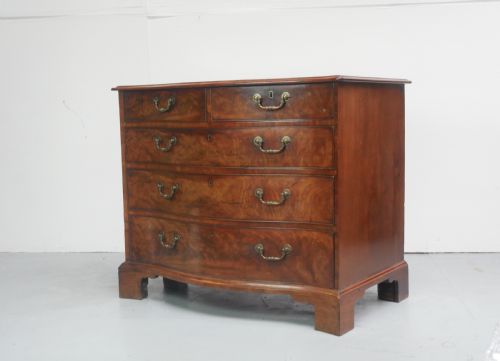
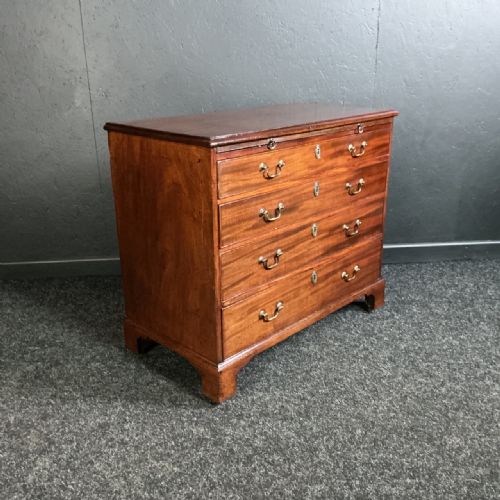

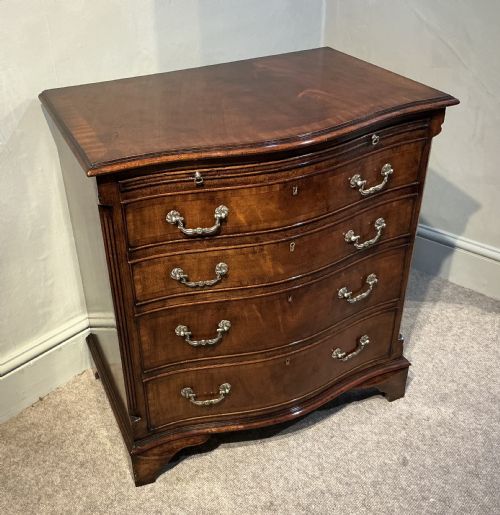


Chippendale Bracket Foot Chest
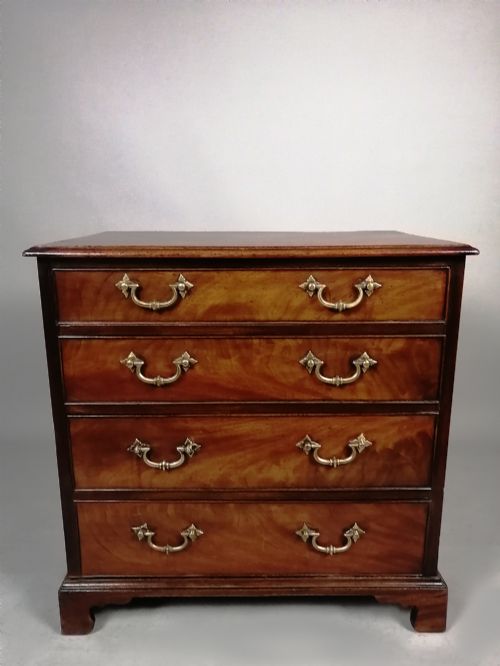
A chippendale bracket foot chest brings together solid mahogany timber and sturdy architectural supports, giving any room a grounded, enduring presence.
Chippendale Bracket Foot Chest
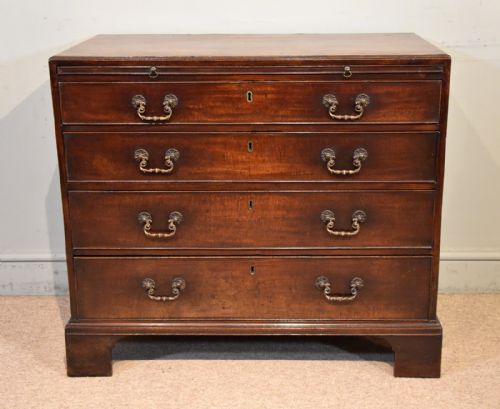
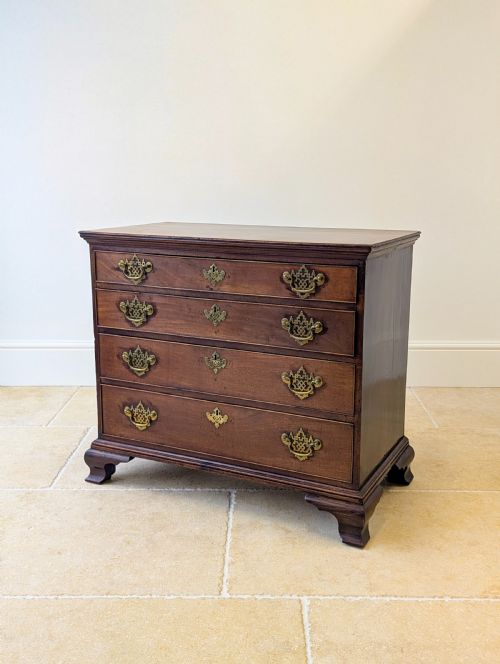
A chippendale bracket foot chest is a traditional form of storage furniture, most frequently encountered in eighteenth-century Georgian mahogany designs.
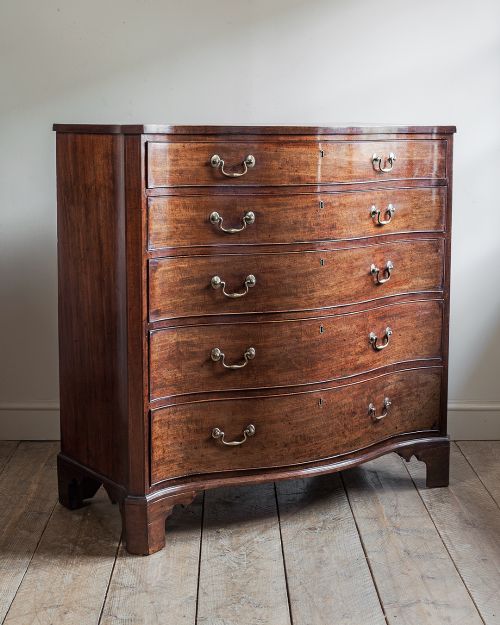
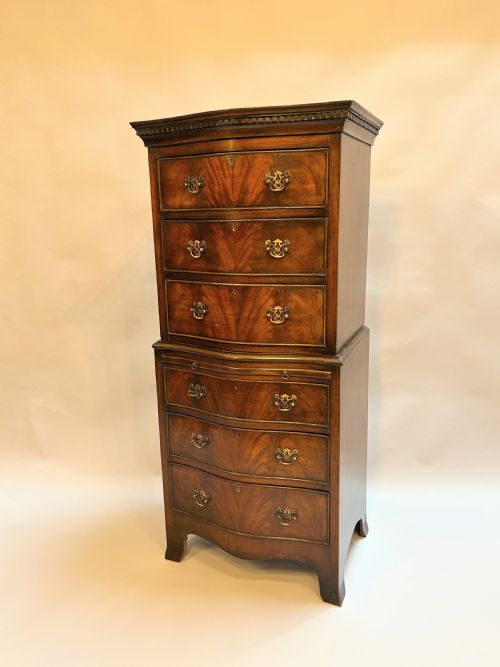
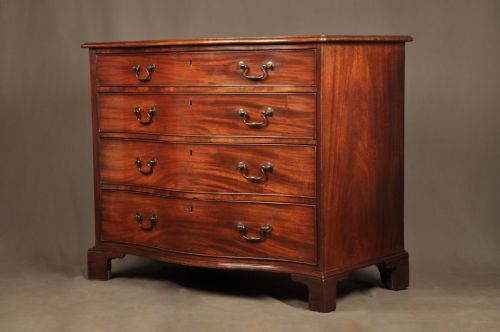
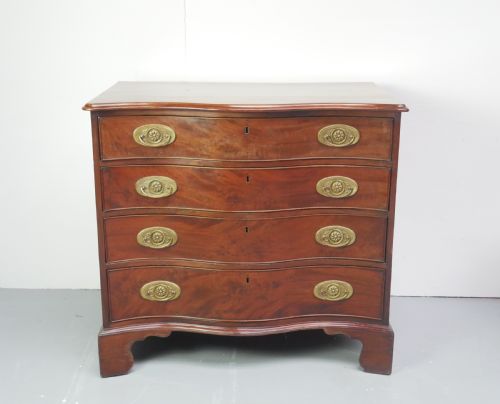
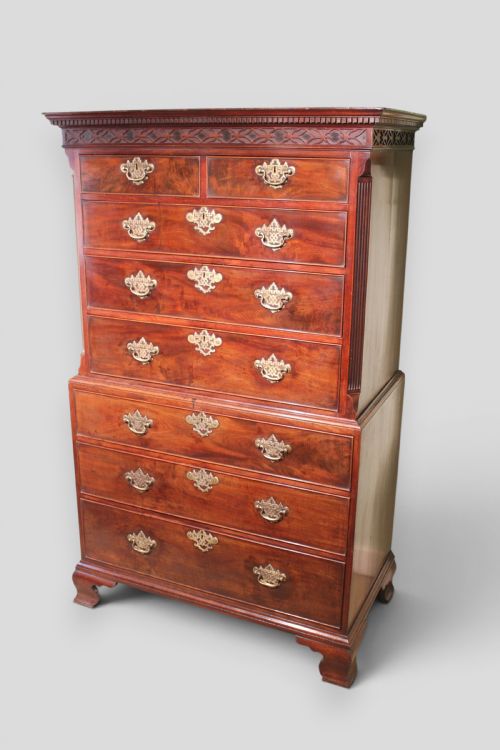
The pieces listed here include straightforward chests of drawers, taller chest on chest configurations, and serpentine fronts spanning the Georgian period and later revival decades.
Buyers seeking this phrase typically encounter rectilinear or serpentine carcases raised on simple or shaped corner feet, constructed primarily from timber during the seventeen-hundreds.
Assessing Quality and Execution
Superior examples display crispness in timber selection, particularly where figured Cuban mahogany grain meets precise edge profiling and bracket foot shaping.
The refinement of internal construction, drawer linings, and the retention of original brass fittings distinguish high-end period pieces from later revival alternatives.
Some eighteenth-century drawers still hold the faint, sweet scent of cedar linings mixed with centuries of old beeswax.
Giles Grendey·William Gomm
The Chippendale Bracket Foot Chest Glossary
- Serpentine
- A front profile curving outward in the centre and inward at the sides, demanding high joinery skill. This shape creates a fluid movement across the drawer fronts.
- Bracket foot
- A simple, corner-supporting foot formed by two pieces mitred at the corner, typical of eighteenth-century cabinet work. It provides a stable base without heavy bulk.
- Brushing slide
- A pull-out shelf located above the top drawer, historically used for folding clothes or writing. It sits flush within the carcase moulding when closed.
- Tallboy
- A tall chest of drawers built in two sections, placing a smaller chest on top of a deeper base chest. It maximises vertical storage space in a bedroom.
- Caddy top
- A raised, moulded top resembling the lid of a tea caddy, seen on mid-eighteenth-century pieces. This decorative edge treatment adds depth to the upper surface.
Chippendale Bracket Foot Chest: Frequently Asked Questions
What is a bracket foot?
A bracket foot is a corner support formed from two pieces of timber joined at a mitre, shaped to lift the carcase slightly off the floor.
This architectural foot style provides clean lines that complement the proportions of Georgian chests without overwhelming the design.
How do I spot a serpentine front?
A serpentine front curves outward in the middle section and sweeps inward toward each front corner in a continuous wave.
This undulating shape requires precise woodworking and was favoured by cabinet makers to give heavy mahogany chests a lighter appearance.
What is a brushing slide?
A brushing slide is a pull-out wooden board integrated just below the top surface, functioning as an auxiliary shelf.
Owners historically used these slides for dusting garments or writing short notes before drawers were opened fully.
How do I tell an 18th century piece from a revival?
Eighteenth-century pieces show internal construction methods, timber ageing, and hand-cut joinery consistent with the period of manufacture.
Revival pieces from later decades often utilise uniform secondary woods and modern machining tolerances while copying earlier styles.
Where should I place a tallboy?
A tallboy requires a wall space with sufficient vertical clearance to accommodate its stacked two-section carcase safely.
Because these pieces are tall and relatively narrow, securing them to a wall prevents tipping in rooms with heavy traffic.