



Chinoiserie Storage
Chinoiserie storage brings together lacquer, gilt and exotic narrative scenes to house belongings in rooms that need a focal point of decorative history.
Chinoiserie Storage
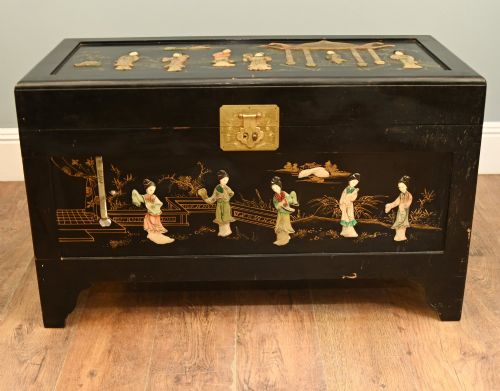
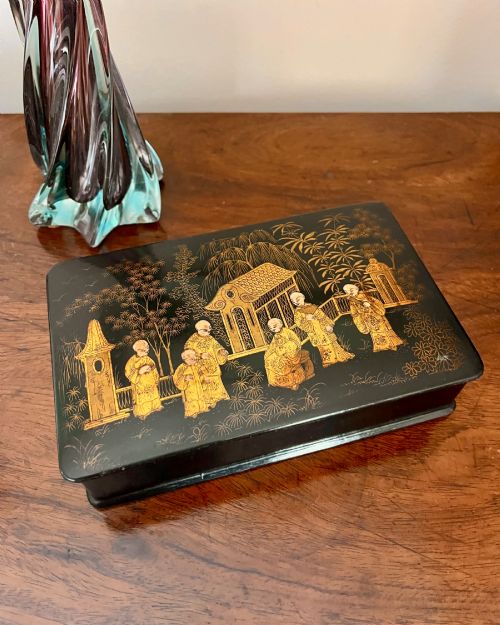
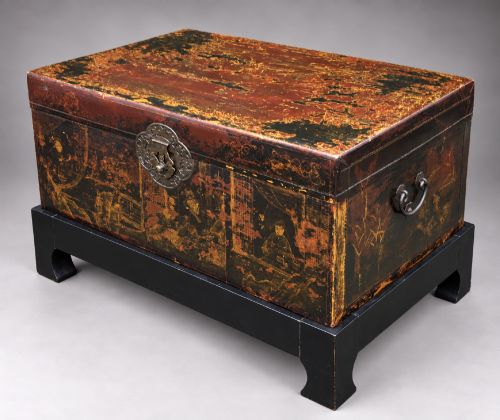
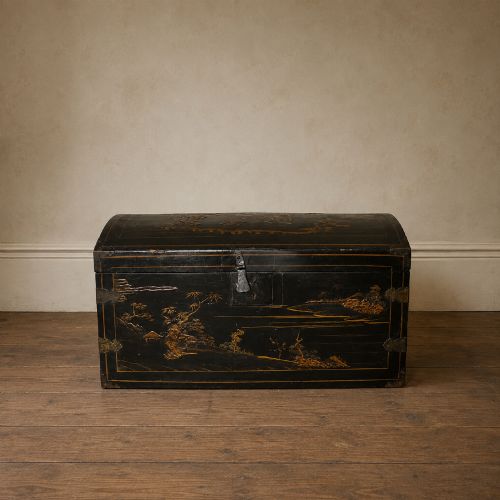
Chinoiserie storage encompasses cabinets, side cabinets, chests, coffers, trunks and tea caddies built across the eighteenth, nineteenth and early twentieth centuries. Pieces range from large marriage cabinets and blanket boxes on stands down to small tabletop tea containers.
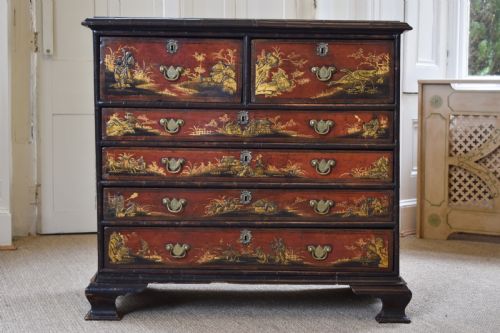
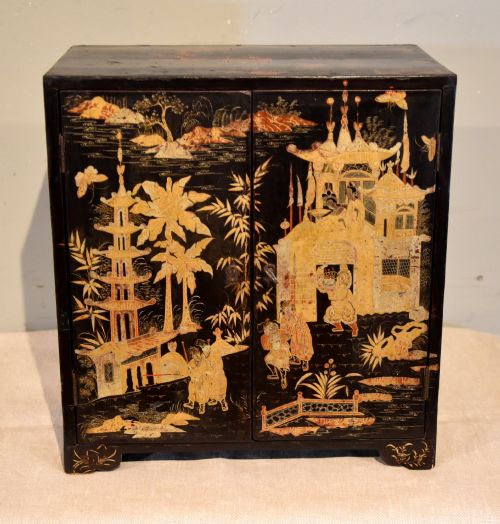
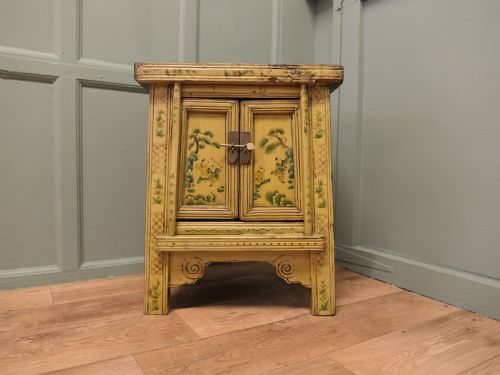
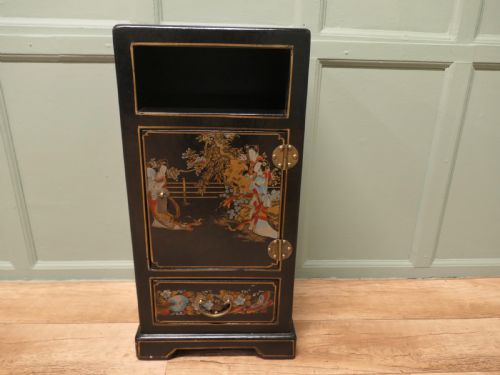
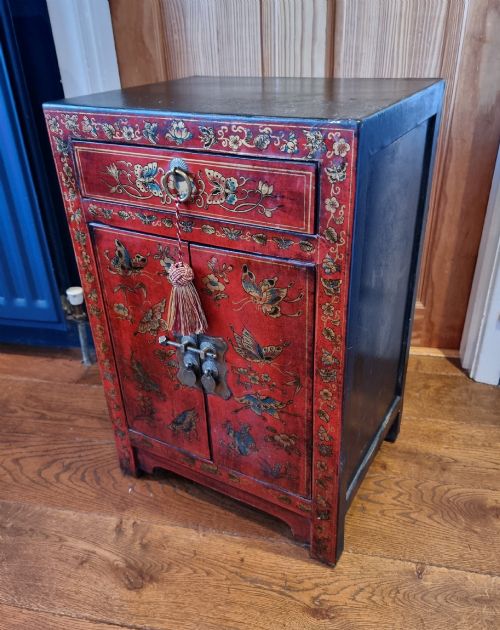
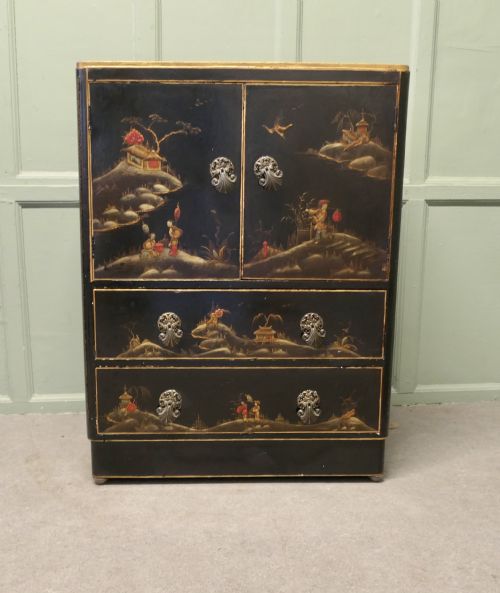
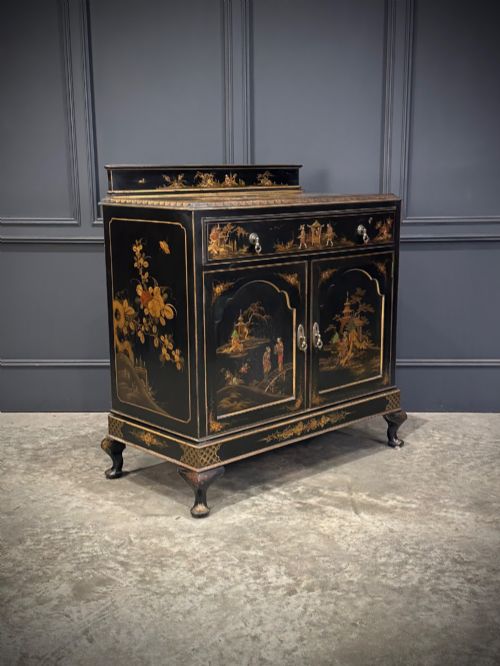
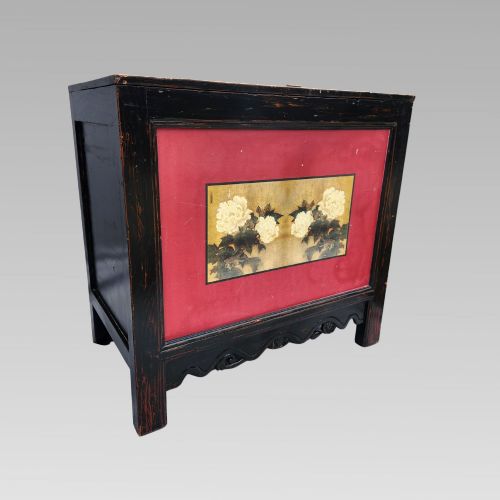
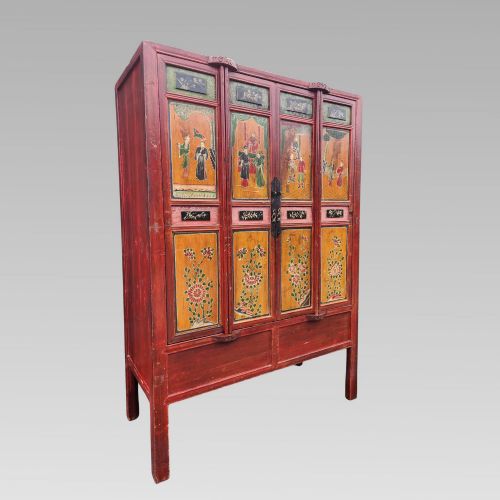
The version most commonly met on this page is the lacquered wooden cupboard or cabinet, finished in red or black and decorated with traditional Chinese or European Japanned motifs. These items served practical domestic storage needs while introducing vibrant colour and narrative landscape painting to domestic interiors.
Materials and Construction
Construction relies primarily on wood, sometimes camphor or other native timbers, prepared as panels for heavy marriage chests, blanket boxes and tall side cabinets. Metal fittings such as brass hinges and locks provide structural reinforcement while contributing to the visual contrast against dark or brightly painted surfaces.
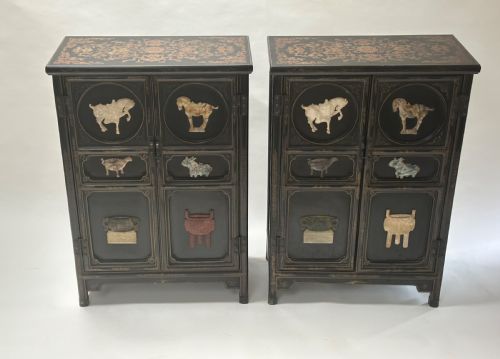
Surfaces receive layers of lacquer, often finished with gold leaf or gilt ornamentation depicting pagodas, flora, fauna and figures. Toleware items employ painted metal construction, while specific examples incorporate soapstone details or penwork decoration.
Chinoiserie Storage Retail Price Guide 2026
Typical asking prices for chinoiserie storage among the pieces listed under this phrase on Sellingantiques today, from the lower quarter to the upper quarter. They describe what is for sale here now, not the wider market.
Several cupboards boldly defy quiet decor with brilliant red lacquer, ensuring your linens reside inside a vibrant architectural fantasy.
Craftsmanship and Finish
Quality separates through the depth and execution of the surface decoration, distinguishing hand-painted detail and meticulous gold leaf application from simpler printed or repetitive motifs. The preservation of the original lacquer surface, free from unsympathetic overpainting, dictates the desirability of an antique.
Herend
The Chinoiserie Storage Glossary
- Chinoiserie
- European decorative style reflecting Chinese artistic influences, popular across several centuries. It manifests in painted landscapes, figures and decorative motifs applied to furniture and objects.
- Japanned
- European imitation of East Asian lacquerwork, created by building up layers of varnish and applying metallic dust or paint. This technique appears frequently on eighteenth and nineteenth-century chests and cabinets.
- Coffer
- Large heavy box traditionally used for storing valuables or linens, often fitted with a hinged lid. Early examples frequently sit upon raised wooden stands.
- Toleware
- Enamelled or painted metalware used for domestic containers such as tea canisters and boxes. It offers a durable surface for colourful decorative painting.
- Tea Caddy
- Small box or jar designed to hold loose tea leaves, often featuring internal compartments or lids. Materials range from wood and lacquer to fine ceramics.
Chinoiserie Storage: Frequently Asked Questions
What is chinoiserie storage?
Chinoiserie storage refers to antique furniture and containers decorated with European interpretations of East Asian artistic traditions. These items combine practical containment with decorative surface narratives.
Cabinets, coffers, trunks and tea caddies form the primary categories available, spanning several centuries of craftsmanship.
How were lacquer cabinets used?
Large cabinets and cupboards housed clothing, linens or household goods in principal rooms. Their decorative surfaces meant they functioned as display pieces as much as utility items.
Smaller trunks and tea caddies secured valuables and perishable commodities like tea leaves within domestic spaces.
How do I identify a 19th-century piece?
Nineteenth-century items often display characteristic black or red lacquer grounds with gilt or painted figural scenes. Construction methods utilise period joinery appropriate to the specific regional origin.
Hardware details and underlying wood types help confirm the manufacturing era when combined with stylistic evidence.
Where does toleware fit in?
Toleware storage consists of painted metal containers produced in sets or individual units for domestic utility. These pieces bring similar decorative colour schemes to wooden lacquerware.
They offer an alternative medium for floral and pagoda motifs within the broader category.