

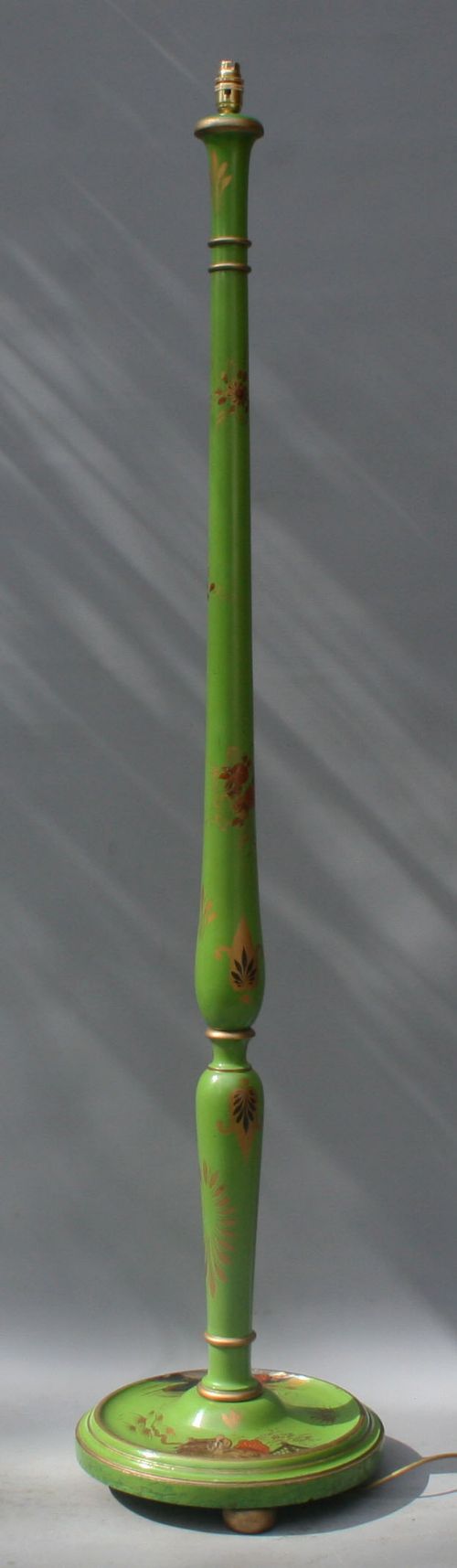


Chinoiserie Lamp Base
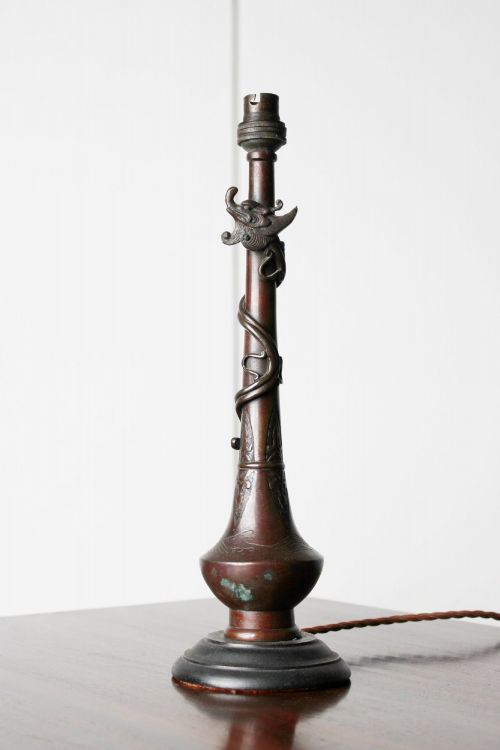
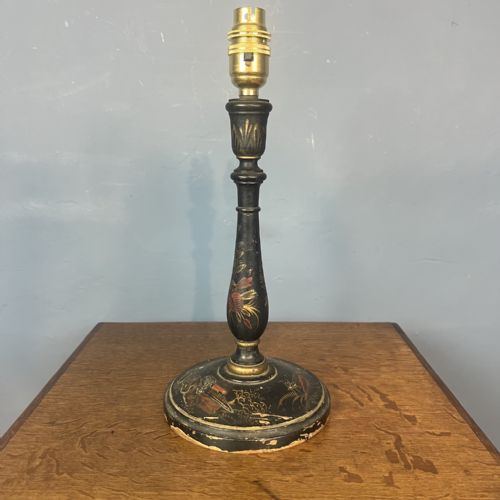
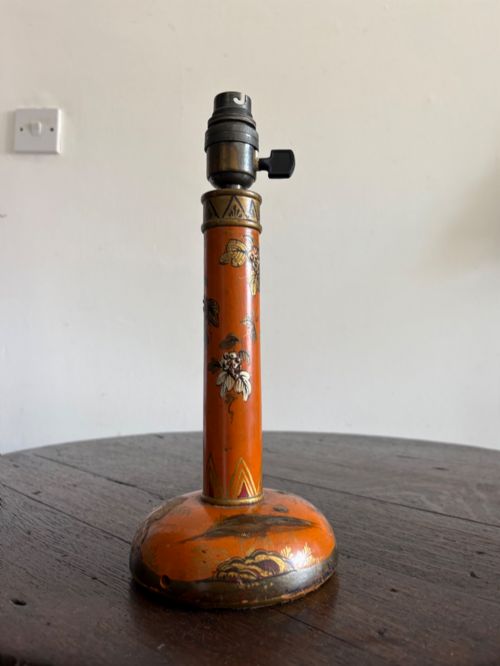
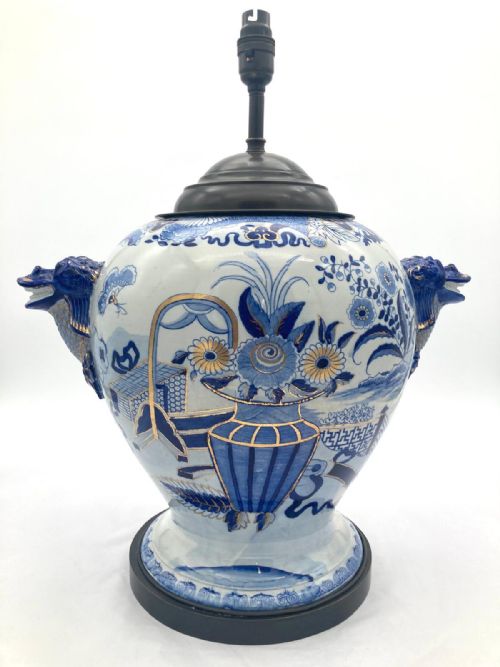
A chinoiserie lamp base brings decorative lacquer, painted porcelain and brass into a room, offering rich colour and pattern.
Chinoiserie Lamp Base
When buyers search for a chinoiserie lamp base, they encounter converted vessels, traditional ginger jars and painted standards that merge historic European taste with East Asian motifs. These pieces span the eighteenth century through the Edwardian period and the early decades of the twentieth century, reflecting varied interpretations of Chinese and Japanese design.
The selections on this page appear as table lamps and floor lamps, alongside wine tables and converted vases. Ceramic vessels form the largest share, particularly blue and white porcelain, famille rose, famille verte and Delftware.
Wooden items present lacquered finishes and carved root wood, while brass and ormolu mounts frequently secure the bases and support the electrical fittings.
Materials and Manufacture
Potters and artisans formed these bodies from porcelain, ironstone, Paris porcelain and earthenware, applying hand-painted glazes in blue, green, pink and orange palettes. Metalworkers shaped pressed brass, bronze and ormolu to mount the ceramic vessels and construct standard lamp frames.
Woodworkers carved root wood and turned lacquered timber for bases and wine tables, applying hand-painted chinoiserie decoration over the surfaces. Silk and fabric shades often complete the construction, paired with handmade elements and gilt metal details.
Materials span porcelain, brass, wood, ceramic, silk, lacquer and ormolu mounts.
Craftsmanship and Proportion
The refinement of hand-painted detail on porcelain and lacquer distinguishes superior examples, alongside the crispness of casting in brass and ormolu mounts. Finer pieces demonstrate careful integration between the historic vessel and its lamp conversion, maintaining balanced proportions.
The integrity of the original material, whether crackleware glaze or carved root wood, dictates the character of the object. Skill in applying gilding and mounting hardware without compromising the underlying ceramic or timber defines the upper tier of these works.
The Chinoiserie Lamp Base Glossary
- Famille Rose
- A palette of opaque enamels dominated by pink, introduced to Chinese porcelain during the Qing dynasty. This colouring allows for subtle shading on floral and figural motifs.
- Famille Verte
- A porcelain enamel scheme centred on vibrant green tones, frequently seen on pieces from the nineteenth century. It often incorporates iron red, yellow and blue alongside the dominant green.
- Cloisonné
- A metalwork technique where thin wire partitions are soldered to a base to create cells, which are then filled with coloured enamel paste and fired. These vessels are subsequently converted into lamps.
- Ormolu
- Gilt bronze mounts applied to furniture and porcelain bases, providing decorative trim and structural support. This technique imparts a metallic lustre that complements painted ceramic designs.
- Crackleware
- A type of ceramic glaze characterised by a network of fine cracks intentionally formed during the cooling process. This finish appears on nineteenth-century vases adapted for lighting.
Chinoiserie Lamp Base: Frequently Asked Questions
How do I clean a lacquer lamp base?
Dust the lacquered wooden surface gently with a soft, dry cloth to prevent scratching the hand-painted decoration.
Avoid liquid cleaners, moisture and direct sunlight, as these can damage the historic finish over time.
Are these lamp bases rewired?
Many examples have been updated with modern electrical wiring to suit contemporary domestic use while retaining their historic bodies.
Buyers should check individual listings to confirm the current wiring status and compatibility with standard shades.
What is the difference between famille rose and famille verte?
Famille rose relies on an opaque pink enamel derived from colloidal gold, allowing for delicate pastel gradations.
Famille verte uses transparent green enamels as the primary hue, producing a brighter and more contrasting visual effect.
Can I use standard lamp shades with these bases?
Most bases accept standard fittings, though the scale and weight of the ceramic or brass body dictate the appropriate shade size.
Handmade silk or fabric shades often accompany these pieces to match the proportions of the vase or standard lamp.