
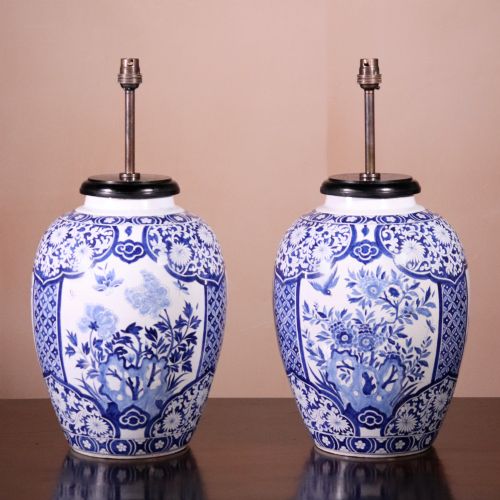


Chinoiserie Ginger Jar Lamp
A chinoiserie ginger jar lamp brings hand-painted porcelain and centuries of decorative tradition to a room.
Chinoiserie Ginger Jar Lamp
A chinoiserie ginger jar lamp repurposes ceramic vessels into functional lighting, combining traditional forms with electrical fittings. Buyers searching for a chinoiserie ginger jar lamp encounter ceramic bodies shaped as jars or vases, often fitted with brass, wood, or ormolu mounts.
The pieces listed span the eighteenth, nineteenth, and early twentieth centuries, drawing on Chinese styles and European interpretations such as French chinoiserie and Georgian designs. Blue and white porcelain sits alongside famille verte, famille rose, and powder blue colourways.
Most examples function as table lamps, pairing ceramic bodies with fabric shades. Some items retain their original lids or feature custom mounts that elevate the overall height and stability of the piece.
How they were made
The foundation of each piece is porcelain or tin-glazed earthenware, thrown and fired before receiving detailed hand-painted decoration in cobalt blue, polychrome enamels, or gold leaf. Makers applied intricate motifs ranging from floral sprays to figural scenes across the curved surfaces.
Metalwork played a structural and decorative role, with brass and ormolu mounts securing the ceramic bodies to bases and housing the electrical wiring. Hardwood components and fabric elements completed the construction of these table lamps.
Some jars started life storing spices before finding a second career as evening reading lights.
What varies in quality
Quality rests in the crispness of the hand-painting and the depth of the porcelain glaze, whether in blue and white, famille rose, or famille verte palettes. Superior pieces display controlled brushwork and harmonious colour saturation across the entire ceramic surface.
The integration of metal mounts also defines the tier of the piece, with finely chased ormolu and substantial brass fittings indicating superior workshop production. The balance between the ceramic jar and its mount determines the elegance of the finished lamp.
The Chinoiserie Ginger Jar Lamp Glossary
- Chinoiserie
- European decorative style reflecting Chinese artistic influences. It gained popularity during the seventeenth and eighteenth centuries and reappeared in various forms throughout the nineteenth century.
- Ormolu
- Gilded bronze used for decorative mounts and fittings. This technique involved applying a gold amalgam to bronze before heating.
- Famille Rose
- A palette of Chinese porcelain enamels dominated by opaque pink. The style developed during the Qing dynasty and spread to European makers.
- Famille Verte
- A porcelain decoration style characterised by green enamel as the predominant colour. It often incorporates vibrant reds, blues, and yellows.
- Tin-Glazed Earthenware
- Pottery covered with a white glaze containing tin oxide. This surface provided an opaque white ground for painted decoration.
Chinoiserie Ginger Jar Lamp: Frequently Asked Questions
What is a ginger jar lamp?
A ginger jar lamp is a decorative table lamp created by converting a ceramic storage jar into a lighting fixture. These pieces combine historical ceramic bodies with electrical components and fabric shades.
They serve as functional room lighting while retaining the ornamental qualities of traditional porcelain vessels.
How do I date a porcelain lamp?
Dating relies on examining the characteristics of the ceramic body, glaze colours, and painting style. Reference to periods such as the Qing dynasty or nineteenth century helps establish age.
The presence of metal mounts, such as ormolu or brass, also provides clues regarding the period of conversion and assembly.
Are these lamps rewired?
Many antique lamps undergo rewiring to meet modern electrical standards for safety. This process involves updating cords and lamp holders while preserving the historic ceramic body.
Buyers often find listings that specify recent rewiring alongside the period of the base.
Where should I place a jar lamp?
These lamps suit side tables, consoles, and desks where their height and decorative presence can anchor a room scheme. The scale of the jar dictates the appropriate surface area.
Pairing them with a suitable fabric shade ensures the light diffuses evenly while highlighting the painted patterns on the ceramic.