



Chinoiserie Accent Seating
Chinoiserie accent seating brings painted lacquer, faux bamboo, and intricate fretwork together to transform a room.
Chinoiserie Accent Seating
When buyers search for chinoiserie accent seating, they are looking for decorative chairs that incorporate motifs and finishes inspired by East Asian art. These pieces typically take the form of armchairs, side chairs, dining chairs, and hall chairs.
The versions most commonly met on this page span the eighteenth, nineteenth, and early twentieth centuries, reflecting styles from Chinese Chippendale to Regency and Victorian interpretations. Makers utilised mahogany, satinwood, hardwood, and painted finishes to achieve distinct decorative effects.
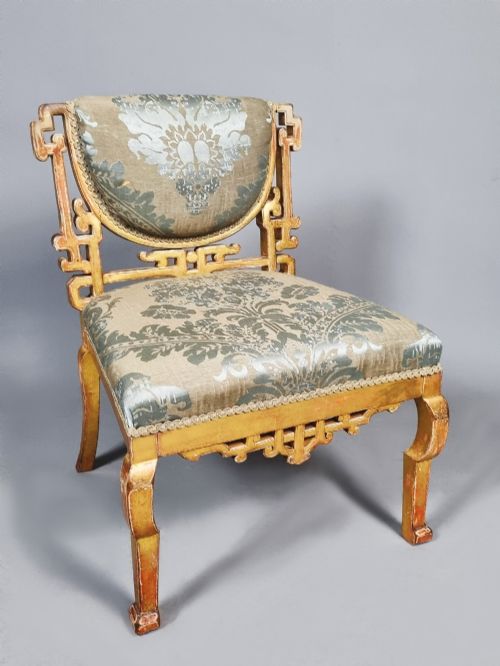
Many examples employ simulated or faux bamboo framing alongside canework seats, while others display elaborate giltwood carvings or lacquered surfaces. Such seating was designed to stand out in a drawing room or hall rather than serve as plain utilitarian furniture.
Materials and construction
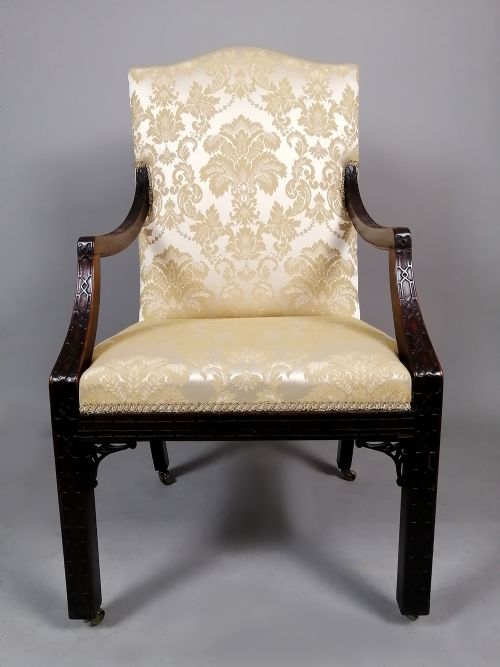
Construction relies heavily on timbers such as mahogany and satinwood, carved into intricate Chinese Chippendale fretwork or turned into simulated bamboo frames. Artisans built these chairs to combine structural stability with elaborate surface ornament.
Surfaces were frequently finished with paint, lacquer, and gilding to evoke decorative traditions associated with export wares. Canework was commonly woven into the seat frames to provide a lighter texture that contrasted with the solid timber supports.
Chinoiserie Accent Seating Retail Price Guide 2026
Typical asking prices for chinoiserie accent seating among the pieces listed under this phrase on Sellingantiques today, from the lower quarter to the upper quarter. They describe what is for sale here now, not the wider market.
Victorian craftsmen occasionally grew so fond of bamboo that even sitting down required a painted illusion of the jungle.
Judging quality and craftsmanship
The standard of a piece rests upon the crispness of the carving and the preservation of the original painted or lacquered surface. Finer examples display deeply undercut fretwork and delicate detailing that remains sharp despite age.
Later interventions and repaint layers alter the character of a chair, distinguishing simpler decorative items from works of higher craftsmanship. The integrity of the timber framing and the tightness of the joinery further indicate how well a piece was originally constructed.
Waugh and Son·George II
The Chinoiserie Accent Seating Glossary
- Chinoiserie
- European interpretations of Chinese and East Asian artistic traditions, expressed through decoration, motifs, and lacquerwork.
- Chinese Chippendale
- A mid-eighteenth-century style featuring fretwork, pagoda motifs, and column supports inspired by Chinese design.
- Canework
- Woven cane or rattan material utilised for chair seats and backs to create a light, flexible surface.
- Faux bamboo
- Wood turned and carved to imitate natural bamboo stems, popular during the Regency and Victorian periods.
- Giltwood
- Timber treated with gold leaf or gold paint to produce a brilliant metallic surface finish.
Chinoiserie Accent Seating: Frequently Asked Questions
What defines chinoiserie accent seating?
These pieces are decorative chairs featuring East Asian inspired motifs, painted lacquer, or fretwork carvings. They were designed to add visual interest to reception rooms rather than for heavy daily use.
Craftsmen drew upon Chinese Chippendale, Regency, and Victorian styles, employing materials like mahogany, satinwood, and cane. Their distinct ornament sets them apart from standard seating of the same periods.
How do I distinguish faux bamboo from real bamboo?
Makers carved and turned solid hardwoods such as mahogany or beech to replicate the segmented joints of natural bamboo. Close inspection reveals wood grain beneath the paint rather than the hollow nodes of actual plant stems.
This technique provided the exotic look of bamboo with the structural strength required for chair legs and arm supports. It became particularly popular during the Regency and late nineteenth centuries.
Where should I place these chairs at home?
Their decorative nature makes them well suited as accent pieces in hallways, drawing rooms, or bedrooms where they can be viewed in profile. They work effectively as standalone statement seats rather than part of a matched dining set.
Because many examples feature delicate paintwork or caned seats, they benefit from placement away from direct heat sources and heavy daily wear.
How do I care for lacquered and painted surfaces?
Painted and lacquered finishes require gentle dusting with a dry, soft cloth to prevent abrasion. Avoid liquid cleaners, modern polishes, or harsh chemicals that can soften or lift historic paint layers.
Maintaining stable room humidity protects both the timber substrate and any delicate surface decoration from cracking or flaking over time.