



Chinese Metal Cachepot
These Chinese metal cachepot selections bring substantial bronze, brass, and enamel plant vessels into the home.
Chinese Metal Cachepot
A Chinese metal cachepot functions as an ornamental container designed to hold potted plants within interior spaces. These items appear in forms such as jardinieres, planters, decorative bowls, and desk pots across the listings.
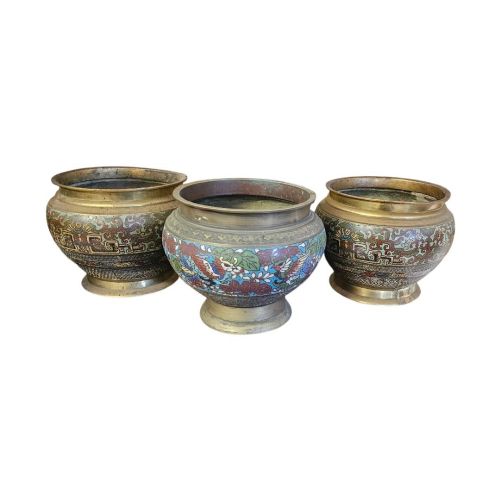
Buyers encounter examples spanning the eighteenth century through to the early twentieth century, incorporating periods like the Georgian era, the Qing Dynasty, and the Republic era. The selection includes single vessels, pairs, and sets of three.
Origins stretch from Chinese Export workshops to broader Asian Revival and Oriental aesthetic movements. Many pieces integrate stands or feature Greco Roman influences alongside traditional Chinese craftsmanship.
How these pieces were made
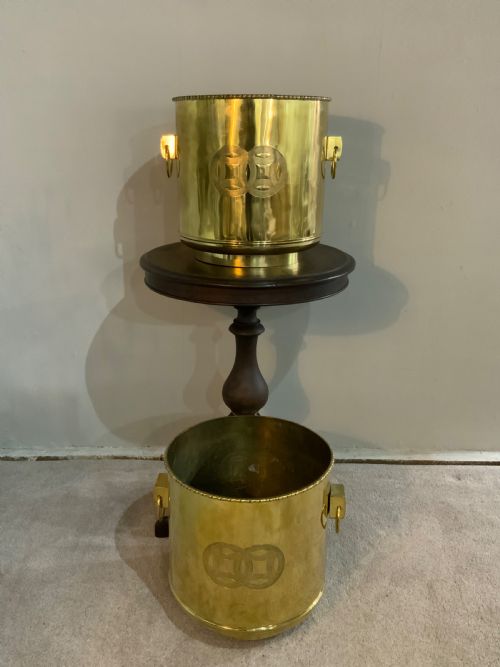
Bronze and brass serve as the primary foundational metals for these vessels, frequently polished to a smooth finish or cast into substantial decorative forms. Copper and hardwood elements additionally appear to support or complement the metal bodies.
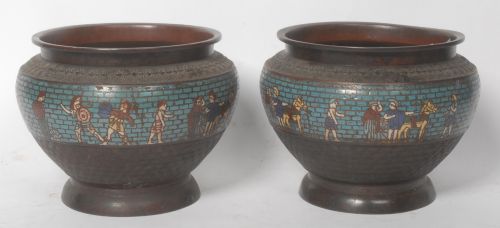
Enamel work distinguishes many surfaces, utilising intricate techniques such as champlevé and cloisonné to apply colourful decorative patterns directly onto the metal. Canton enamel specifically represents the refined painted enamel traditions seen on eighteenth-century pieces.
Chinese Metal Cachepot Retail Price Guide 2026
Typical asking prices for chinese metal cachepot among the pieces listed under this phrase on Sellingantiques today, from the lower quarter to the upper quarter. They describe what is for sale here now, not the wider market.
One notably heavy bronze and cloisonné bowl tips the scales at over a kilogram, ready to anchor your heaviest ferns.
What varies in quality
The precision and complexity of the enamel work separate standard decorative vessels from exceptional examples. Dense, multi-coloured champlevé and cloisonné patterns demand high technical skill compared to simpler polished brass surfaces.
Scale and configuration dictate desirability among collectors, with large pairs and sets of three commanding greater visual presence than isolated small desk pots. Age and period attribution also influence the character of each piece.
The Chinese Metal Cachepot Glossary
- Cachepot
- An ornamental flowerpot cover designed to hold a potted plant and catch drainage water. These vessels conceal utilitarian terracotta pots within decorative metal exteriors.
- Champlevé
- An enamelling technique where troughs or cells are carved into the metal surface and filled with vitreous enamel prior to firing. This method creates bold, raised metal outlines around coloured enamel sections.
- Cloisonné
- A decorative metalwork method utilising thin metal wires soldered to a base to form compartments filled with enamel paste. The piece is then fired and polished to a smooth finish.
- Jandiniere
- An ornamental pot or stand for holding flowers or plants, typically styled for interior display. These larger receptacles often feature substantial bronze or brass construction.
- Canton enamel
- Painted enamel ware produced in the Guangdong province of China primarily for export markets. This technique displays detailed pictorial scenes directly onto a metal ground.
Chinese Metal Cachepot: Frequently Asked Questions
What is a Chinese metal cachepot used for?
These vessels serve primarily as decorative containers to house potted plants inside the home. They conceal standard nursery pots while adding substantial metal and enamel texture to a room.
Historically, they also functioned as large decorative bowls or desk accessories depending on their scale. Today, they remain versatile focal points for interior styling.
How can I tell the period of a cachepot?
Dating relies on examining the manufacturing techniques, metal alloys, and decorative styles visible across the piece. Eighteenth-century items often feature Canton enamel work, whereas late nineteenth and early twentieth-century examples frequently utilise heavy champlevé or polished brass.
Stylistic markers such as Qing Dynasty motifs or Greco Roman export adaptations help narrow down the era of production.
Are these pieces waterproof?
Many antique metal vessels were constructed for decorative display rather than direct planting. Using an internal plastic or ceramic liner prevents water from sitting directly against historic bronze or brass.
Protecting the interior ensures the metal remains stable and prevents any corrosion of the underlying structure over time.