



Chinese Lacquer Armoire
A Chinese lacquer armoire brings deep colour and striking presence into a room, offering substantial storage disguised behind rich layers of traditional finish.
Chinese Lacquer Armoire
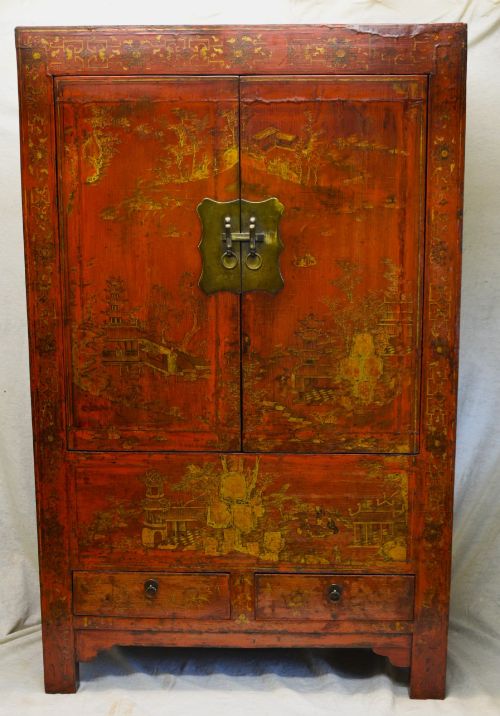
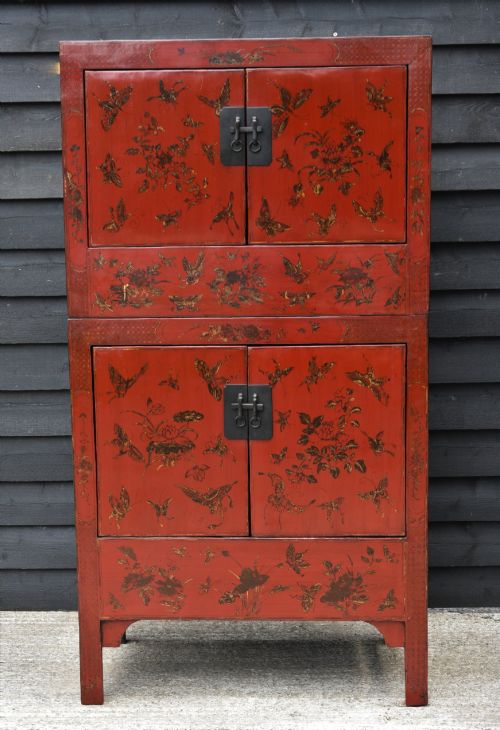
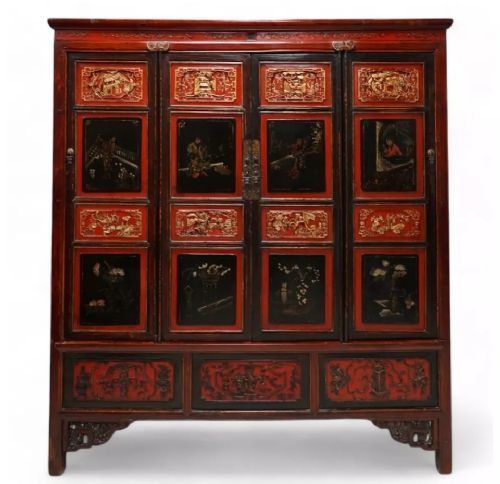
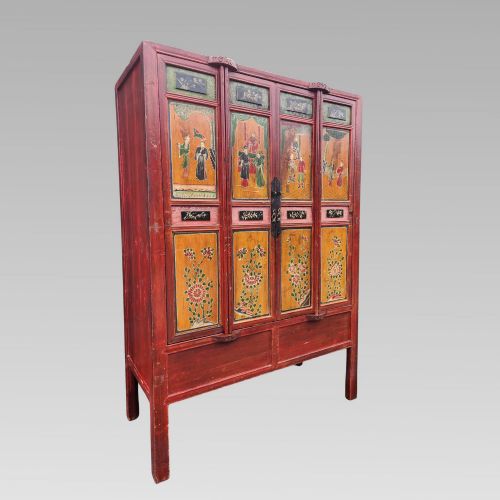
When you search for a chinese lacquer armoire, you encounter substantial storage furniture created across the nineteenth and early twentieth centuries. These pieces encompass marriage cabinets, wedding cupboards, and compound cabinets originating from Chinese provincial workshops and dynastic traditions.
The version you are most likely to meet on this page is the marriage cabinet finished in red lacquer, often featuring contrasting metalwork and substantial elm construction beneath the surface. These tall storage cupboards serve as focal points in modern interiors while retaining their historic utility.
Construction and materials
Makers built these cabinets using sturdy timber frames, predominantly selecting elm for its structural reliability and grain. Panels of wood received multiple coats of lacquer, building up a durable and lustrous surface that protected the core material.
Details emerged through the application of gold leaf and contrasting black or red pigments to create pictorial scenes and decorative borders. Blacksmiths provided robust brass and iron hardware, including distinctive circular faceplates and pin locks that secured the heavy doors.
Chinese Lacquer Armoire Retail Price Guide 2026
Typical asking prices for chinese lacquer armoire among the pieces listed under this phrase on Sellingantiques today, from the lower quarter to the upper quarter. They describe what is for sale here now, not the wider market.
Current listings feature nineteenth-century marriage cabinets constructed from elm and finished in red or black lacquer with brass hardware.
Assessing quality and craftsmanship
Quality rests heavily on the condition and depth of the lacquer surface, where layers applied with patience create a tactile warmth that thin modern coats cannot replicate. The survival of original gold leaf detailing and pictorial motifs distinguishes finer provincial work from plain utility pieces.
Structural integrity of the underlying elm framework determines how well the cabinet bears its own weight over centuries. Original blacksmith-made brass or iron hardware that remains intact adds significantly to the integrity of the piece.
The Chinese Lacquer Armoire Glossary
- Lacquer
- A durable resin finish applied in multiple layers to wood surfaces. This traditional technique creates a smooth, protective shell that deepens in character over time.
- Marriage cabinet
- A large storage cupboard traditionally presented to a bride as part of her dowry. These tall pieces typically feature two doors opening to reveal internal shelving.
- Elm
- A resilient hardwood native to Asia, chosen by cabinetmakers for its interlocking grain. This timber provides the sturdy skeleton beneath the decorative lacquer skin.
- Gold leaf
- Beat gold hammered into extremely thin sheets and applied to the lacquered surface. Artisans utilised this material to highlight key decorative scenes and borders.
- Compound cabinet
- A two-part storage form consisting of a smaller cupboard stacked securely upon a larger base. This architectural arrangement maximises vertical capacity in traditional rooms.
Chinese Lacquer Armoire: Frequently Asked Questions
What is a chinese lacquer armoire?
A chinese lacquer armoire is a tall wooden storage cabinet finished with layers of natural resin and decorative pigments. These pieces originate primarily from the nineteenth and early twentieth centuries.
They served traditionally to store garments and household textiles within the home. Today, they function as prominent storage furniture in contemporary living spaces.
How do I date a lacquer cabinet?
Dating relies on examining the construction methods of the timber frame, the wear patterns in the lacquer, and the style of the brass hardware. Pieces from the nineteenth century often display hand-forged iron or brass pins and natural distressing.
Comparing the decorative motifs to known regional styles helps narrow the period of manufacture. Provincial workshops maintained traditional methods well into the twentieth century, bridging stylistic eras.
Where were these cabinets made?
These cabinets were constructed in various Chinese provinces, reflecting local woodworking traditions and aesthetic preferences. Regional workshops adapted standard furniture forms to suit local domestic requirements.
Makers utilised readily available timber like elm, applying finishes specific to their regional guilds. This provincial diversity creates the distinct character found across different examples.
How do I care for lacquer furniture?
Maintaining lacquer requires keeping the piece away from direct sunlight and maintaining stable room humidity. Excessive dryness or moisture can compromise the stability of the wooden substrate and the finish.
Dusting gently with a soft, dry cloth preserves the surface sheen without abrasive cleaners. The durable nature of the resin means minimal intervention keeps the finish stable.