





Chinese Fretwork Table
A chinese fretwork table brings pierced geometric carving and structural lightness into a room, joining European cabinet-making with Eastern decorative traditions.
Chinese Fretwork Table
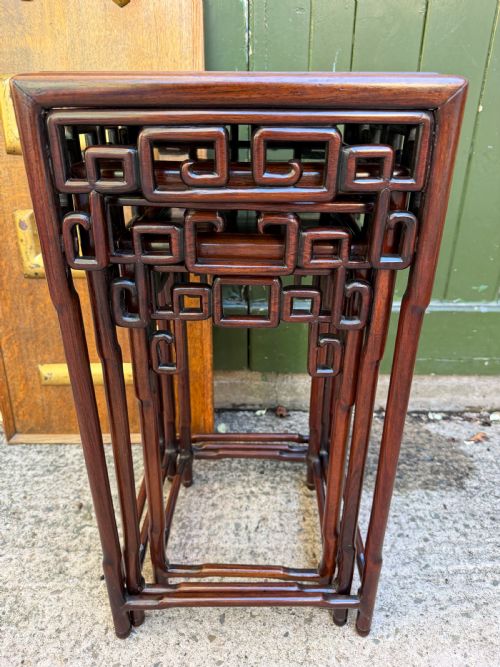
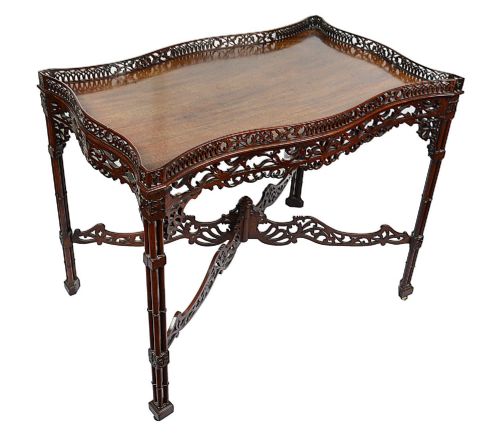
A chinese fretwork table encompasses forms ranging from side tables and console tables to desks, plant stands, altar tables, and coffee tables. These pieces emerge in styles spanning the Qing Dynasty, Chippendale, Chinese Chippendale, and Georgian periods, alongside later revival iterations.
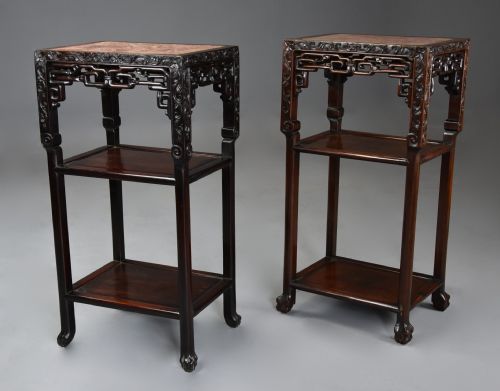
The version met most often on this page is a hardwood or mahogany table featuring openwork carving, panel tops in marble or glass, and structured geometric framing. Examples vary from freestanding pot stands and reception desks to long altar tables and nested sets.
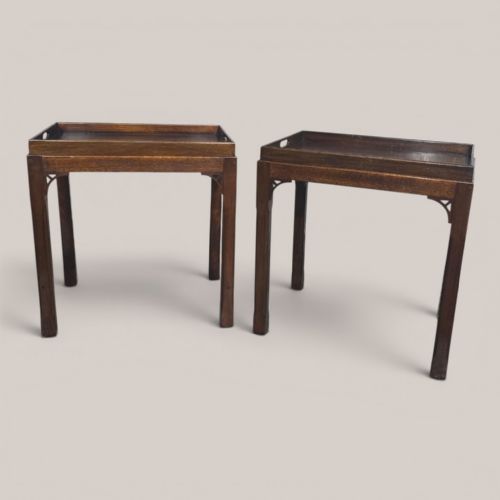
Originating across the eighteenth, nineteenth, and twentieth centuries, these tables reflect both traditional Chinese craftsmanship and European adaptations of Oriental design. The grouping includes matched pairs, writing tables, silver tables, and card tables with distinct regional and stylistic traits.
Materials and Construction
Makers construct these tables using dense timbers such as mahogany, elm, hardwood, and hongmu, often pairing the primary wood with burrwood veneers or inset panels of rouge marble, porcelain, and glass. Brass hardware occasionally appears on desks and drawers.
Joinery relies on precise framing to support intricate pierced fretwork panels and carved aprons. Artisans shape solid wood into geometric lattices, slender legs, and raised galleries without relying on modern fasteners.
Chinese Fretwork Table Retail Price Guide 2026
Typical asking prices for chinese fretwork table among the pieces listed under this phrase on Sellingantiques today, from the lower quarter to the upper quarter. They describe what is for sale here now, not the wider market.
Listings feature mahogany, hardwood, elm, and hongmu, paired with inset marble, glass, and porcelain panels across multiple centuries.
Evaluating Quality
The integrity of the inset top, whether marble, glass, or burrwood, and the tightness of the structural joints dictate the longevity and finish of the piece. Finer examples exhibit balanced proportions and seamless integration between the carved panels and the supporting legs.
Butler
The Chinese Fretwork Table Glossary
- Fretwork
- An ornamental design carved or pierced into wood in geometric or interlaced patterns. It creates a light, decorative screen effect along aprons and galleries.
- Hongmu
- A category of dense, heavy Chinese hardwoods prized for rich dark colour and stability. It provides a durable ground for intricate carving.
- Altar table
- A long, narrow ceremonial table featuring upturned ends or carved spandrels beneath the top. These pieces serve domestic display functions in Western interiors.
- Silver table
- An English furniture form designed for displaying tea or silver services, frequently adapted with Chinese Chippendale fretwork rails. It stands on slender legs with open stretchers.
- Chippendale
- A style of eighteenth-century English furniture incorporating rococo, Gothic, and Chinese motifs. It defines pieces with delicate pierced fretwork and lattice legs.
Chinese Fretwork Table: Frequently Asked Questions
What is a chinese fretwork table?
A chinese fretwork table is a wooden surface distinguished by openwork geometric carving, drawing on either Qing Dynasty traditions or European Chippendale interpretations.
These tables appear in forms such as side tables, altars, desks, and plant stands, utilising materials like mahogany, hongmu, and elm.
How do I style an altar table?
An altar table provides a long, narrow surface suited for placement against a wall in a hallway or living space. Its clean lines and carved aprons work well paired with lamps or decorative objects.
Because these tables are relatively shallow, they occupy minimal floor space while adding architectural interest to a room.
How do I tell eighteenth-century from later pieces?
Distinguishing periods involves examining timber patination, tool marks, and construction methods. Earlier pieces in mahogany or hardwood display natural wear and hand-cut joinery consistent with eighteenth-century workshop practices.
Nineteenth and twentieth-century examples often utilise machinery for repetitive fretwork patterns and exhibit different surface finishes.
What woods were used for these tables?
Makers utilised a variety of timbers depending on the origin and period of manufacture. Mahogany and elm appear frequently alongside dense Asian hardwoods such as hongmu.
Secondary materials include burrwood for veneers, alongside inset panels of rouge marble, glass, and porcelain.