



Chinese Fretwork Desk
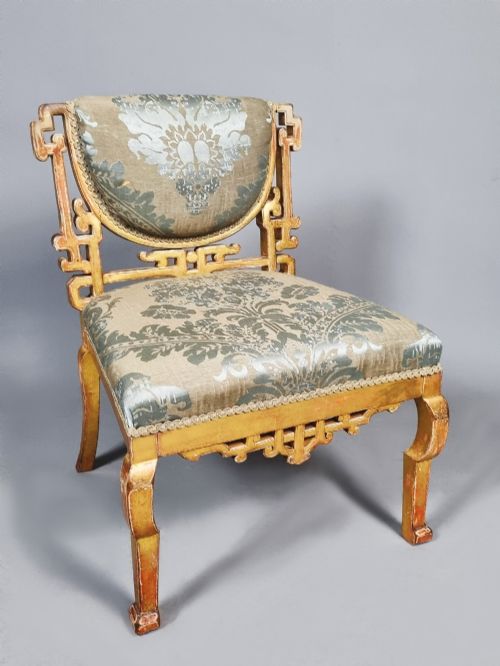
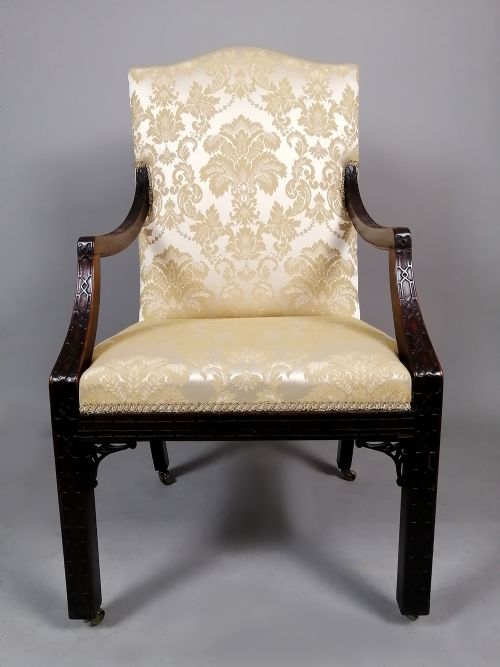
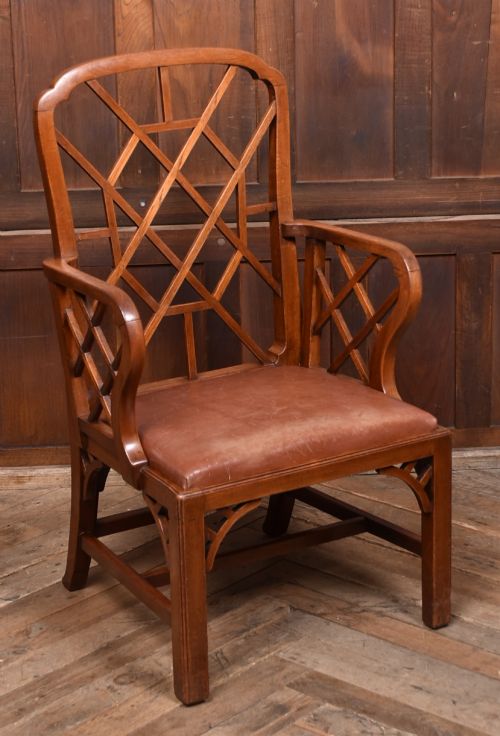
These Chinese fretwork desk examples and related tables combine structural English forms with openwork lattice motifs, bringing distinct linear geometry into a study.
Chinese Fretwork Desk
When you search for a chinese fretwork desk, you encounter pieces that merge eighteenth-century cabinet-making traditions with Asian geometric ornamentation. These items draw on styles such as Chinese Chippendale and Chippendale Revival, spanning periods from the eighteenth century through to the early twentieth century.
The desks and writing tables in this category typically utilise mahogany or other dense hardwoods, often incorporating brass hardware or leather writing surfaces. Alongside formal desks, the selections include related writing tables and occasional tables sharing the same architectural lattice vocabulary.
How they were made
Cabinet-makers constructed these forms primarily using mahogany and selected hardwoods, relying on dense grain to support intricate pierced decoration. Joinery required precise hand-cutting to form the characteristic geometric lattice patterns without compromising structural integrity.
Surface finishing involved careful polishing to highlight the timber grain, while secondary elements occasionally incorporated brass fixtures or fitted leather inserts for writing surfaces.
Chinese Fretwork Desk Retail Price Guide 2026
Typical asking prices for chinese fretwork desk among the pieces listed under this phrase on Sellingantiques today, from the lower quarter to the upper quarter. They describe what is for sale here now, not the wider market.
Some desks hide their inkwells so cleverly you might accidentally write a letter with a butter knife.
What varies in quality
The standard of a piece rests heavily on the crispness of the fretwork carving and the depth of the timber selection. Finer examples display sharp, cleanly pierced geometric openings rather than soft or rounded edges.
Proportion and structural balance also distinguish finer furniture, where the delicate lattice-work integrates securely with the main frame without appearing cumbersome or overly repaired.
Waugh and Son
The Chinese Fretwork Desk Glossary
- Fretwork
- Ornamental design created by cutting patterns through thin wood. This technique forms the signature geometric lattices seen on aprons and legs.
- Chinese Chippendale
- An eighteenth-century English revival style incorporating Asian architectural motifs. It utilises fretwork, pagoda lines, and straight legs.
- Mahogany
- A durable tropical hardwood valued for its rich reddish-brown colour and stable grain. It served as the primary material for high-quality period desks.
- Chippendale Revival
- A later nineteenth and twentieth-century movement recreating earlier eighteenth-century designs. It often mirrors the proportions and fretwork of original pieces.
Chinese Fretwork Desk: Frequently Asked Questions
What periods do these desks date from?
The pieces span from the eighteenth century through the nineteenth century and into the Edwardian era and early twentieth century. This includes both original period items and later revival interpretations.
Craftsmanship evolved across these periods, moving from eighteenth-century workshop builds to later nineteenth-century revival pieces that maintained similar geometric detailing.
What woods were used for these desks?
Mahogany and various dense hardwoods form the primary material basis for these items. These timbers provided the structural strength needed to support intricate pierced decoration.
Makers selected these woods for their ability to hold fine carved edges without splintering along the grain during the fret-cutting process.
How do I style a Chinese fretwork desk?
These desks suit traditional studies, libraries, or contemporary rooms needing a focal point with linear architectural detail. Their open lattice design keeps visual weight light in smaller spaces.
Pair the desk with simple seating to let the geometric fretwork on the legs and aprons remain the primary visual feature of the room.
Are these desks original or revival pieces?
The selection includes items from the mid-eighteenth century alongside nineteenth-century pieces and Edwardian Chippendale Revival examples. Each listing indicates its specific period of manufacture.
Examining the timber ageing, construction joints, and hardware helps distinguish an original eighteenth-century desk from a later revival piece.