

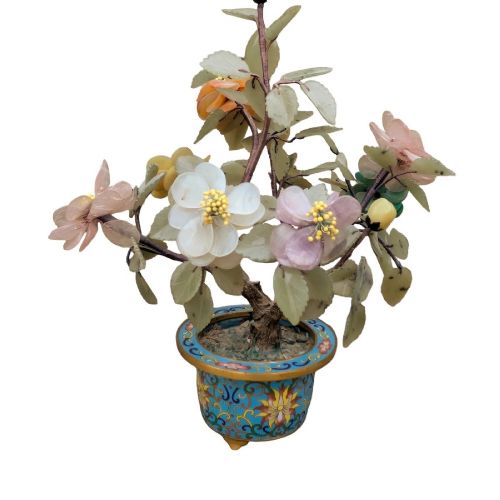


Chinese Floral Planter
A Chinese floral planter brings centuries of craftsmanship and botanical display together, offering an authentic piece of history for the home.
Chinese Floral Planter
When you search for a Chinese floral planter, you encounter vessels designed to hold plants, miniature trees, and floral arrangements. These objects encompass jardiniere forms, plant stands, and decorative bowls intended for interior display.
The pieces on this page span the nineteenth and early twentieth centuries, alongside earlier Georgian iterations. You find rectangular, hexagonal, and lobbed forms created in varied styles such as Qing Dynasty, Chinoiserie, and Chinese Export.
Vessels range from small desk pots to large bronze bowls and tall mahogany vase stands. Many examples incorporate specialised elements like drip trays and four-character seal marks.
How they were made
Metalworking techniques form a significant part of these pieces, utilising bronze, brass, and applied cloisonne enamel to create intricate surface patterns. Artisans also worked with hardstones, jade, and quartz, often carving them to resemble flowering bonsai trees.
Ceramic pieces utilise porcelain painted with enamel, exemplified by famille rose decoration featuring peonies and songbirds. Woodworking appears in carved mahogany stands designed to elevate the planters.
Chinese Floral Planter Retail Price Guide 2026
Typical asking prices for chinese floral planter among the pieces listed under this phrase on Sellingantiques today, from the lower quarter to the upper quarter. They describe what is for sale here now, not the wider market.
Listings feature items spanning the Georgian era through to the early twentieth century, incorporating porcelain, bronze, brass, and cloisonne enamel.
What varies in quality
Quality rests in the precision of the metalwork, the clarity of the enamel colours, and the complexity of the carved hardstone elements. Pieces featuring detailed pictorial motifs and distinct seal marks demonstrate higher artisan skill.
The choice of material alters the character of the object, from heavy cast bronze bowls to delicate porcelain and intricately assembled jade bonsai foliage. Structural integrity in wooden stands and fitted drip trays further separates standard utility items from finer decorative works.
The Chinese Floral Planter Glossary
- Cloisonne
- Enamelwork created by soldering wire compartments onto a metal base before firing. The technique produces vivid coloured patterns outlined in thin metal.
- Famille rose
- A palette of opaque enamels dominated by pink, introduced to Chinese porcelain during the Qing dynasty. It allowed for soft tonal gradations in floral and bird motifs.
- Hardstone
- A semi-precious stone such as jade or quartz used in carving decorative objects. Artisans shaped these materials into naturalistic petals and leaves for bonsai displays.
- Jardiniere
- An ornamental pot or stand designed to hold a plant or flower arrangement. These vessels often sit on dedicated tables or stands.
- Qing Dynasty
- The final imperial dynasty of China, lasting from the seventeenth to the early twentieth century. Objects from this period often display traditional motifs and imperial marks.
Chinese Floral Planter: Frequently Asked Questions
What is a chinese floral planter used for?
These vessels were originally created to display live plants, small trees, and floral arrangements within domestic interiors. They served both practical horticultural functions and decorative display roles in traditional spaces.
Today, collectors use them to house indoor plants or display them as standalone sculptural objects. Their varied forms mean they adapt easily to modern tabletop and surface placement.
How do i identify qing dynasty pieces?
Identification relies on examining construction methods, decorative styles, and any present marks. Qing pieces often feature specific enamel palettes, cast bronze forms, or carved hardstones characteristic of the era.
Look for four-character seal marks on the base of porcelain pieces and traditional motifs like peonies. Comparing the weight and material quality against known period examples helps confirm origin.
How should i clean a bronze jardiniere?
Bronze planters require gentle maintenance to preserve their historic metal surfaces and patination. Dusting with a soft, dry cloth prevents the buildup of debris without harming the finish.
Avoid using harsh chemical polishes or abrasive cleaners, which can strip the natural aged patina. If moisture is used for live plants inside, ensure a proper liner protects the interior metal.
What materials are common in these planters?
The listings feature a diverse range of materials including bronze, brass, porcelain, and carved hardstones. Cloisonne enamel is frequently applied to metal bases to create colourful surface patterns.
Complementary pieces include mahogany for stands and quartz or jade for artificial bonsai foliage. Each material requires different care approaches depending on whether the piece is ceramic or metal.