




Chinese Floral Carving
Chinese floral carving brings together heavy hardwood, smooth marble, and intricate lacquer in pieces designed to hold plants, lamps, and wine.
Chinese Floral Carving
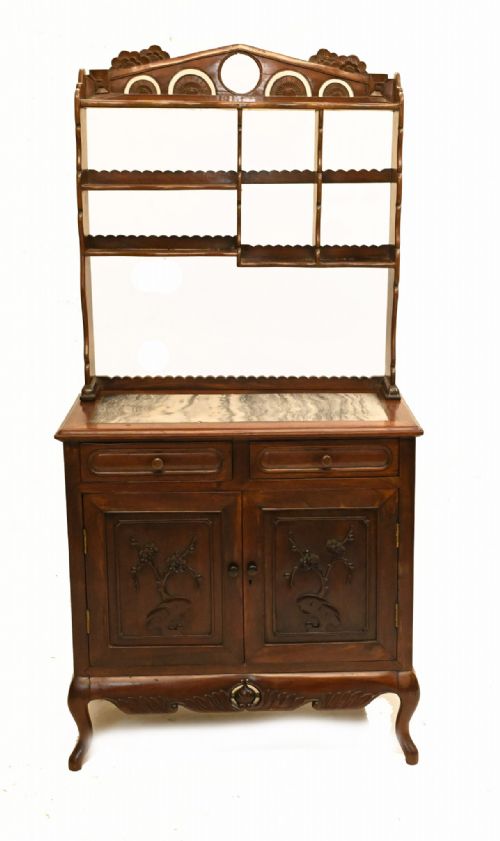
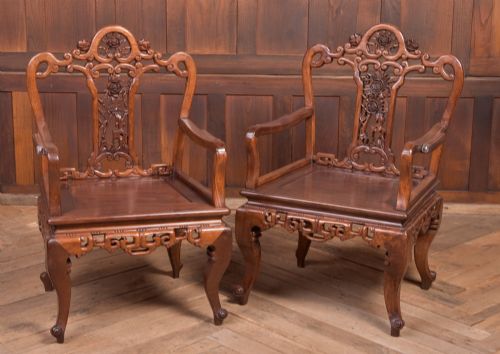
When you search for Chinese floral carving, you encounter a distinct group of furniture and decorative objects rooted in the nineteenth and early twentieth centuries. These items draw on Qing Dynasty and Chinoiserie traditions, ranging from heavy hardwood plant stands and marble-topped vase pedestals to low coffee tables and intricately carved side cabinets.
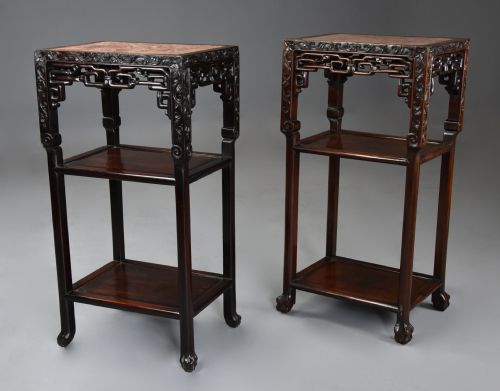
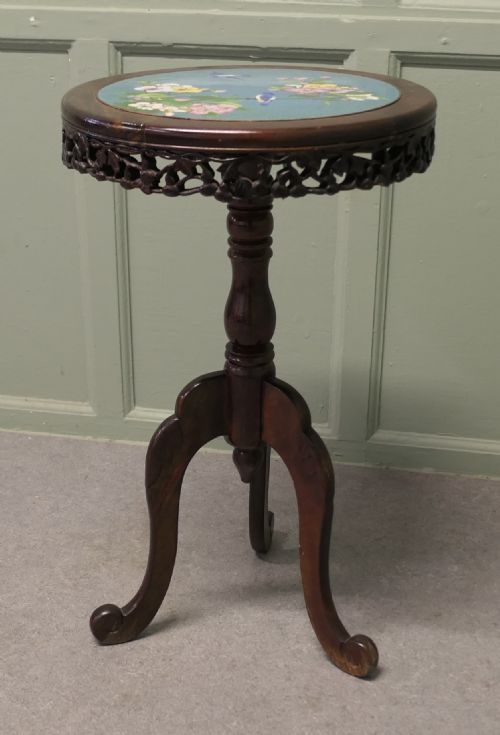
Plant stands and vase pedestals dominate the selection, frequently formed from dense tropical timbers such as rosewood and hongmu. These stands serve practical functions while displaying deep relief carving around their aprons and legs, often incorporating floral motifs alongside inset marble panels.
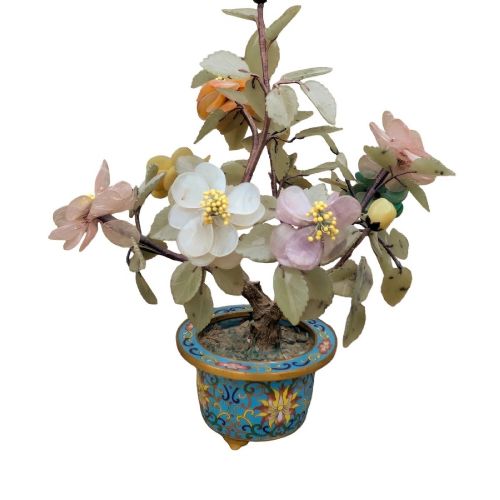
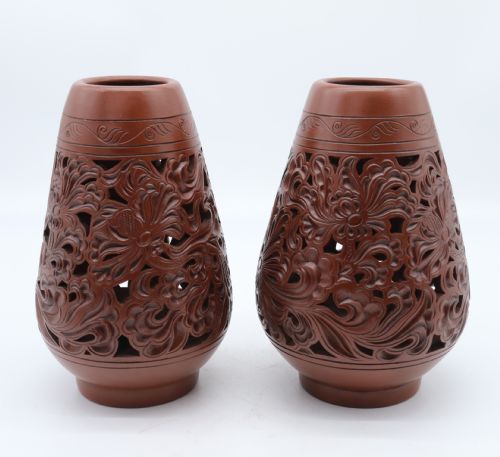
Beyond furniture, the category extends to decorative objects including cinnabar lacquer vases, cloisonne enamel jardiniere bowls, and carved hardstone bonsai trees. These smaller works display meticulous surface detailing, utilising plant and flower forms across metal, pottery, and stone.
Materials and construction
Makers utilised dense natural timbers, predominantly rosewood, mahogany, and general hardwoods, relying on traditional joinery methods to build rigid frames without modern fasteners. These hardwoods support deep three-dimensional carving, allowing craftsmen to cut floral scrolls and foliage directly into the structural grain.
Surface decoration frequently involves contrasting textures, such as inset marble tops fitted smoothly into wooden frames, or thick coats of red cinnabar lacquer built up and carved away in layers. Cloisonne enamel pieces integrate metal wire partitions filled with coloured pastes, while pottery elements utilise Yixing clays and celadon glazes.
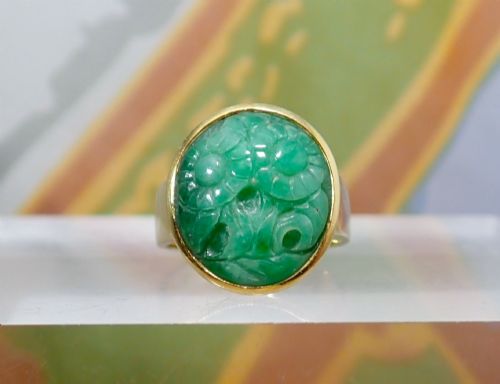
Certain items incorporate mother-of-pearl or hardstone inlays set flush into the wooden surfaces to create botanical patterns. Gilding appears on select carved temple panels and wood surfaces, highlighting specific floral details against dark or painted backgrounds.
Listings feature items spanning the nineteenth and twentieth centuries, including Victorian imports, Qing Dynasty hardwood furniture, and mid-century jadeite rings.
Evaluating the pieces
The standard of a piece rests heavily on the depth and crispness of the carving, distinguishing sharp, undercut foliage from shallow, machine-like surface impressions. Master carvers achieved genuine relief where petals and stems detach visually from the background ground.
Material selection dictates much of the inherent worth, particularly the weight, grain density, and stable figuring of the rosewood or hongmu timbers. Pieces retaining original inset marble panels with natural veining without replacement repairs maintain greater integrity.
Construction precision matters equally, seen in tight joints, balanced proportions on tall plant stands, and the complete survival of delicate lacquer layers or cloisonne enamel cells. Consistency across a matched pair or a graduated set of quartetto tables indicates disciplined workshop production.
The Chinese Floral Carving Glossary
- Hardwood
- Dense slow-growth timber, including rosewood and hongmu, chosen for structural stability and deep carving capability. These heavy woods form the primary structure for stands and cabinets.
- Cinnabar lacquer
- A decorative surface created by applying numerous coats of coloured tree sap and carving intricate patterns into the hardened layer. This technique produces deep red reliefs depicting flowers and figures.
- Jardiniere
- A large ornamental pot or bowl designed to hold live plants or floral arrangements, often manufactured from bronze, ceramic, or cloisonne enamel.
- Cloisonne
- Enamel work created by soldering thin metal wires to a metal base to form enclosed cells, which are then filled with vitreous paste and fired. The resulting surface displays colourful floral designs bounded by fine wire outlines.
- Hongmu
- A traditional Chinese term denoting dense, dark red-black hardwoods prized for high-status furniture production. It resists warping and takes a sharp carved edge.
Chinese Floral Carving: Frequently Asked Questions
What were plant stands used for?
Plant stands served to elevate heavy ceramic pots and jardiniere bowls holding prized flowers or miniature trees within traditional interiors. This placement improved air circulation around the plants while displaying them at eye level.
In domestic settings, these stands also functioned as small side tables for holding lamps, tea items, or decorative ornaments. Their compact footprints made them adaptable to various corners of a room.
How do I care for hardwood furniture?
Hardwood furniture benefits from placement away from direct heat sources and strong sunlight, which can dry out the timber and cause splits. Regular dusting with a dry, soft cloth maintains the natural sheen without requiring heavy polishes.
Applying a light coat of quality beeswax periodically helps nourish the wood grain. Avoid placing damp items directly onto unsealed wood surfaces to prevent water rings.
What is the difference between rosewood and hongmu?
Rosewood encompasses a broad botanical family of heavy, oily tropical timbers valued for their rich colour and grain patterns. Hongmu specifically translates as red wood in Chinese, referring broadly to a category of dense, dark decorative hardwoods used in fine Qing Dynasty furniture.
Both materials share exceptional weight and durability, allowing craftsmen to carve intricate floral details directly into the structural elements without risk of crumbling.
How do I identify a Qing Dynasty piece?
Qing Dynasty items typically display dense hardwood construction, traditional mortise and tenon joinery, and deep, hand-cut floral relief motifs. The presence of natural materials like marble inserts, cinnabar lacquer, or cloisonne enamel further points towards this historical period.
Examining the underside and interior surfaces reveals tool marks and patination consistent with nineteenth-century workshop methods. Graduated quartetto tables and freestanding plant stands are particularly characteristic forms from the later decades of this era.