


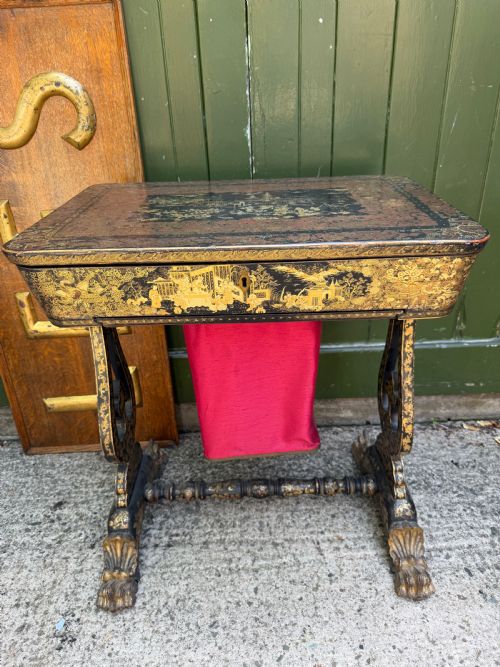


Chinese Decorated Table
A Chinese decorated table brings layered lacquer and gilded detail into a room, offering both practical surface space and distinct visual character.
Chinese Decorated Table
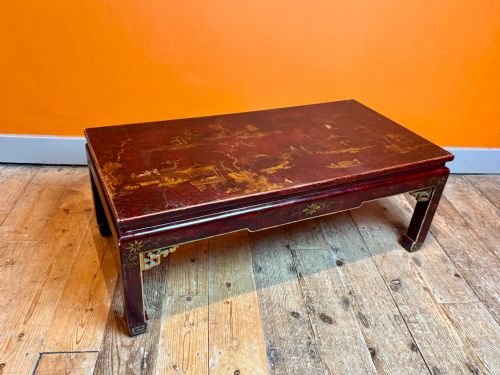
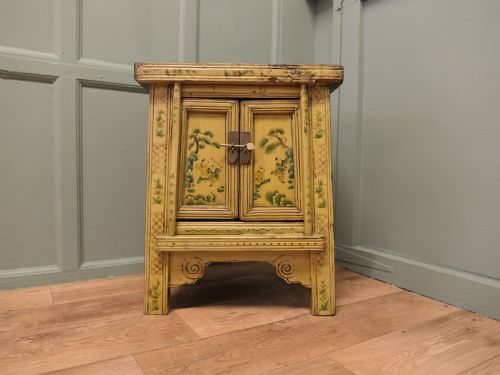
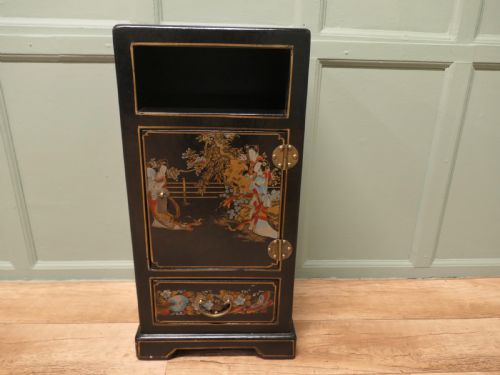
A chinese decorated table encompasses low coffee tables, nest of four tables, and work-tables originating from the nineteenth and early twentieth centuries. These pieces typically display painted or lacquered surfaces influenced by Chinoiserie styles and Chinese Export traditions. Buyers encounter various forms, from black and ochre lacquer finishes to raised relief detail and gilded decoration.
The selection ranges from mid-nineteenth century work-tables to early twentieth century low coffee tables and nest sets. Each piece utilises timber bases finished with lacquer, paint, or gilded ornamentation. The visual vocabulary draws heavily on traditional motifs interpreted through export and Chinoiserie aesthetics.
How they were made
Construction relies upon timber frameworks finished with successive coats of lacquer or paint to create durable, lustrous surfaces. Artisans applied pigments directly to the wood or built up deep layers of black, cream, or ochre lacquer before adding detail.
Gilded decoration and raised relief work frequently adorn the surfaces, catching the light against dark or coloured backgrounds. These decorative techniques required steady hands and precise brushwork to achieve the intricate patterns seen on nests of tables and low coffee surfaces.
Chinese Decorated Table Retail Price Guide 2026
Typical asking prices for chinese decorated table among the pieces listed under this phrase on Sellingantiques today, from the lower quarter to the upper quarter. They describe what is for sale here now, not the wider market.
The furniture styles recorded on this page include Chinoiserie, Qing Dynasty, Chinese Export, and Chinese Chinoiserie.
What varies in quality
The refinement of the surface decoration largely determines the distinction between standard examples and finer works. Pieces described as fine quality exhibit crisp gilded detailing and well-preserved lacquer layers with minimal disruption to the raised relief work.
The integrity of the underlying wood structure and the stability of the lacquer finish also dictate overall standard. Better examples maintain smooth joins in nests of tables and secure fittings on work-tables, ensuring the decorative scheme remains the primary focus.
The Chinese Decorated Table Glossary
- Chinoiserie
- European decorative style reflecting Chinese artistic influences, frequently seen in the painted and lacquered motifs of these tables. It interprets traditional Eastern motifs through a Western aesthetic lens.
- Lacquer
- A durable resin finish applied in multiple layers to wood surfaces, providing a smooth, glossy base for painted and gilded decoration. It hardens into a protective coating that withstands daily use.
- Nest of tables
- A set of graduated tables designed to slide neatly beneath one another to save space. They became popular in nineteenth-century production for versatile placement.
- Gilded decoration
- The application of gold leaf or gold paint to highlight specific motifs and patterns across the surface. This technique adds contrast and luminosity to dark lacquer grounds.
Chinese Decorated Table: Frequently Asked Questions
How do I use a nest of tables?
A nest of four tables can be stacked together beside a sofa or separated around a room when hosting guests. They provide convenient surfaces for drinks or lamps without permanently occupying floor space.
When not in use, the smaller tables slide neatly beneath the largest one to maintain a compact footprint. This modular design makes them exceptionally adaptable for modern living spaces.
What is Chinoiserie style?
Chinoiserie is a European interpretation of Chinese artistic traditions, popular across furniture and decorative arts from the eighteenth century onwards. It incorporates motifs such as figures, landscapes, and pavilions rendered in paint and lacquer.
This aesthetic combined traditional Eastern subject matter with Western furniture forms, creating distinctive pieces designed for export and fashionable interiors.
How do I clean lacquered furniture?
Dust lacquered surfaces gently with a soft, dry cloth to prevent the accumulation of grit that might scratch the finish. Avoid harsh chemical cleaners or excessive moisture, which can damage the delicate layers.
Maintaining a stable room temperature away from direct sunlight preserves the lacquer and prevents the wood underneath from warping or cracking over time.
How do I date these tables?
Dating relies upon examining construction methods, timber types, and the specific characteristics of the lacquer and gilding. Nineteenth-century examples often display hand-mixed pigments and denser timber frames.
Twentieth-century pieces from the 1920s and 1930s show shifts in proportion and decorative application, reflecting changing interior tastes while retaining traditional motifs.