




Chinese Carved Soapstone
These pieces of chinese carved soapstone bring together centuries of skilled handwork, offering tactile depth and narrative detail for any collection.
Chinese Carved Soapstone
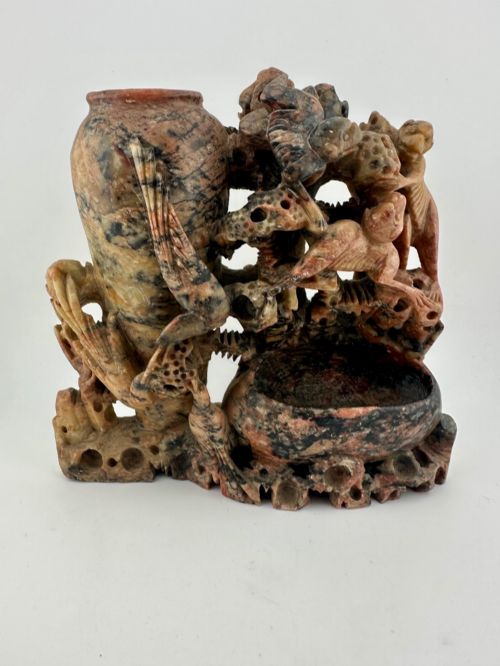
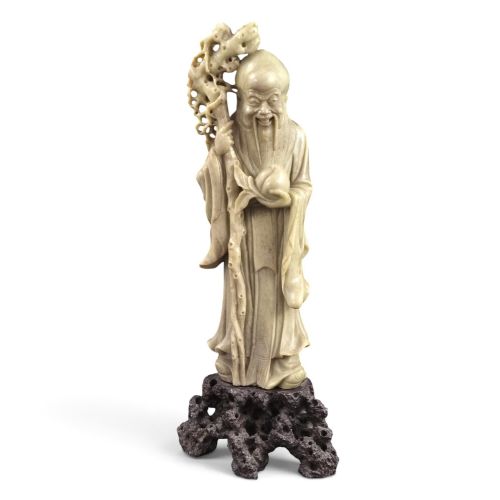
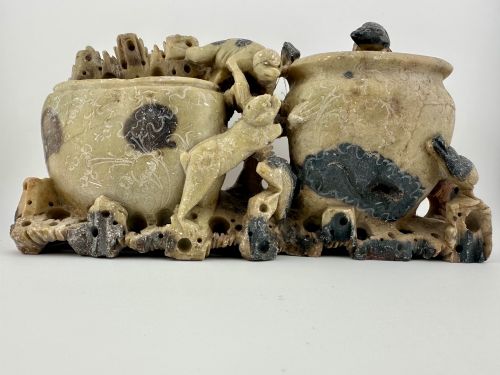
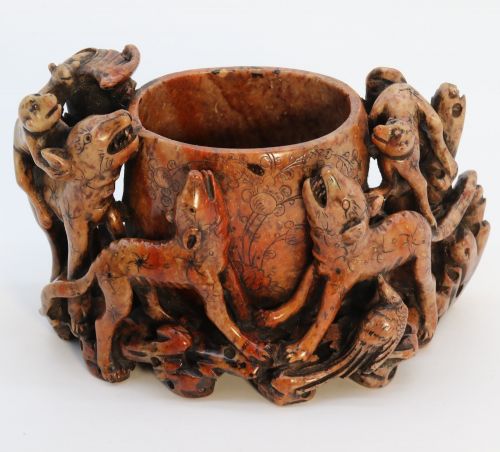
When you search for chinese carved soapstone, you encounter a range of sculptural objects spanning the nineteenth century through the republic period and into the mid-twentieth century. The selection includes scholar's desk items such as brush washers, brush pots, and seals, alongside figural groups representing figures like Shoulao and Buddha.
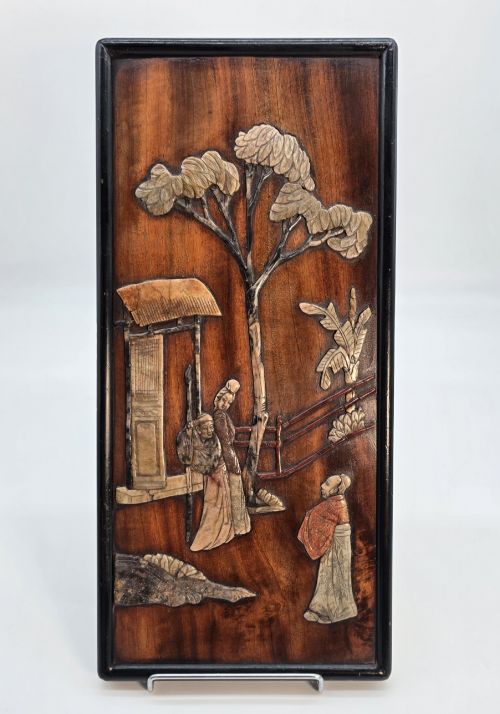
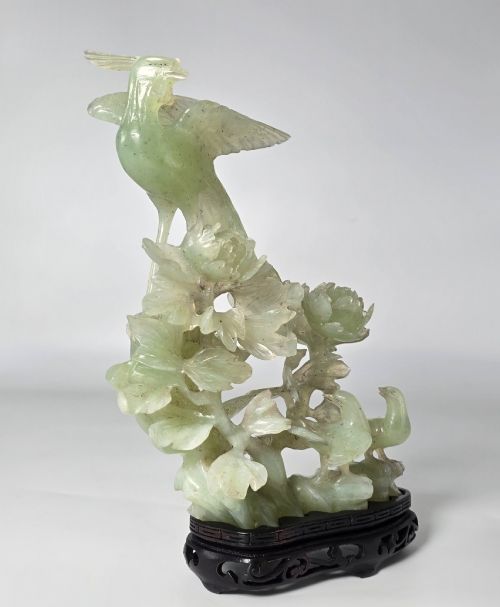
You will also find animal carvings depicting monkeys, dragons, dogs of fo, and birds, as well as framed pictures and larger decorative vessels. These pieces draw on traditional Chinese, Qing dynasty, and provincial styles, reflecting both scholarly pursuits and domestic decoration.
The objects commonly appear mounted on hardwood bases or integrated into larger decorative schemes involving lacquer and brass. Each form serves as an example of traditional material handling, shaped by makers working within established regional aesthetics.
Quality variations in the work
The standard of carving depends on the depth of relief, the precision of anatomical or botanical detail, and the natural colour variation within the stone itself. Sculptures that display fluid movement and thoughtful composition command attention over simpler, rigid formations.
The integration of secondary elements, such as fitted hardwood stands or carefully turned stoppers on snuff bottles, contributes to the overall cohesion of the piece. Superior examples maintain crisp edges in the soft stone despite the passage of time and handling.
Chinese Carved Soapstone Retail Price Guide 2026
Typical asking prices for chinese carved soapstone among the pieces listed under this phrase on Sellingantiques today, from the lower quarter to the upper quarter. They describe what is for sale here now, not the wider market.
Listings feature soapstone objects paired with hardwood bases, oak frames, and black lacquer panels.
The Chinese Carved Soapstone Glossary
- Soapstone
- A metamorphic rock composed primarily of talc, valued for its softness and suitability for detailed carving.
- Steatite
- An alternative mineralogical term for massive talc schist or soapstone used in traditional carving.
- Shoushan stone
- A specific variety of soapstone sourced from the mountains of Fujian province, historically favoured for Chinese seals and scholar's objects.
- Brush pot
- A cylindrical vessel traditionally placed on a scholar's desk to hold writing brushes.
- Seal
- A carved stamp or chop used for leaving an impression in cinnabar paste or wax, often topped with mythical beasts.
- Chi dragon
- A stylized, hornless dragon motif commonly found in traditional Chinese decorative art.
Chinese Carved Soapstone: Frequently Asked Questions
What is a Chinese soapstone brush pot used for?
These cylindrical vessels served scholars as functional containers for holding calligraphy brushes on a desk.
Over time, they evolved into decorative objects that showcased the carver's skill in depicting continuous landscapes or figurative scenes.
How do I identify a Qing dynasty soapstone carving?
Carvings from this period often feature traditional iconography such as Shoulao figures, Foo dogs, or mythical dragons.
The style relies on deep relief work and is frequently paired with bespoke hardwood stands designed specifically for the sculpture.
What are Chinese soapstone seals?
Seals function as personal signatures or marks of ownership, stamped in red ink onto paintings, calligraphy, and documents.
The top portion of the stone is typically sculpted into an animal, such as a lion or mythical beast, while the base bears the carved characters.
How do I care for antique soapstone pieces?
Soapstone is a relatively soft material that benefits from gentle dusting with a dry, soft cloth to prevent surface scratching.
Avoid exposure to harsh chemicals, excessive moisture, or sudden temperature shifts that might affect any integrated wooden bases or lacquer mounts.