






Chinese Canton Lamps
Chinese Canton lamps bring brilliant hand-painted floral panels and gilt detailing into a room, offering striking decorative lighting.
Chinese Canton Lamps
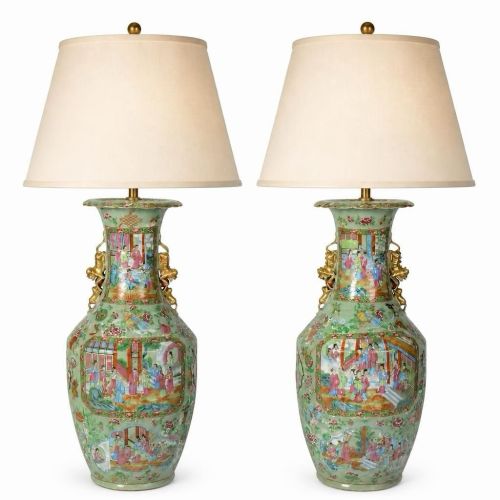
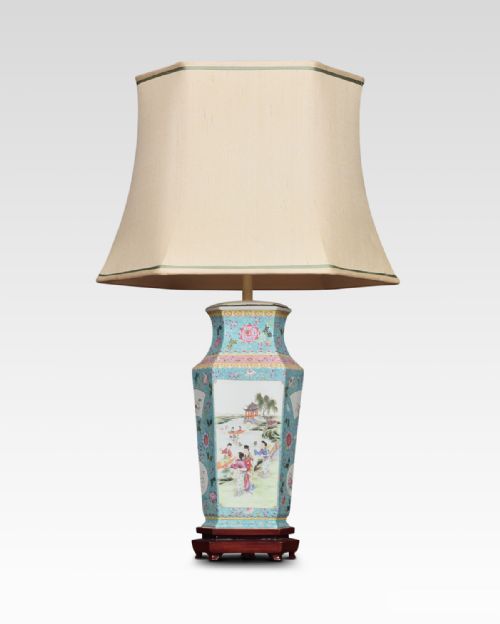
Chinese Canton lamps are primarily table lamps created from porcelain vases dating from the nineteenth century, including various pieces from the 1870s up to 1920. These pieces often feature vibrant palette work associated with Chinese export goods and Qing Dynasty aesthetics.
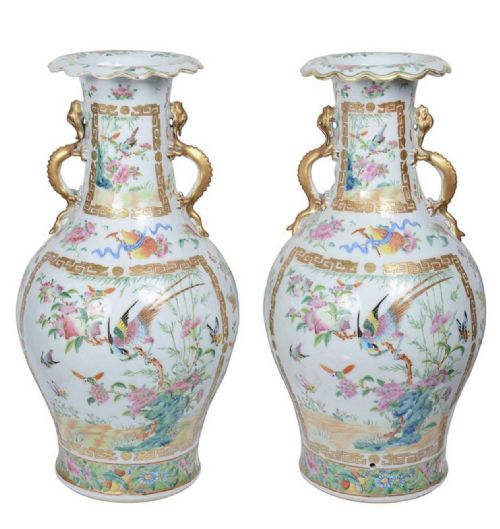
Buyers frequently encounter pairs of vases converted into lamps, alongside individual decorative vessels mounted with brass, ormolu, and wood components. The overarching style reflects both traditional Chinese production and Victorian Chinoiserie tastes of the period.
Table lamps dominate the selection, utilising forms such as oil lanterns and decorative vases. The most common survivals on this page are nineteenth-century porcelain bodies paired with fabric or silk shades.
How they were made
The primary material is porcelain, shaped and painted by hand before undergoing high-temperature firing. Enamel colours, particularly pinks and greens associated with rose medallion and famille rose palettes, are applied over or within the glaze.
Metal mounts in brass, gilt bronze, and ormolu secure the porcelain bodies and provide structural bases for lamp fittings. Wooden elements and silk or fabric shades complete the conversion from traditional vessel to functional lighting.
Design styles span Chinese Export, Qing Dynasty, and Victorian Chinoiserie across multiple nineteenth-century decades.
What varies in quality
The sophistication and detail of the hand-painted enamel decoration distinguish finer pieces from simpler examples, particularly in the rendering of figures and floral panels. Crispness in the gilding and the precision of the porcelain potting also elevate certain items.
The quality and period integrity of the metal mounts, whether brass, gilt bronze, or ormolu, influence the overall character of the piece. Superior conversions integrate these mounting elements harmoniously with the original nineteenth-century porcelain body without causing damage.
The Chinese Canton Lamps Glossary
- Rose Medallion
- A distinct pattern style of Chinese Canton porcelain characterised by alternating panels of birds, flowers, and figures surrounding a central medallion. It is widely seen on nineteenth-century vases converted into lamps.
- Ormolu
- Gilded bronze applied as a decorative mount or fitting on furniture and porcelain. In these lamps, ormolu provides ornate collars, bases, and hardware.
- Chinoiserie
- European decorative style reflecting Chinese artistic influences, popular during the Victorian era. Pieces in this style often incorporate Asian porcelain into Western interior schemes.
- Chinese Export
- Goods manufactured in China specifically for Western markets from the seventeenth to the nineteenth centuries. These items combine traditional Chinese techniques with shapes and functions desired by European and American buyers.
Chinese Canton Lamps: Frequently Asked Questions
Are these lamps converted from old vases?
Many nineteenth-century Chinese Canton lamps began life as decorative vases or oil lanterns before being fitted for electricity. This practice preserves antique porcelain while adapting the vessels for modern home use.
Buyers should examine how the mounts and wiring are fitted to the ceramic body. Professional conversions respect the historical integrity of the porcelain piece.
How do I identify a nineteenth century piece?
Nineteenth-century Chinese Canton lamps typically display hand-mixed enamel colours, dense rose medallion patterns, and heavy potting characteristic of the Qing Dynasty. The wear on the base and the quality of the hand-painting offer clues to their age.
Examining the foot rim and the style of the enamel work helps distinguish genuine nineteenth-century export porcelain from later reproductions.
Where should I place a Canton lamp?
These lamps suit side tables, living rooms, and studies where their vibrant colours and gilt details can catch the light. Their striking visual presence works well against neutral backgrounds that allow the painted panels to stand out.
Pairing them with appropriate fabric or silk shades helps balance the ornate porcelain base. Ensure the placement protects the antique ceramic body from accidental knocks in busy walkways.
What is the difference between Canton and Famille Rose?
Canton porcelain refers to pieces decorated in Canton for the export market, often featuring distinct panelled designs. Famille rose is a broader technical term describing the pink enamel palette used across various Chinese ceramic styles.
Many Canton lamps utilise the famille rose palette, combining floral motifs with figural scenes in a vibrant nineteenth-century aesthetic.