

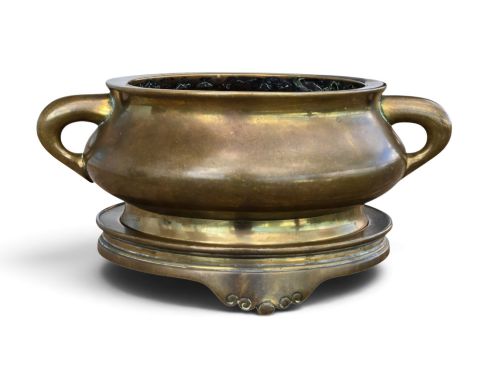
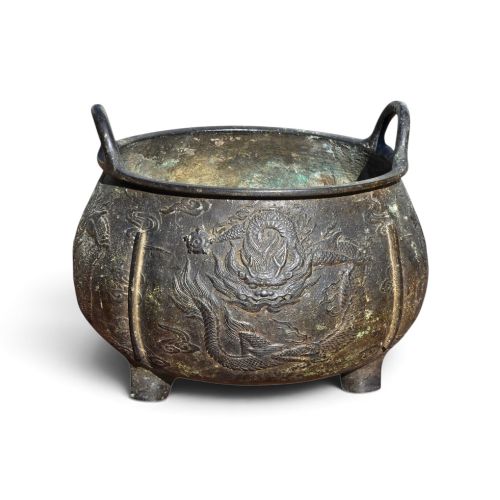
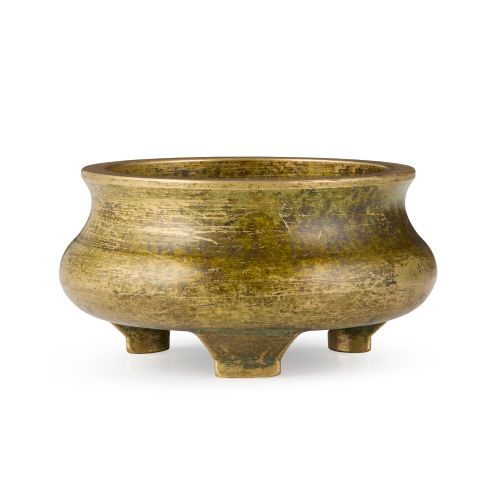
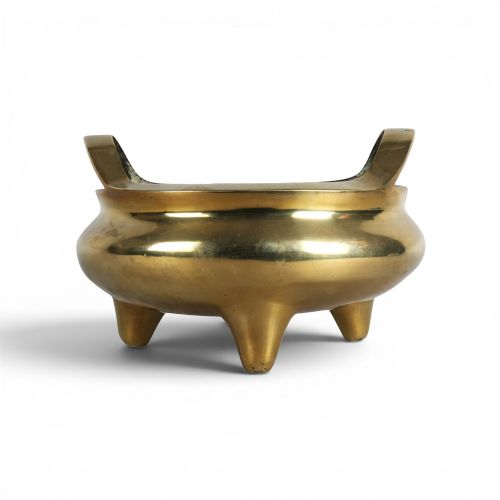
Chinese Bronze Tripod Burner
These Chinese bronze tripod burners are traditional ritual vessels and scholar's objects prized for their weight and patination.
Chinese Bronze Tripod Burner
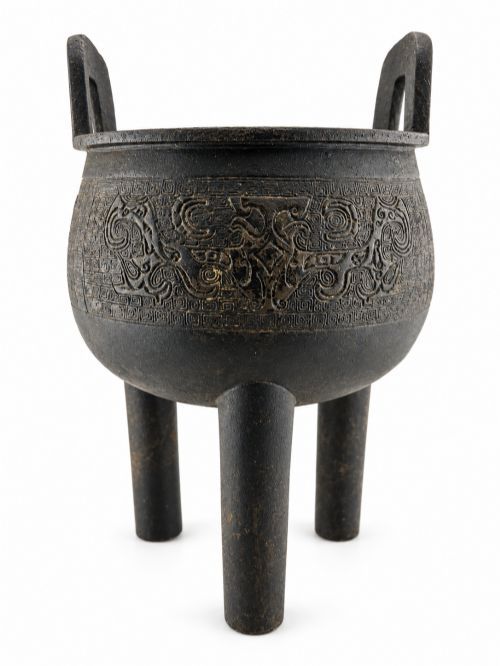
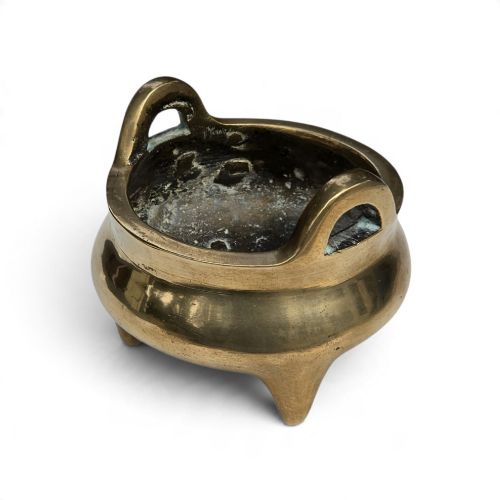
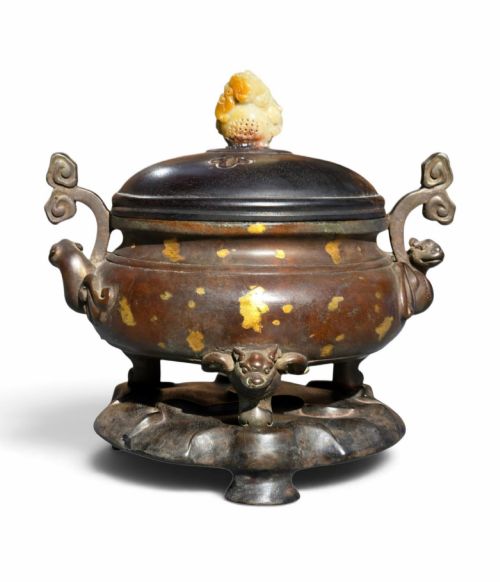
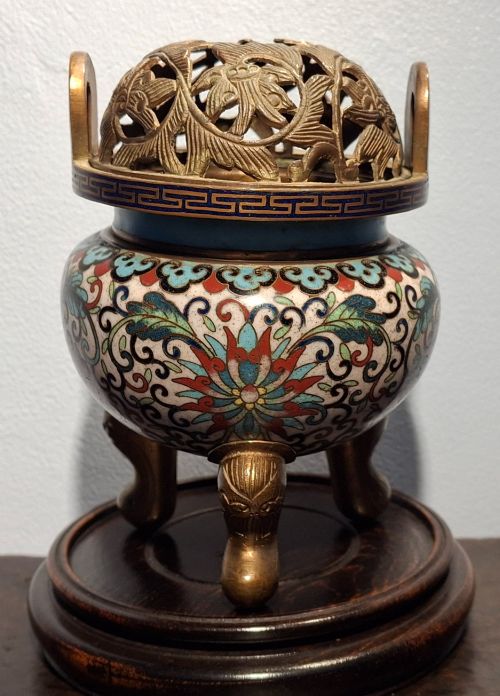
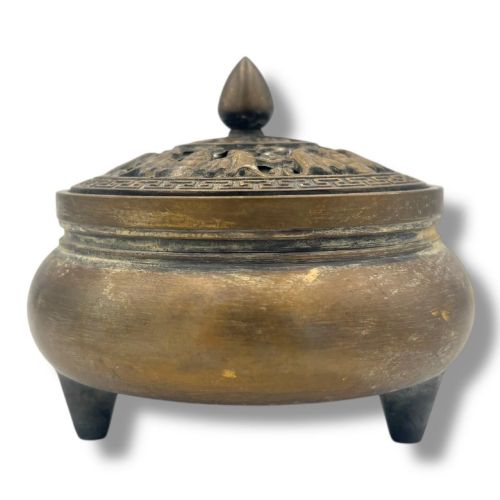
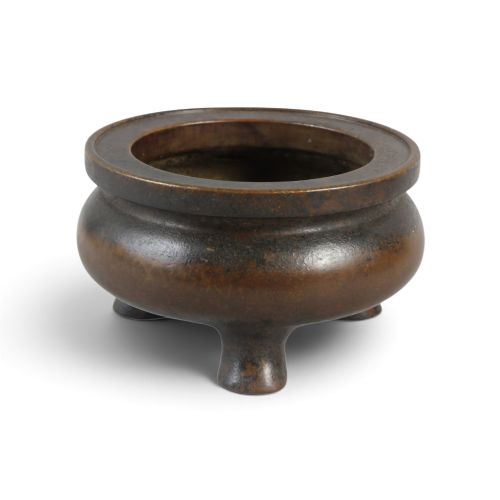
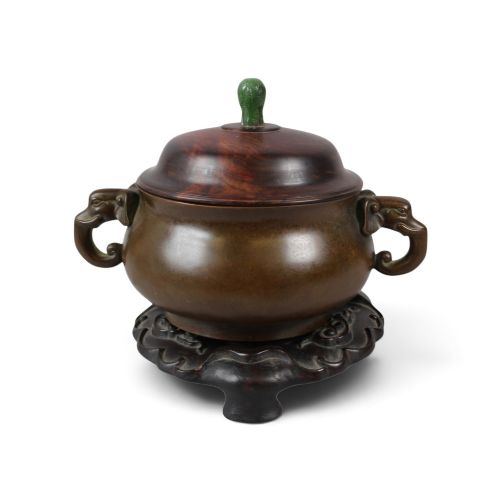
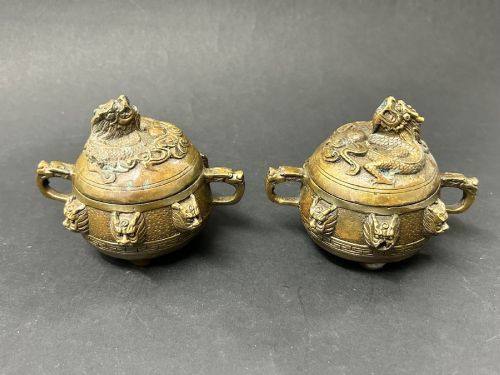
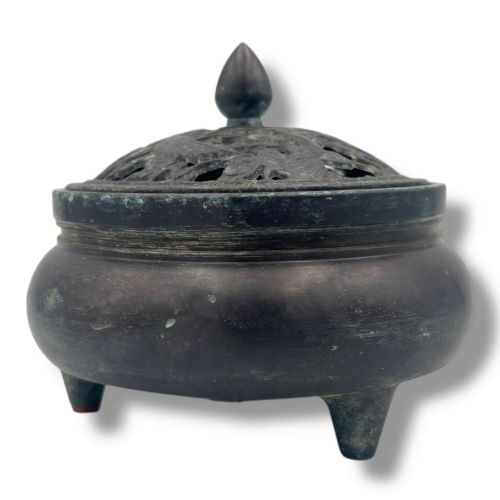
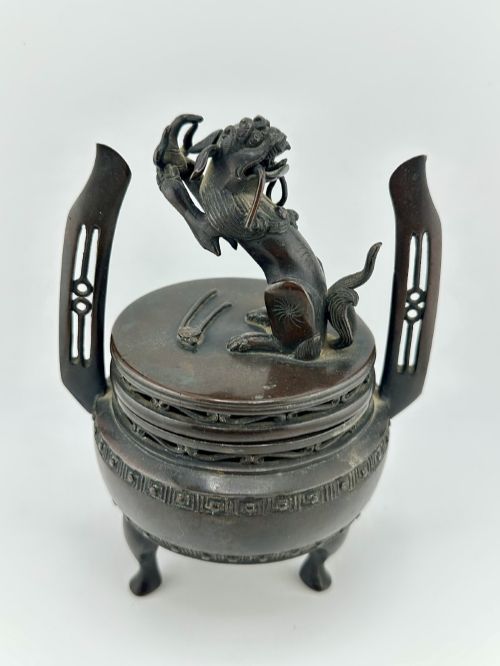
A Chinese bronze tripod burner takes the form of a bowl or ritual vessel raised on three feet, frequently paired with a matching cover and custom stand. Most examples encountered here date from the Ming and Qing dynasties down to the late nineteenth century, spanning archaic revival styles and scholar's studio pieces.
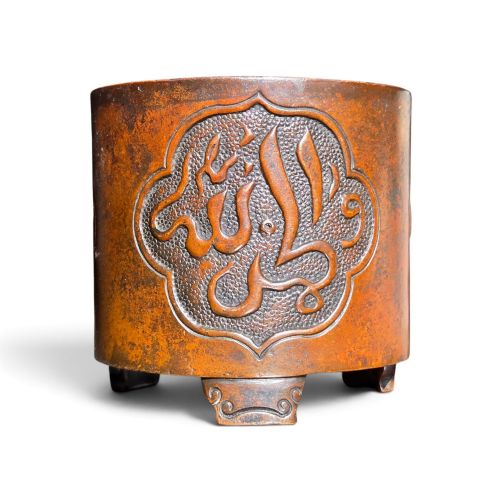
The inventory includes hexagonal vessels, cylindrical forms made for the Islamic market, and lobed lotus designs alongside massive ritual censers bearing apocryphal Xuande or Qianlong marks. These pieces functioned primarily for burning incense within domestic interiors or scholarly studies.
How they were made
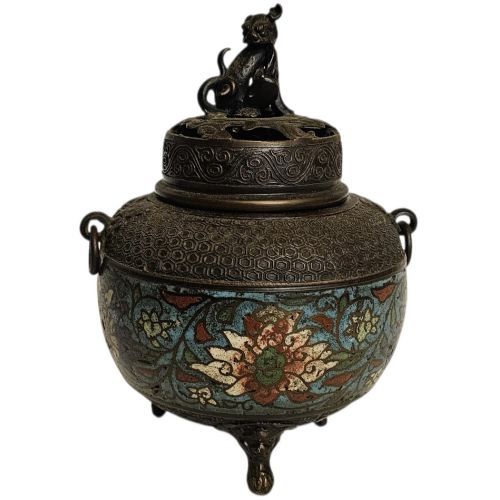
These items rely on traditional lost-wax or sectional mould casting methods using copper alloys, brass, and heavy bronze to achieve thick, substantial walls. Artisans applied patination treatments directly to the metal surface, sometimes incorporating cloisonne enamel work or pairing the metal bodies with carved hardwood stands and jade finials.
Chinese Bronze Tripod Burner Retail Price Guide 2026
Typical asking prices for chinese bronze tripod burner among the pieces listed under this phrase on Sellingantiques today, from the lower quarter to the upper quarter. They describe what is for sale here now, not the wider market.
Several heavy censers arrive with documented weights exceeding six kilograms, while miniature scholar's examples weigh a mere fraction of that scale.
What varies in quality
Quality rests upon the crispness of the cast decoration, such as taotie masks and relief handles, and the depth of the metal patination. Denser, heavier castings with refined surface finishes and bell-ring resonance distinguish superior scholar's pieces from standard domestic wares.
Wu Bangzuo·Xuande Mark·Qianlong Marks
The Chinese Bronze Tripod Burner Glossary
- Censer
- A vessel used for burning incense. These containers often feature pierced lids to release fragrant smoke.
- Archaistic
- A style that emulates ancient ritual bronzes from early Chinese dynasties. Such designs typically incorporate motifs like taotie masks.
- Tripod
- A vessel supported by three feet. This configuration provides stability on flat surfaces and elevates the body.
- Patina
- The surface coloration and sheen developed naturally over time or applied chemically. It protects the metal and adds visual depth.
- Cloisonne
- An enamel technique where powdered glass is fired within wire compartments soldered to a metal base. This method creates colourful decorative patterns.
Chinese Bronze Tripod Burner: Frequently Asked Questions
What is a Chinese bronze tripod burner?
It is a traditional vessel raised on three legs, designed to burn incense for ritual or domestic purposes.
These pieces range from small scholar's studio objects to monumental ritual censers created across the Ming and Qing dynasties.
How were these incense burners used?
They were placed in scholars' studies, halls, or temples to burn aromatic resins and woods during meditation or gatherings.
Many incorporate fitted lids with pierced designs or qilin finials to allow the fragrant smoke to escape evenly into the room.
How do I identify the period?
Dating relies on stylistic clues such as archaistic taotie decoration, casting weight, and surface patination rather than relying solely on base marks.
Many later nineteenth-century pieces bear earlier dynastic marks like those of the Xuande or Qianlong periods as a mark of respect.
Do they require special care?
These metal vessels require minimal maintenance beyond occasional dusting with a dry cloth to protect the patination.
Avoid using liquid cleaners or polishes that might strip the historic surface finish or damage integrated enamel and jade elements.