


Chinese Brass Burner
A Chinese brass burner is a vessel for ritual or domestic incense, forged in metal and shaped for the scholarly desk or temple altar.
Chinese Brass Burner
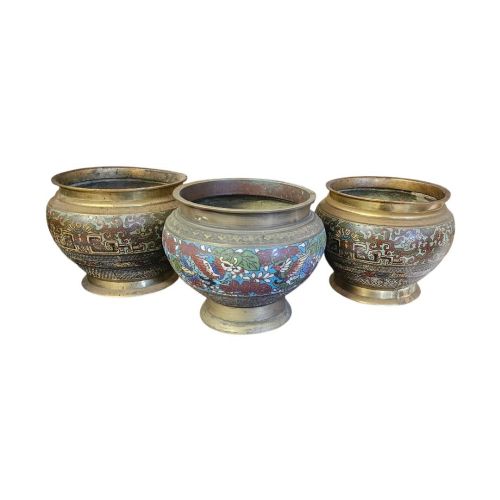
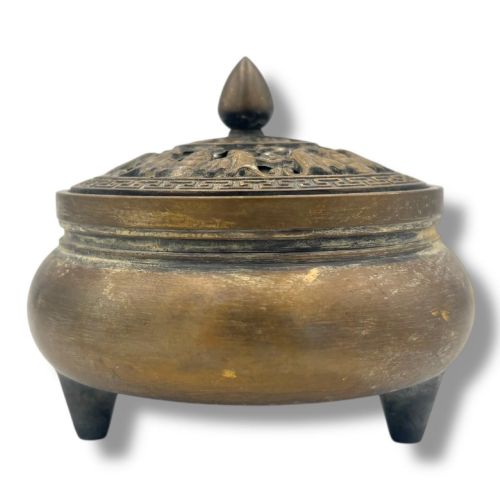
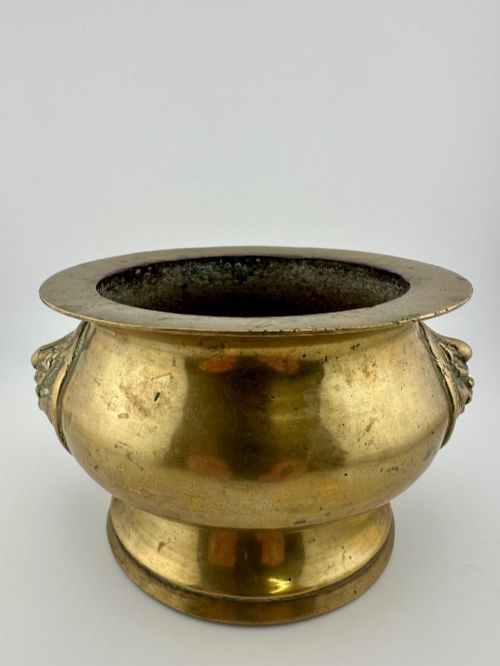
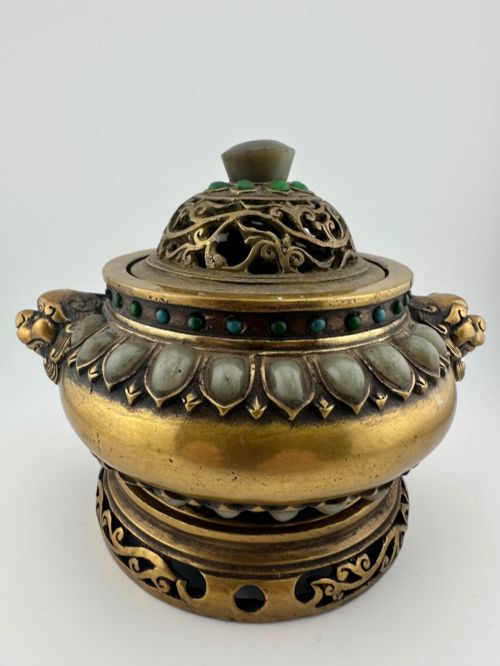
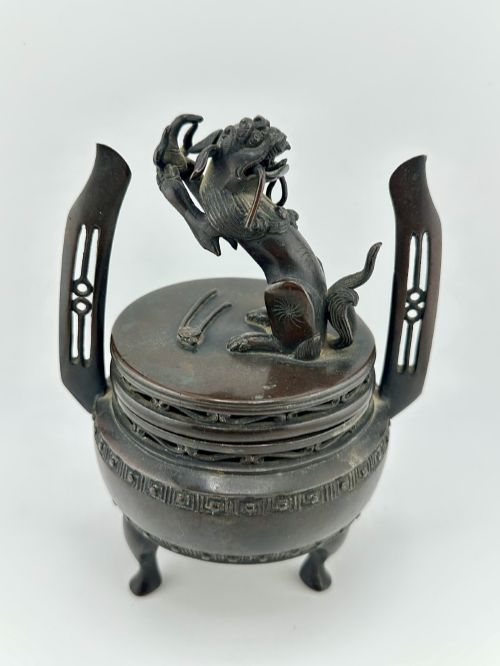
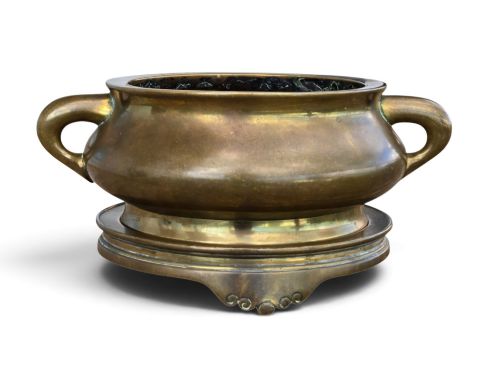
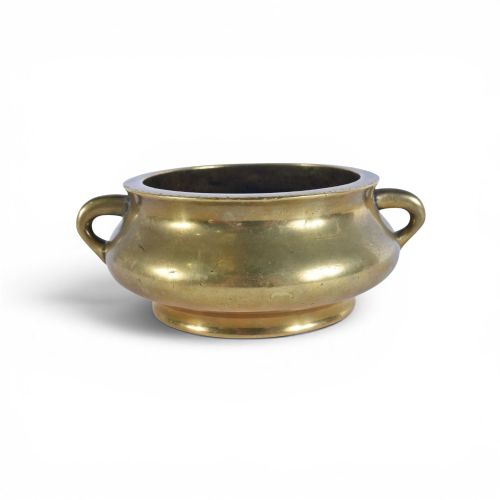
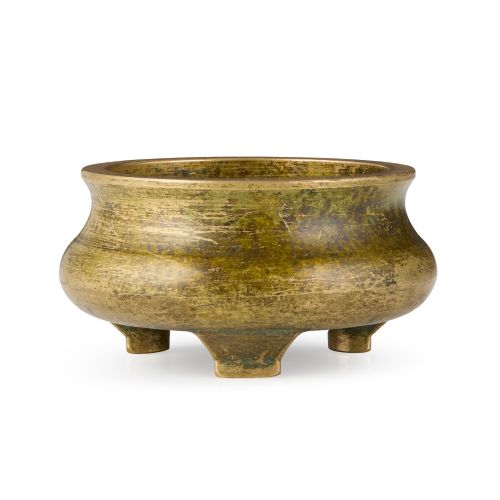
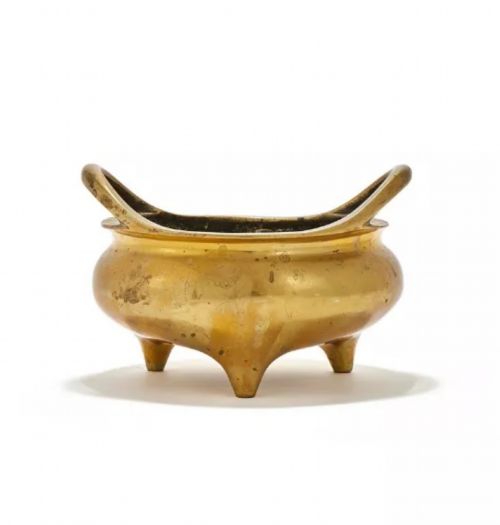
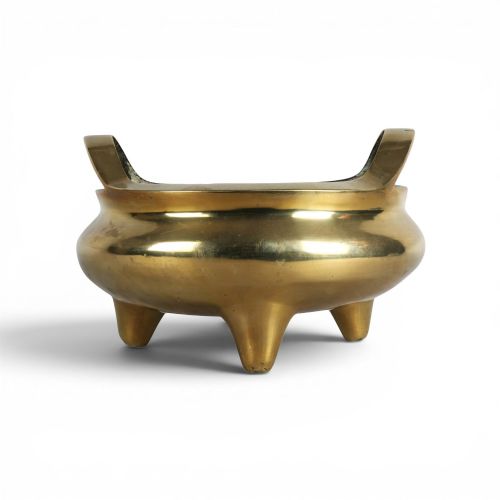
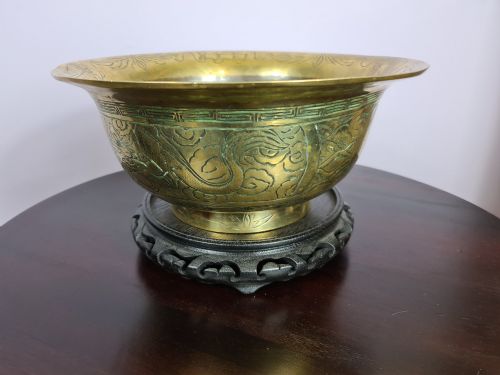
When you search for a chinese brass burner, you enter a field dominated by heavy metal vessels designed for burning incense, spanning the Qing Dynasty to the early twentieth century. The forms range from tripod censers with lion mask handles and pierced floral lids to large bowls and ritual vessels bearing archaic motifs.
You will frequently encounter pieces dated to the eighteenth century, alongside Victorian, late Qing, and early twentieth-century examples up to nineteen thirty. The materials extend beyond plain metal into champlevé enamel, cloisonné, jade, and hardstone inlays, often complete with matching stands or qilin finials.
How they were made
These vessels rely primarily on bronze and brass, cast in substantial weights that frequently exceed several kilograms for larger forms. Artisans employed lost-wax casting techniques to achieve complex tripod bases, bombé profiles, and structural bamboo or ring handles.
Surface ornamentation involved hand-finishing, incising, and inlaying with materials such as hardstone, jade, and champlevé or cloisonné enamel. Many examples incorporate cast scholar marks, imperial style seals, or detailed lion mask and qilin elements integrated directly into the metalwork.
Listings incorporate materials spanning bronze, brass, enamel, jade, hardstone, and wood across periods from the eighteenth century through to nineteen thirty.
What varies in quality
The distinction between ordinary production and superior work lies in the density of the metal casting and the crispness of the chased or incised details. Heavier specimens with balanced proportions and integrated handles demonstrate a higher degree of foundational skill.
Quality also rests in the execution of secondary materials, such as the precision of hardstone inlays, the vibrancy of champlevé enamel, and the clarity of Xuande, Qianlong, or Wu Bangzuo studio marks cast into the base.
The Chinese Brass Burner Glossary
- Censer
- A vessel specifically designed for burning incense during rituals or within scholar's studios. These items often feature pierced lids to allow scented smoke to escape.
- Tripod
- A vessel supported by three distinct feet, commonly found on classical bronze and brass burners of the Qing period. This form provides both stability and traditional aesthetic balance.
- Bombé
- A rounded, bulbous body shape that swells outward towards the centre before tapering at the rim and base. This profile is typical of fine eighteenth-century scholar vessels.
- Champlevé
- An enamelling technique where troughs are dug into the metal surface and filled with vitreous enamel before firing. It frequently appears alongside intricate bronze casting.
- Archaistic
- A design style that consciously imitates ancient ritual bronzes from earlier dynasties. These pieces borrow ancient decorative motifs for later scholarly use.
Chinese Brass Burner: Frequently Asked Questions
What is a chinese brass burner used for?
These vessels were created primarily to hold burning incense in temples, household altars, or scholarly studios.
They served both ritual purposes and as decorative objects of contemplation for scholars and collectors.
How do I identify eighteenth century pieces?
Eighteenth century examples are typically distinguished by heavy bronze construction, deep patination, and specific studio or dynastic marks.
Look for refined forms like the bombé censer and cast signatures associated with makers such as Wu Bangzuo or Xuande seals.
What do lion mask handles signify?
Lion mask handles function as both structural grips and symbolic guardians on heavy metal vessels.
They draw on traditional iconography to protect the vessel and add sculptural depth to the exterior profile.
How should I clean a brass burner?
Metal vessels of this age generally require minimal intervention to preserve their natural surface patination.
Dust them gently with a soft, dry cloth and avoid harsh chemical polishes that strip historical character.