






Chinese Blue Lamp
A chinese blue lamp brings deep cobalt tones and historic porcelain bodies into domestic rooms, offering a conversation piece that anchors a corner.
Chinese Blue Lamp
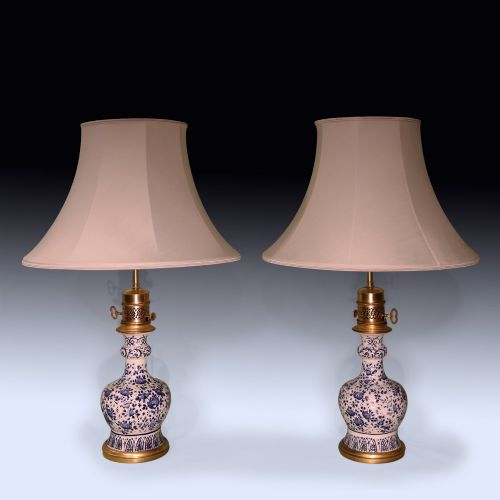
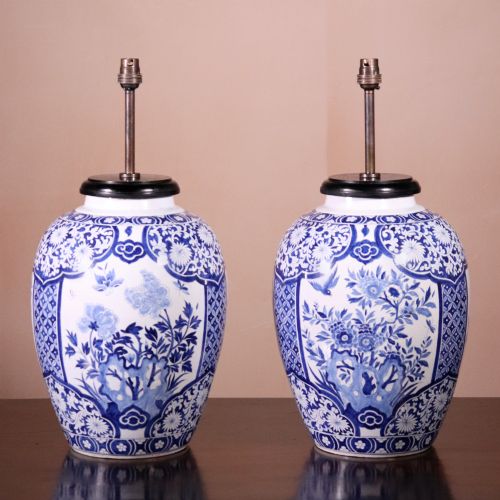
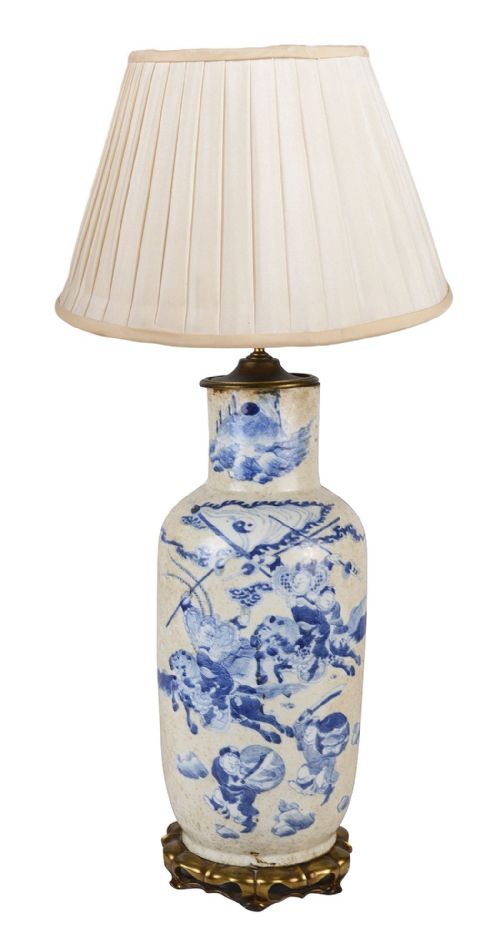
A chinese blue lamp typically takes the form of a converted vase, jar, or baluster vessel mounted for electrical illumination. Buyers searching for a chinese blue lamp encounter substantial nineteenth-century porcelain bodies alongside ginger jars and cloisonne examples.
Vessels span various Qing Dynasty and Republic eras, often paired with prunus blossom motifs or crackleware glazes. Many examples originate as export porcelain or later adaptations fitted with silk or fabric shades.
Table lamps dominate the selection, frequently appearing as matched pairs with brass or gilt bronze hardware. Forms range from turquoise glaze figural pieces to monumental celadon and blue decorated bodies.
Materials and construction
Makers shaped these bodies from hard-paste porcelain, earthenware, or metal cores for cloisonne enamel, applying cobalt underglaze pigments before high-firing. Artisans then fitted completed vessels with brass, wood, or gilt bronze mounts to secure electrical workings.
Surface decoration combines hand-painted blue and white pigments, powder blue grounds, and intricate enamel wirework soldered to metal bases. Fabric and silk shades complete the assembly, often added during twentieth-century adaptations.
Chinese Blue Lamp Retail Price Guide 2026
Typical asking prices for chinese blue lamp among the pieces listed under this phrase on Sellingantiques today, from the lower quarter to the upper quarter. They describe what is for sale here now, not the wider market.
Listings feature materials such as porcelain, cloisonne enamel, brass, gilt bronze, and silk across the nineteenth and early twentieth centuries.
Assessing quality
Quality rests on the crispness of the cobalt painting, the weight and finish of the bronze or brass mounts, and the stability of the ceramic body. Superior examples display balanced proportions, deep tonal variation in the blue pigments, and intact enamel work without loss.
The precision of the original vessel conversion also marks the grade, distinguishing professional mounting from casual alterations that compromise the ceramic structure.
The Chinese Blue Lamp Glossary
- Celadon
- A pale green jade-like ceramic glaze often found on nineteenth-century vessels adapted as lighting. This glaze derives its colour from iron oxide in the reduction firing.
- Cloisonne
- A decorative metalwork technique where thin wire partitions form cells filled with enamel paste. These pieces involve multiple firings before surface polishing.
- Ginger jar
- A wide-shouldered ceramic storage vessel with a domed lid, commonly utilised for conversion into a table lamp. Originally designed for spices, these jars feature robust porcelain walls.
- Prunus blossom
- A decorative motif depicting blossoming plum branches against a cracked ice background, frequently painted in blue. This pattern appears widely on nineteenth-century export porcelain.
Chinese Blue Lamp: Frequently Asked Questions
How are antique jars converted?
Historic vessels are adapted by drilling a discreet channel through the base for wiring or by running cords through existing apertures without damaging the ceramic body.
Mounts made of brass or gilt bronze are then secured to the neck and base to hold the lamp hardware firmly in place.
Where should I place these lamps?
These pieces suit side tables, halls, or living room corners where their height and saturated colour provide ambient task lighting.
Matched pairs work particularly well placed on matching sideboards or flanking a fireplace mantel.
How do I date these porcelain pieces?
Dating relies on stylistic clues such as the depth of the cobalt blue, the texture of crackleware glazes, and the nature of the bronze mounts.
Nineteenth-century examples often display heavier potting and specific export decoration styles distinct from later Republic period production.