
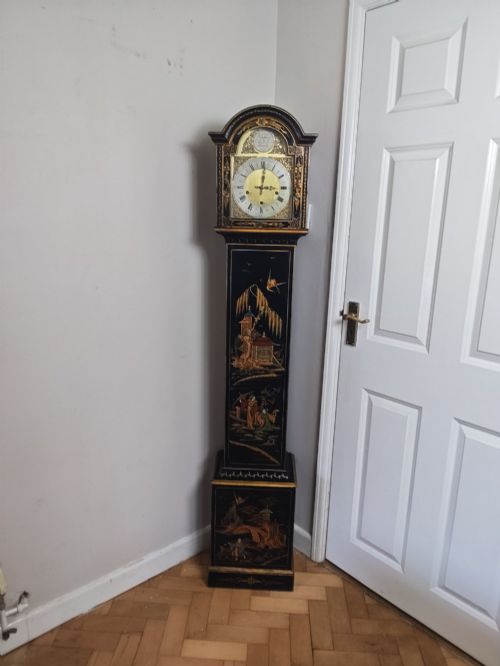
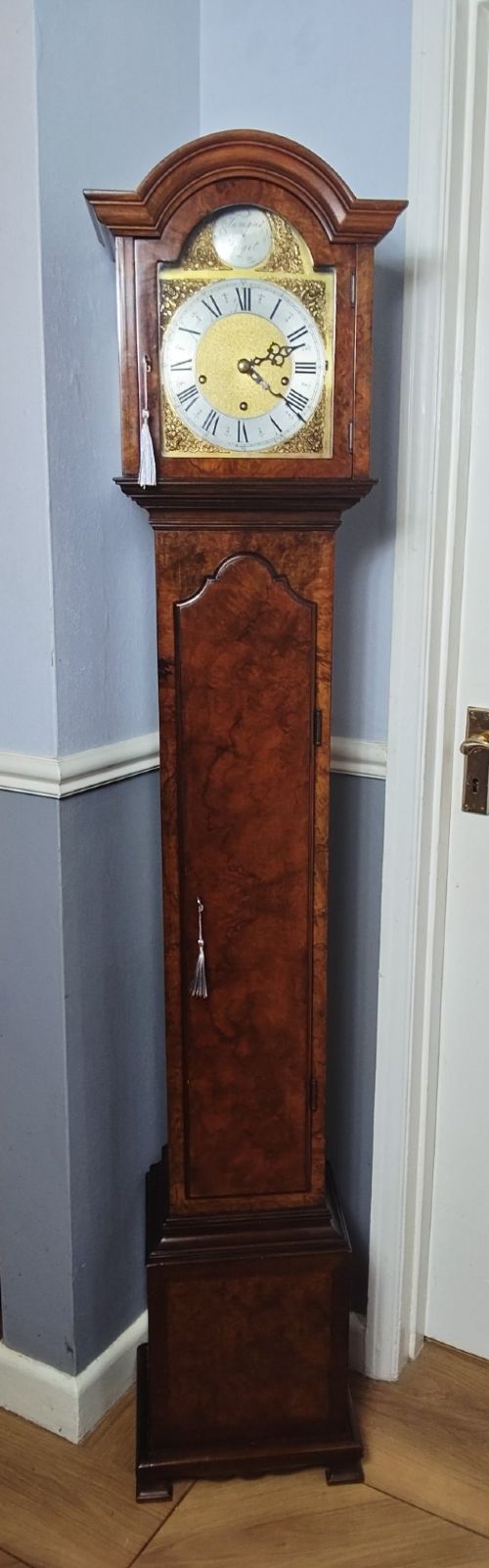


Chiming Tall Clock
A chiming tall clock brings deep acoustic presence to a room through intricate gearwork and weighted chimes.
Chiming Tall Clock
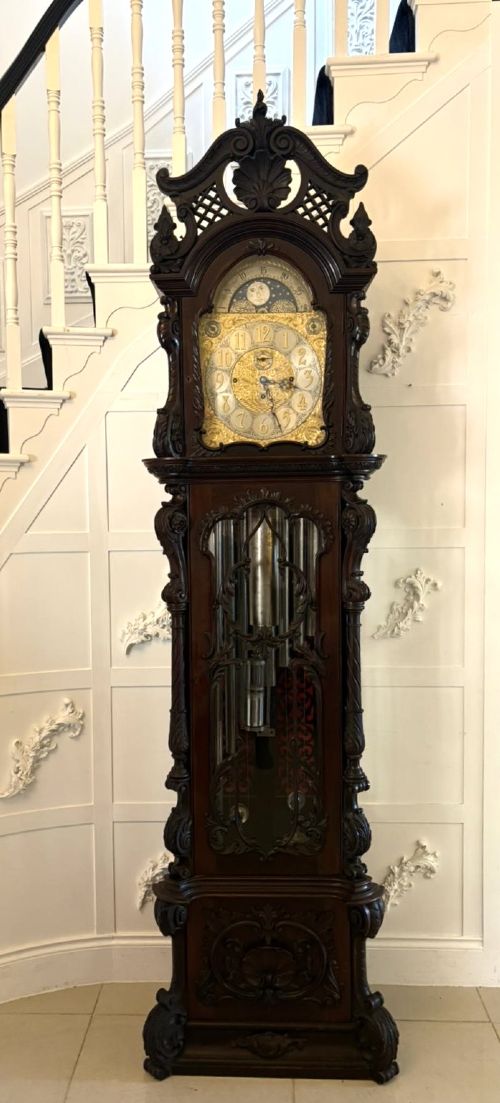
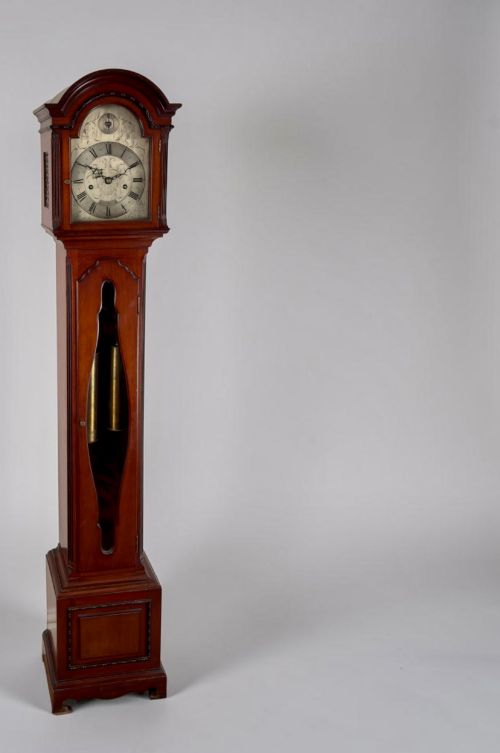
A chiming tall clock encompasses floor-standing timepieces including grandfather clocks, grandmother clocks, and longcase clocks. These vertical cases house mechanical movements designed to sound the hour or play musical tunes on gongs or tubes.
The pieces on this page span from the Georgian period through the Victorian and Edwardian eras into the 1920s and 1930s. Buyers will frequently encounter smaller grandmother clocks alongside full-sized grandfathers.
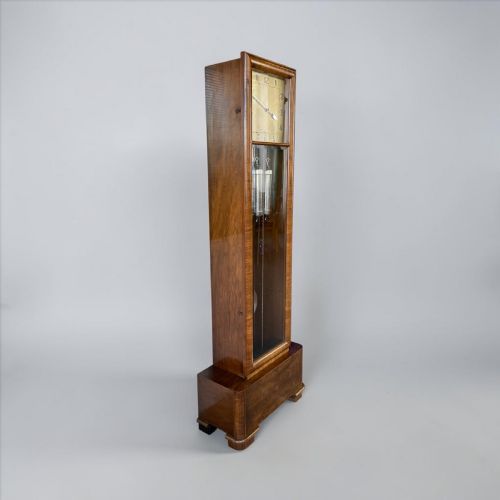
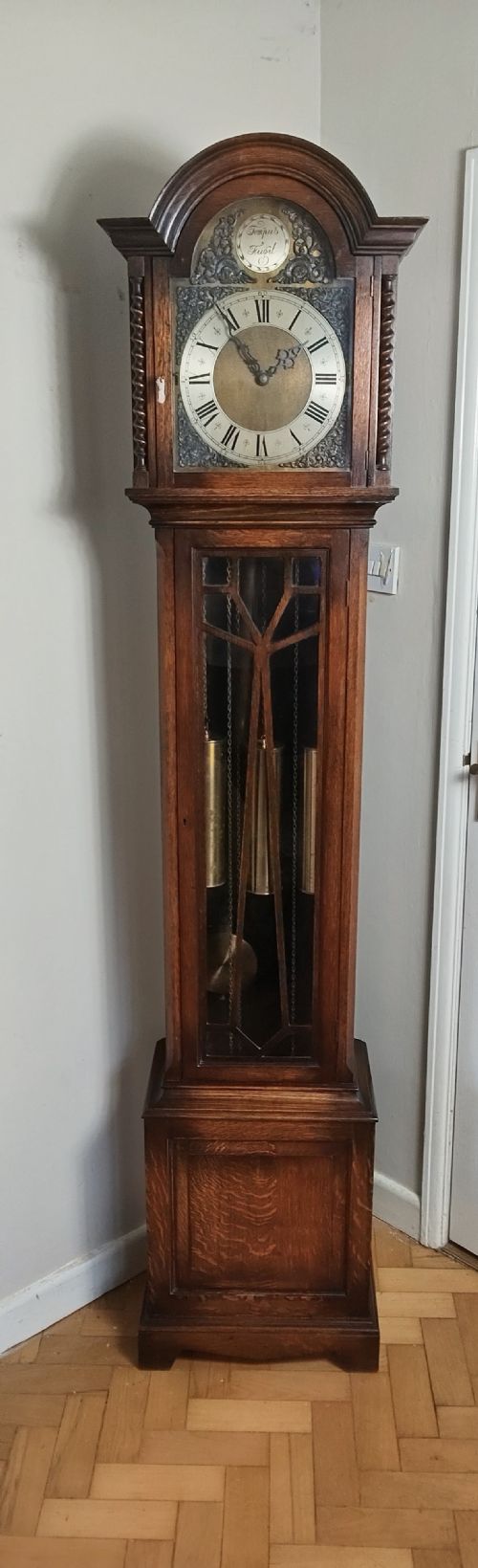
Various revival styles shape these exteriors, featuring Jacobean Revival, Queen Anne Revival, and Chinoiserie decoration alongside Art Deco forms. Mahogany, oak, and walnut cases dominate the selection.
Construction and materials
Cabinetmakers utilised solid and veneered timbers including mahogany, oak, and walnut to build the towering wooden enclosures. Brass, steel, and metal components form the complex internal gear trains, dials, and chiming mechanisms.
Movements rely on weights, often numbering three to drive timekeeping, striking, and musical functions. Painted or brass dials display the hours, sometimes accompanied by subsidiary dials for tune selection.
Some grandfather clocks kept the household strictly on schedule by sounding three distinct tunes before the hour even arrived.
Evaluating craftsmanship
The sophistication of the internal movement dictates much of the standing, separating simple striking clocks from complex musical examples that play multiple tunes or feature nine tubes. Signed movements by established makers indicate higher workshop standards.
Cabinet execution distinguishes finer examples, visible in figured timber grains, intricate marquetry, and carved mahogany details. Proportions also matter, particularly in smaller longcase clocks designed for modest spaces.
Gillett and Johnston·Bravingtons·Harrods·Lister and Sons·William Smith·Geo Tarratt
The Chiming Tall Clock Glossary
- Longcase clock
- A tall, weight-driven pendulum clock enclosed in a wooden case standing directly on the floor. These tall enclosures protect the pendulum and hanging weights while displaying the dial at eye level.
- Grandmother clock
- A smaller version of the longcase clock, typically produced during the Edwardian period and the 1920s. Their reduced height suits rooms with lower ceilings.
- Quarter chiming
- A movement mechanism that sounds a sequence of notes at each quarter hour before striking the full hour. This acoustic feature requires additional trains of gears within the clock.
- Chinoiserie
- A decorative style employing hand-painted oriental motifs and lacquerwork on wooden furniture cases. This aesthetic appears on select grandmother and grandfather clock surfaces.
- Triple weight
- A movement configuration utilising three suspended weights to power the timekeeping, striking, and chiming trains independently. Such setups allow for complex musical tunes or Westminster chimes.
Chiming Tall Clock: Frequently Asked Questions
What is a grandmother clock?
A grandmother clock is a smaller, more slender variant of the traditional grandfather clock. These scaled-down timepieces became popular during the Edwardian period and the early twentieth century.
Their reduced proportions allow them to fit comfortably in smaller rooms and hallways where a full-sized longcase clock might overwhelm the space.
How do triple weight clocks work?
Triple weight clocks utilise three separate suspended weights inside the trunk to drive three distinct internal mechanisms. One weight powers the timekeeping gear train, the second operates the hour strike, and the third runs the chiming or musical train.
This configuration ensures each function receives dedicated power without draining the main timekeeping reserve.
Where should I place a tall clock?
Tall clocks require a stable, level floor away from direct sunlight, dampness, and major draughts that might affect the wooden case or the pendulum swing. Placing them against an interior load-bearing wall helps reduce vibrations from passing traffic.
Sufficient vertical clearance is essential, particularly for grandfathers, while grandmother clocks suit lower ceilings.
How do I identify the period of a tall clock?
The architectural style, timber choice, and dial execution provide strong indicators of a tall clock's period of origin. Georgian and Victorian examples often feature traditional mahogany or oak proportions, while 1920s and Art Deco pieces display distinct modernist lines or figured walnut veneers.
Examining the movement construction and any signature on the dial offers further chronological evidence.