




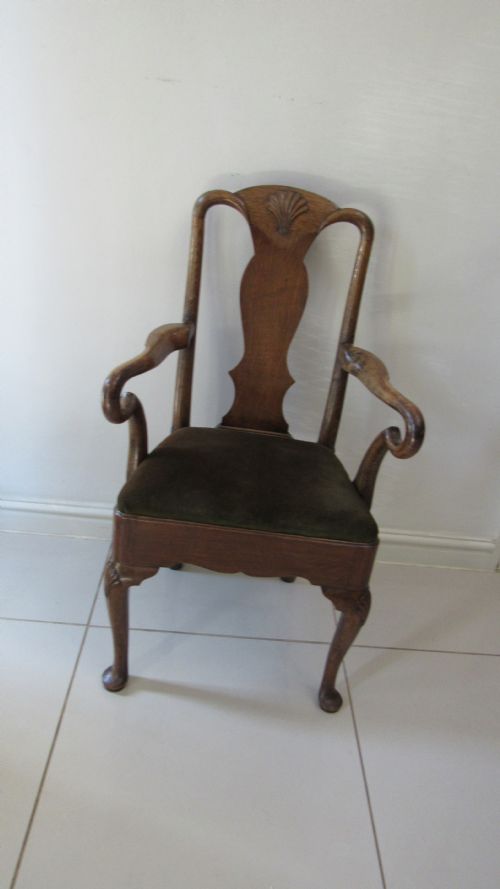
Childs Wooden Elbow Chair
A childs wooden elbow chair brings vernacular seating down to scale, offering sturdy domestic charm crafted for the nursery.
Childs Wooden Elbow Chair
A childs wooden elbow chair is a scaled-down seating form designed for young occupants, appearing across the Georgian, Regency, and Victorian periods. These pieces include stick-back armchairs, Windsor forms, and hoop-back stick chairs originating from English and Welsh vernacular traditions.
The versions most commonly met on this page belong to the nineteenth century, including primitive folk art interpretations and classic Windsor designs. Makers scaled down adult chair proportions while retaining the joinery methods of full-sized seating.
How they were made
Craftsmen utilised native timbers such as elm, yew, ash, mahogany, and oak, selecting woods based on local availability and structural strength. Yew and elm provided the toughness required for slender spindles and bentwood arm bows.
Joinery relied on traditional stick and Windsor construction, where turned legs and back spindles fit directly into shaped solid timber seats. Selected examples feature historic painted finishes applied over the bare wood.
Childs Wooden Elbow Chair Retail Price Guide 2026
Typical asking prices for childs wooden elbow chair among the pieces listed under this phrase on Sellingantiques today, from the lower quarter to the upper quarter. They describe what is for sale here now, not the wider market.
A tiny elbow chair built for a Victorian toddler still holds the unmistakable smudge of a sticky jam-covered thumb on the arm.
What varies in quality
The division between standard examples and superior pieces rests upon timber selection and the fluency of the turning work. Elegant leg spinnings and well-figured yew or mahogany grain elevate specific chairs above simpler utilitarian equivalents.
Proportion and structural harmony also dictate quality, as skilled provincial makers balanced miniature dimensions without making the arms or backrests feel clumsy. Original surface patination and untouched timber finishes preserve the historic character sought by collectors.
The Childs Wooden Elbow Chair Glossary
- Stick back
- A chair construction method where turned spindles are wedged directly into bored holes in the seat. This method defines many primitive and vernacular seating forms.
- Windsor
- A chair style featuring a solid wooden seat into which the legs and back bow are separately inserted. These chairs often incorporate curved arm pieces and shaped splats.
- Vernacular
- Localized domestic furniture built by regional makers using traditional methods rather than grand academic styles. Welsh and English country workshops produced distinct regional variations.
- Elm
- A tough, interlocking-grained hardwood frequently used for solid chair seats because it resists splitting. Cabinet makers valued its durability for items subject to heavy daily use.
- Hoop back
- A continuous bentwood rail that forms both the top rail and the arms of an armchair. This technique provides inherent structural strength to lighter seating frames.
Childs Wooden Elbow Chair: Frequently Asked Questions
Were these chairs meant for everyday use?
These seating pieces served practical functions in domestic nurseries and parlours, providing sturdy furniture sized specifically for children. Families utilised them around the home for daily seating.
Over generations, the surviving examples transitioned from utilitarian nursery items into decorative collectable objects displayed within period interiors.
What woods were commonly used?
Regional makers selected local hardwoods depending on which parts of the chair required strength or flexibility. Yew and ash were favored for bent arms and slender spindles.
Elm appeared frequently for solid seats due to its resistance to splitting, while mahogany and oak served in more formal cabinet-made workshops.
How can I tell the period?
Dating relies on observing construction details, tool marks, timber ageing, and regional stylistic traits. Georgian and Regency examples often display lighter proportions and refined turnings.
Victorian and later nineteenth-century pieces tend toward sturdier builds, while folk art variations reflect the individual maker's local vernacular traditions.