

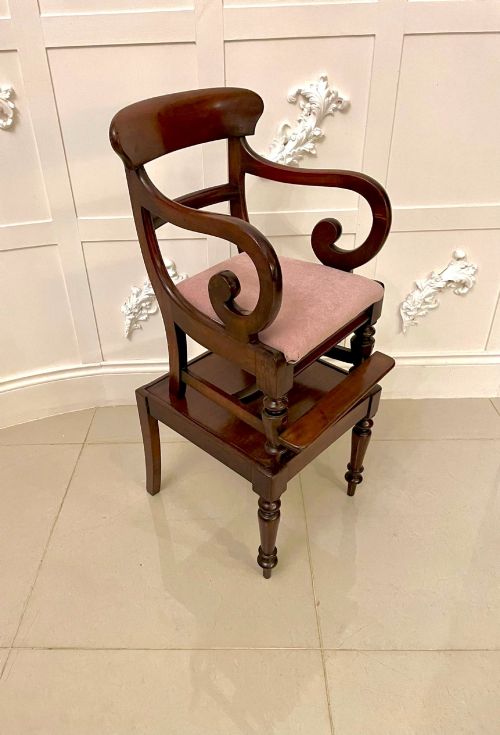
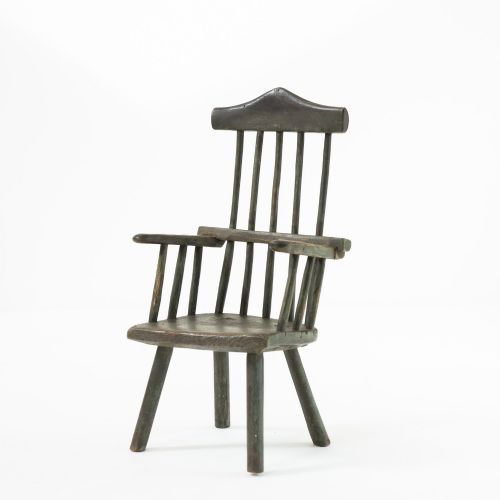
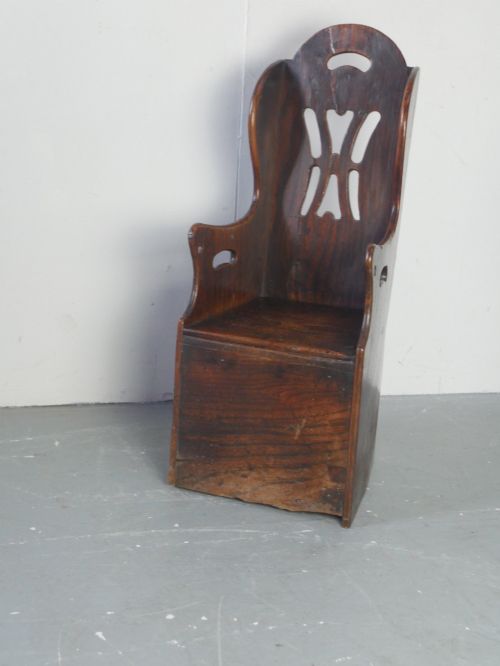
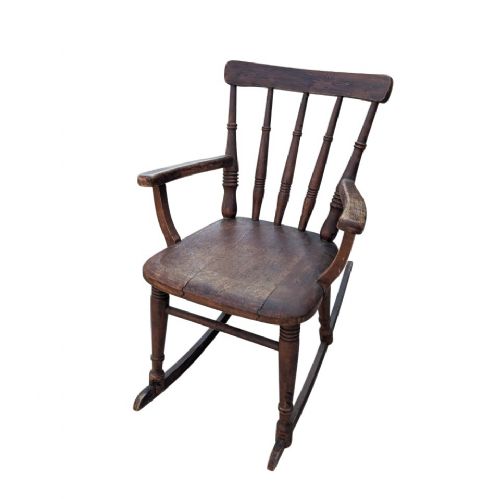


Childrens Wooden Seat
These small children's wooden seats offer a tangible link to domestic history, crafted down to miniature scale for household use.
Childrens Wooden Seat
A children's wooden seat spans domestic forms from simple country stick-backs and ladderbacks to formal mahogany armchairs and high chairs. These pieces appear across periods from the seventeenth century through the Victorian era, reflecting the furniture styles of their respective days in miniature.
Buyers most frequently encounter vernacular country examples built from native timbers like elm, ash, and yew. Alongside standard chairs, the selection includes rocking chairs, commode chairs, and high chairs designed for practical use in historic nurseries.
How they were made
Cabinetmakers and country joiners built these seats using traditional construction methods suited to domestic timber. Windsor frameworks rely on turned spindles and bentwood hoops, while vernacular pieces utilise solid plank seats joined with pegged mortise and tenon joints.
Makers selected native hardwoods such as oak, mahogany, walnut, and fruitwood depending on the period and regional workshop traditions. Seats often incorporate woven rush, cane, or bergere panels to support daily use.
Childrens Wooden Seat Retail Price Guide 2026
Typical asking prices for childrens wooden seat among the pieces listed under this phrase on Sellingantiques today, from the lower quarter to the upper quarter. They describe what is for sale here now, not the wider market.
The listings span multiple centuries, ranging from seventeenth-century fruitwood lambing chairs to twentieth-century oak settle designs.
What varies in quality
The distinction between ordinary workshop pieces and finer items rests on timber selection and joinery execution. Sophisticated examples display carefully matched grain, elegant turning on legs and spindles, and balanced proportions scaled down faithfully from adult furniture.
Surface finish and original patination heavily influence the character of each seat. Pieces retaining untouched timber surfaces and early polished finishes demonstrate greater integrity than those altered by later interventions.
The Childrens Wooden Seat Glossary
- Stick back
- A chair construction method where turned spindles are inserted directly into a solid wooden seat.
- Windsor
- A traditional chair type featuring a solid wooden seat into which the legs and back spindles are fitted independently.
- Commode chair
- A piece of seating furniture enclosing a concealed chamber pot or receptacle beneath a removable seat.
- High chair
- An elevated child's seat designed to bring a small occupant up to the height of a dining table.
Childrens Wooden Seat: Frequently Asked Questions
How were children's high chairs used historically?
These elevated seats positioned young children safely at table height during family meals in domestic interiors. They combined sturdy wooden frames with footrests and enclosed rails to keep infants secure.
Over subsequent generations, many high chairs were adapted for general use by removing their elevated bases or modifying the tray components.
What is a primitive stick back chair?
A primitive stick back is a vernacular seating form produced by local joiners using readily available regional timbers. These items prioritise simple utility and robust construction over formal stylistic conventions.
Maker methods relied on basic turning lathes and hand tools, resulting in honest, unpretentious chairs intended for daily nursery life.
Are these small seats meant for sitting?
While originally constructed for actual use by children in past centuries, many historic examples now function primarily as decorative interior objects. Their structural capacity depends on the individual timber condition and historical glue stability.
Owners often place them beside larger period armchairs or utilise them to display antique dolls and textiles.