




Childrens Wooden Chair
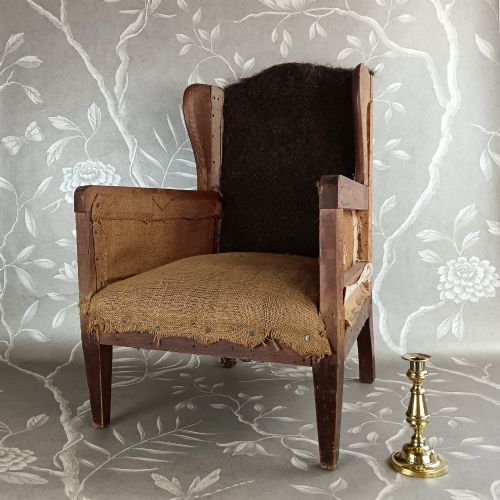
These small seats bridge domestic history and carpentry, and a childrens wooden chair brings domestic character to a room through centuries of vernacular design.
Childrens Wooden Chair
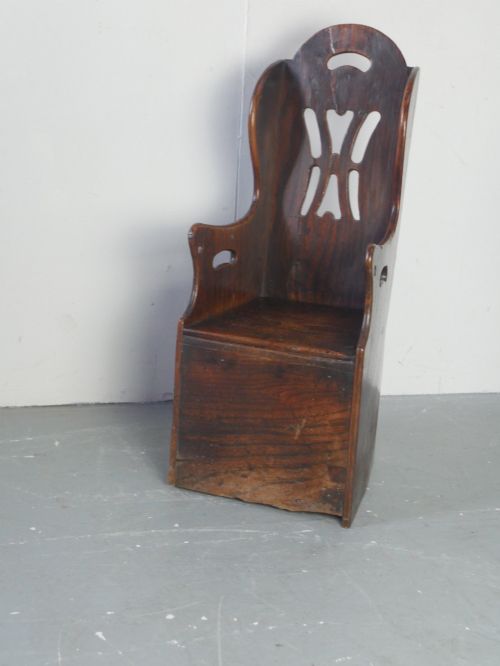
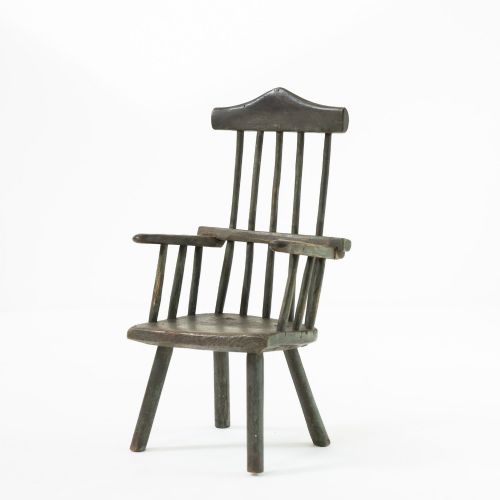
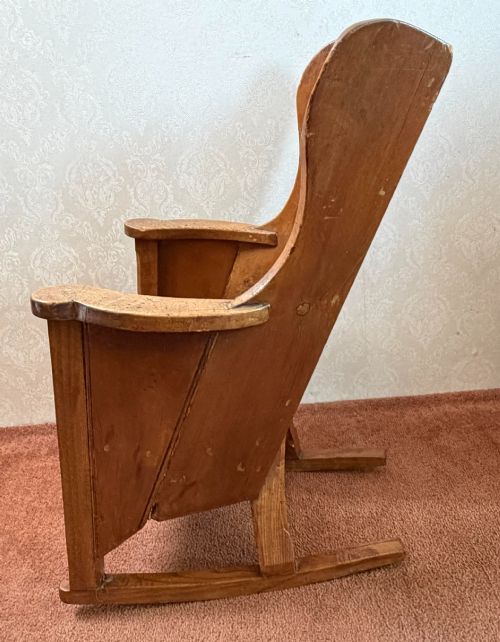
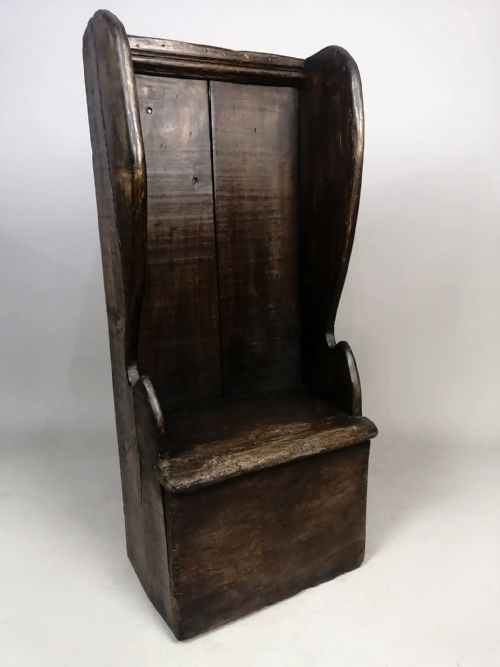
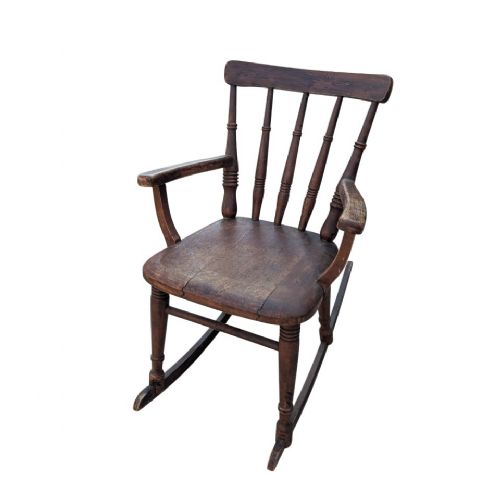
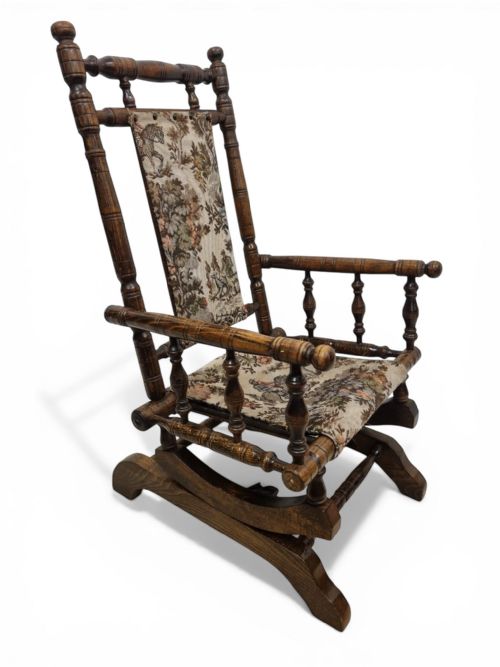
A childrens wooden chair spans forms from simple stick-back models to high chairs, commode chairs, and rocking variants. Examples appear across the seventeenth, eighteenth, nineteenth, and early twentieth centuries.
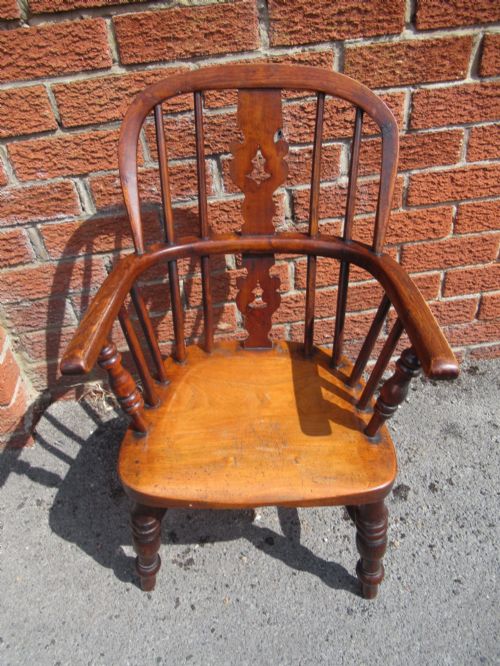
The most common versions met on this page belong to the Georgian and Victorian periods, often taking the form of Windsor or vernacular country armchairs. These pieces mirror adult furniture styles down in scale, reflecting the domestic habits of past households.
Materials and construction methods
Cabinet makers and vernacular joiners utilised native timbers including elm, ash, oak, yew, fruitwood, and mahogany. These woods were chosen for strength and grain, frequently combining dense hardwoods for frames with softer timbers.
Construction techniques include traditional Windsor framing with socketed spindles, ladderback joinery, and steam-bent components for rockers and arms. Caned panels, rush seating, and tapestry upholstery occasionally add texture to the wooden framework.
Current listings feature pieces spanning the seventeenth century through to the nineteen thirties, constructed in elm, oak, mahogany, ash, and yew.
Distinctions in construction and design
The standard of a piece rests on the integrity of its joinery and the selection of timber. Fine examples display carefully turned spindles, balanced proportions, and minimal structural alterations.
Simpler vernacular pieces rely on honest utility, while formal styles like George III mahogany high chairs or Regency armchairs demonstrate sophisticated cabinet work and refined turning.
The Childrens Wooden Chair Glossary
- Windsor chair
- A wooden chair built with a heavy solid seat into which the legs and back spindles are wedged directly. This design gives sturdy construction with minimal framing.
- Stick back
- A chair design where turned wooden rods form the back support, common in vernacular country seating. These rods slot into the seat plank.
- Ladderback
- A chair featuring horizontal wooden slats between the upright posts of the back. Rush or cane often fills the seat base below.
- Commode chair
- A seating item fitted with a concealed aperture for a chamber pot beneath the seat. These date primarily from the Georgian and Victorian eras.
- High chair
- A raised seat designed to bring a small child to table height. Examples include standalone frames and models on wheeled or fixed wooden stands.
Childrens Wooden Chair: Frequently Asked Questions
How were these chairs used?
These miniature seats served daily domestic functions for eating, resting, and nursery routines. High chairs and commode models provided practical household assistance for families.
Rocking chairs and armchairs offered comfort and entertainment for young children in the parlour or bedroom. Each form answered a specific domestic requirement of the period.
How do I date a childrens wooden chair?
Dating relies on timber selection, tool marks, and stylistic clues shared with full-sized furniture. Georgian and Victorian pieces show characteristic turning patterns and construction methods.
Details such as exposed peg joints, timber shrinkage, and original surface patination help establish the era of manufacture.
Can I use these chairs today?
Many of these pieces remain structurally sound for display and light decorative use in modern interiors. Their diminutive scale makes them suitable for shelf placement or corner styling.
Collectors often treat them as sculptural objects rather than functional seating due to their age and delicate proportions.
What is a vernacular childrens chair?
Vernacular pieces are utilitarian objects made by local country craftsmen rather than urban cabinet makers. They utilise regionally available woods like ash, elm, and fruitwood.
These chairs prioritise sturdy construction and practical form over formal decorative styles.