

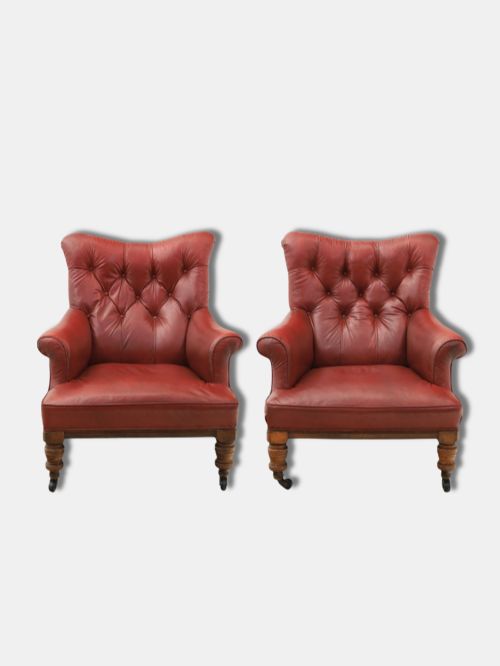
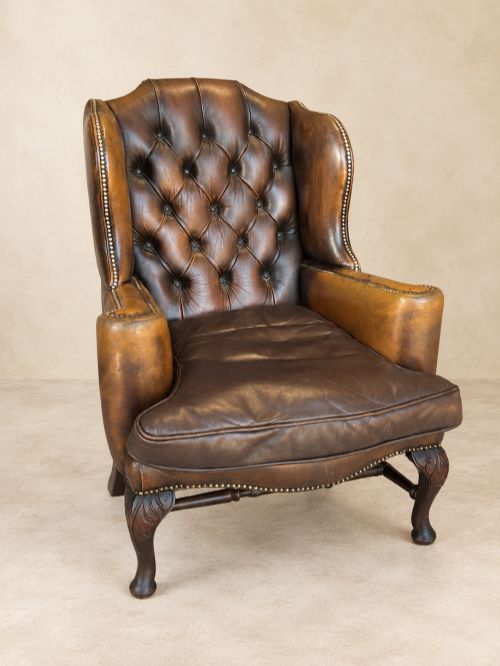
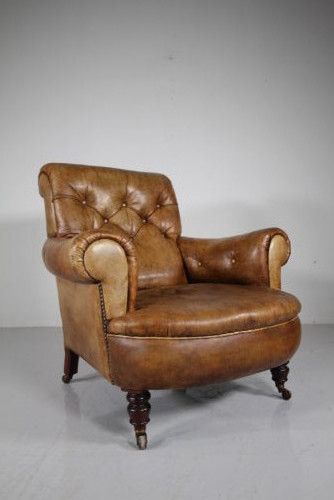
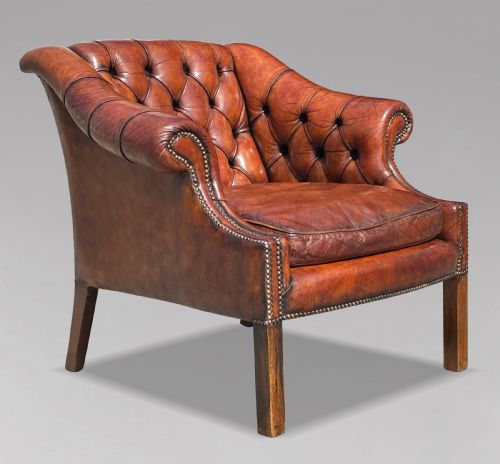



Chesterfield Library Chairs
Chesterfield library chairs offer deep seats and substantial upholstery, serving as enduring anchors for a study or reading room.
Chesterfield Library Chairs
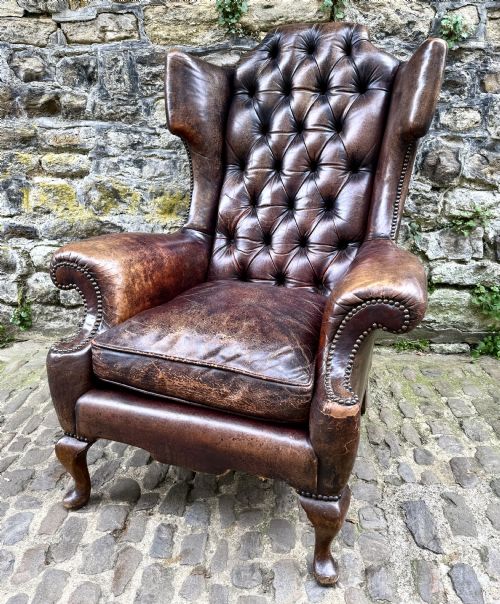
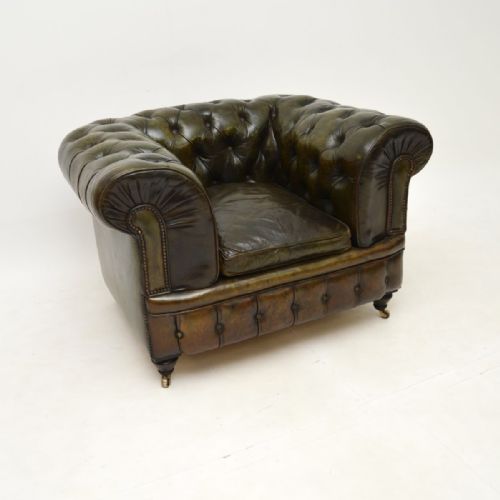
These pieces are substantial seats designed for reading rooms, studies, and offices, combining generous padding with supportive backs. When searching for chesterfield library chairs, buyers encounter forms ranging from low tub club seats to high-backed wing chairs.
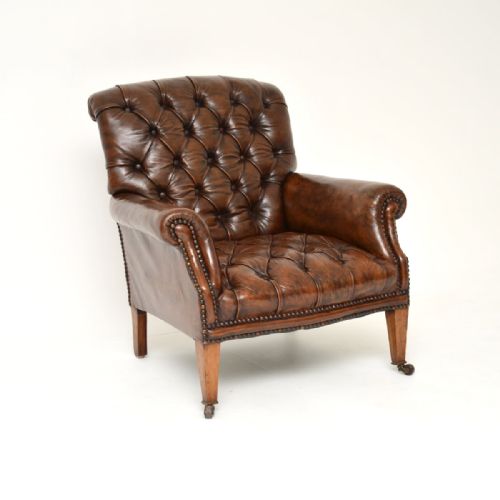
The selections span multiple periods, with nineteenth-century Victorian and William IV examples appearing alongside eighteenth-century George III pieces and early twentieth-century designs. Most versions arrive in brown or oxblood leather, often featuring buttoned upholstery and timber frames.
Armchairs, desk chairs, and porters chairs dominate the forms, sometimes accompanied by footstools or writing slopes. Buyers often find pairs or larger sets alongside single seating options.
Materials and construction methods
Makers built the structural frameworks using hardwoods such as mahogany, oak, and general timber, ensuring stability for heavy daily use. Exposed woodwork frequently displays carved details, particularly on Victorian lion-carved frames and show-framed models.
Upholstery relies primarily on leather, sometimes hand-dyed, along with alternatives like red oxblood rexine on early twentieth-century pieces. Brass details appear on castors and tacking, securing the leather edges to the frames.
Chesterfield Library Chairs Retail Price Guide 2026
Typical asking prices for chesterfield library chairs among the pieces listed under this phrase on Sellingantiques today, from the lower quarter to the upper quarter. They describe what is for sale here now, not the wider market.
The listings span from eighteenth-century George III examples to 1930s productions, utilising leather, mahogany, oak, and rexine.
Judging the standard of execution
The distinction between tiers rests on the depth of the buttoning, the suppleness of the leather, and the crispness of the timber carving. Pieces with full buttoned backs and hand-dyed finishes sit at the upper end of the spectrum.
Frame integrity and historical accuracy in restoration also divide the selections. Fully restored nineteenth-century models with intact mahogany or oak subframes represent higher craftsmanship than simpler, later variations.
Thomas Chippendale
The Chesterfield Library Chairs Glossary
- Wingback
- An upholstered chair with side panels attached to the arms and stretching up to the headrest. This design originally protected occupants from drafts in large rooms.
- Rexine
- A leathercloth material made from fabric coated with cellulose nitrate and pigments. It mimics genuine leather and appears on early twentieth-century pieces.
- Porters chair
- A high-backed enclosed seating form designed to keep out draughts for attendants stationed in drafty halls. They often feature hooded tops and deep buttoning.
- Tub armchair
- A chair with a continuous curved back and armrests forming a rounded enclosure. This form provides compact support in studies and offices.
- Buttoning
- A method of securing upholstery stuffing by pulling tufting threads deep through the padding to form diamond patterns. It maintains the shape of the cushion over decades of use.
Chesterfield Library Chairs: Frequently Asked Questions
How do I identify a Victorian library chair?
Victorian models frequently display dark mahogany frames, deep buttoned leather, and robust proportions. Many incorporate carved wooden details or heavy brass castors.
Later examples from the era may also show hand-dyed leather finishes and distinct club or wingback silhouettes.
What is the difference between a club chair and a wing chair?
Club chairs offer low, rounded backs and deep seats designed for lounging in comfort. Wing chairs incorporate protective side panels on the upper back to shield the sitter.
Both types utilise leather upholstery and buttoning across the various periods represented here.
Are these chairs suitable for a modern desk?
Several options include desk chairs and adjustable variants equipped with writing slopes. These provide appropriate height and back support for workspace use.
Buyers should check the dimensions of individual pieces to ensure clearance beneath modern desktop surfaces.
How should I care for antique leather upholstery?
Leather surfaces benefit from gentle cleaning and occasional conditioning to maintain suppleness. Avoiding direct sunlight prevents the hand-dyed brown and oxblood tones from fading.
Regular dusting keeps the buttoned recesses free from debris and preserves the finish over time.