




Cherub Jewellery Box
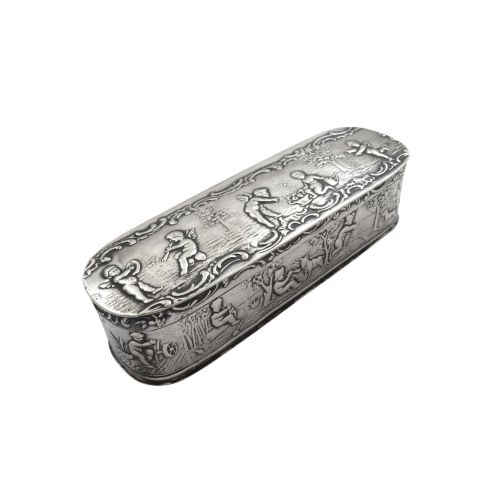
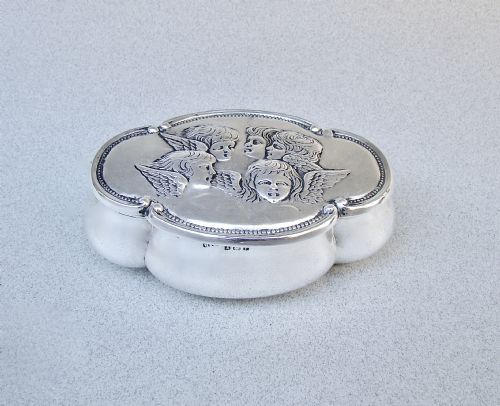
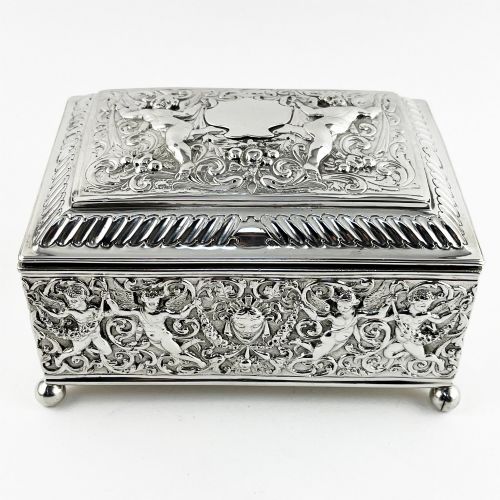
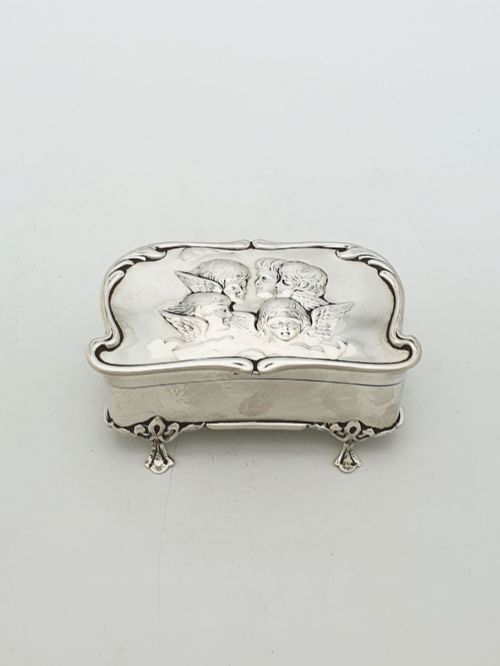
Cherub jewellery box pieces are small decorative caskets and trinket boxes adorned with putti relief, sought after for vanity and dressing table display.
Cherub Jewellery Box
A cherub jewellery box is a compact vessel designed to hold rings, trinkets, or small valuables upon a dressing table. These boxes emerge primarily from the Victorian and Edwardian eras, spanning from the late 19th century into the early 20th century.
The dominant forms on this page include sterling silver ring boxes, porcelain caskets, and gilt metal containers. Makers from England and continental Europe produced these boxes in styles ranging from Rococo Revival and French Rococo Revival to Napoleon III.
How they were made
Sterling silver boxes utilise stamped or chased relief panels where cherub figures emerge from the metal surface, frequently paired with gilt interiors. Silversmiths mounted these panels onto wooden cores or constructed them as solid silver caskets.
Porcelain and ormolu pieces combine fired ceramic plaques, such as Capodimonte or Sevres style work, with cast bronze mounts plated in gold. Walnut examples employ timber construction with brass fittings and domed lids.
Gilded copper electro-form techniques also appear, coating forms in metal through electrical deposition before applying surface gilding. This variety of construction methods reflects the distinct material preferences of Victorian and Edwardian workshops.
Cherub Jewellery Box Retail Price Guide 2026
Typical asking prices for cherub jewellery box among the pieces listed under this phrase on Sellingantiques today, from the lower quarter to the upper quarter. They describe what is for sale here now, not the wider market.
Every cherub box secretly judges your ring collection while guarding your pins.
What varies in quality
Quality rests in the crispness and depth of the cherub relief work, distinguishing sharply cast or hand-chased figures from worn, shallow pressings. Maker attribution significantly elevates a piece, particularly when bearing marks from established silversmiths like William Comyns or H. Matthews.
The integrity of the interior lining, whether original silk, velvet, or gilt wash, preserves the functional character of the box. Heavier gauge sterling silver and substantial porcelain bodies indicate superior manufacture compared to lighter, foil-backed or thin gilt metal alternatives.
William Comyns & Sons·H. Matthews·Trussell Brighton
The Cherub Jewellery Box Glossary
- Sterling silver
- An alloy containing 92.5 percent silver by mass, forming the primary metal body for the majority of these trinket boxes. This standard ensures durability while allowing intricate repousse and relief work.
- Ormolu
- Finely chopped high-karat gold applied to a base metal object, typically bronze or copper, through a mercury amalgamation or electroplating process. It provides the bright golden framing seen on porcelain and glass caskets.
- Repousse
- A metalworking technique where the artisan hammers or pushes the design from the reverse side to create a raised relief on the front. Cherub jewellery boxes rely on this method to project figures outward from the lid or sides.
- Capodimonte
- A style of porcelain originating from the famous Italian factory known for delicate modelled figures and relief decoration. Pieces bearing this influence feature prominently among ceramic trinket boxes.
- Electro-form
- A manufacturing method using electroplating to grow a metal shell over a form, creating detailed hollow vessels like French gilded copper caskets.
Cherub Jewellery Box: Frequently Asked Questions
How do I date a silver trinket box?
Dating a silver trinket box relies heavily on British hallmarks stamped directly onto the metal, which indicate the assay office, date letter, and maker's mark. Stylistic clues such as Rococo Revival curves or Edwardian proportions also help narrow the manufacturing era.
Unmarked continental pieces require assessment of the construction techniques, materials, and overall aesthetic context. Comparing the piece to documented examples from makers like William Comyns aids further in establishing a timeline.
Were these boxes used for everyday storage?
These boxes were designed for daily use on dressing tables and boudoir desks to store active rings, brooches, and small pins. Their velvet or silk-lined interiors protected delicate gemstones from scratching against the metal or ceramic walls.
Over time, their role shifted from utilitarian vanity items to decorative cabinet pieces and collector displays. Today they remain functional for small modern keepsakes while serving as decorative objects.
What materials are common in antique caskets?
Sterling silver dominates the British listings, often featuring chased cherub panels and gilt wash interiors. Other common materials include burr walnut timber, Sevres and Capodimonte porcelain, ormolu mounts, and gilded copper.
Combinations of porcelain plaques set within cast metal frames appear frequently in continental European pieces. Each material dictates the specific cleaning and care required to preserve the finish.