
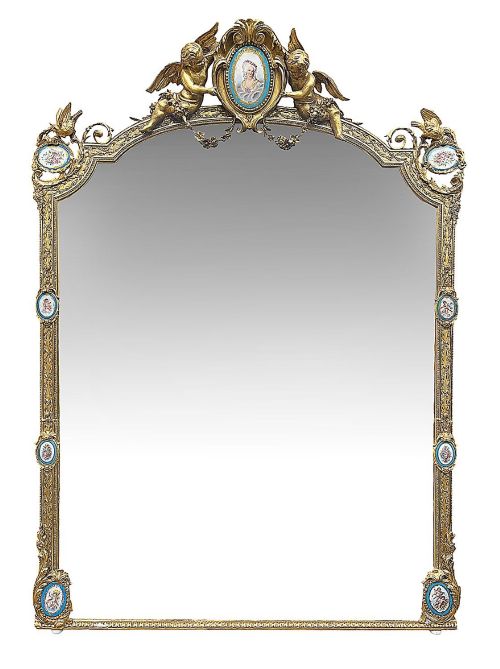
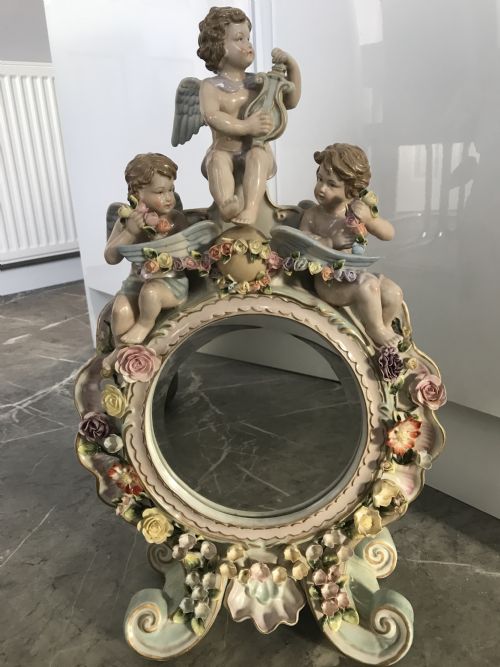


Cherub Gilded Mirror
A cherub gilded mirror brings sculptural romance and reflective depth to a room, uniting carved figures with gleaming metallic finishes.
Cherub Gilded Mirror
A cherub gilded mirror combines reflective glass with carved wooden or gesso figures representing winged infants, putti, or mythical attendants. These pieces emerge in styles such as Rococo Revival, Louis XVI, and Victorian, reflecting the ornamental tastes of the nineteenth and early twentieth centuries.
Buyers encounter various forms ranging from large overmantle mirrors designed for a fireplace to smaller dressing table mirrors and wall sconces. Many examples incorporate floral swags, scrolling foliage, or cresting figures alongside the central mirror glass.
Origins span English, French, and Italian workshops, with distinct regional interpretations of classical motifs. The selection includes both grand architectural wall pieces and intimate porcelain or cast iron variations.
Materials and construction methods
Carvers typically shaped wooden frames from softwoods or hardwoods before applying layers of gesso to build up intricate relief details. Gilding was achieved by laying gold leaf or metal leaf over the prepared surfaces, sometimes complemented by painted or parcel-gilt finishes.
Mirror glass was set into the rebates behind ornate mouldings, occasionally retaining original silvering or showing characteristic age spots. Structural elements integrated cast iron or porcelain components in specific continental and industrial pieces.
Keep an eye out for mythical fish-tailed cherubs swimming amidst the gilded swags.
Assessing craftsmanship and condition
Quality reveals itself in the depth and crispness of the carved ornamentation, particularly in the modelling of the cherubs' faces and wings. Superior pieces display fluid, hand-carved gesso work where floral swags and scrollwork remain sharp and well-defined.
The integrity of the original gilt surface and the stability of the wooden frame determine the grade of the piece. Heavy overmantles rely on sound joinery and robust backing boards to support the weight of the glass and heavy decorative crests.
Coalbrookdale·Sir Willian Trotter
The Cherub Gilded Mirror Glossary
- Giltwood
- Wood that has been coated with gold leaf or metal leaf over a prepared base. This finish provides the characteristic metallic brilliance seen on traditional frames.
- Gesso
- A plaster-like mixture applied to wood frames to create a smooth surface for carving or moulding details. It allows craftsmen to achieve high relief ornamentation before gilding.
- Putto
- A plump, winged infant figure frequently depicted in classical art and architectural decoration. These figures form the distinctive cherub motifs on these mirrors.
- Overmantle mirror
- A large mirror specifically designed to hang above a fireplace mantelpiece. These pieces often feature extended horizontal proportions to match the width of the hearth.
- Parcel-gilded
- A finishing technique where only specific portions of an object are gilded while other areas are painted or left exposed. This creates a subtle contrast between metallic highlights and the base material.
Cherub Gilded Mirror: Frequently Asked Questions
How do I clean a gilded mirror frame?
Dust the carved surfaces gently with a soft, dry brush to prevent disturbing fragile gesso or gold leaf.
Avoid using liquid cleaners or chemical polishes on the gilded areas, as moisture and solvents lift the metallic finish.
Are these mirrors heavy to hang?
Many overmantle and large wall mirrors possess substantial weight due to the timber frames, thick gesso, and heavy glass.
Secure installation requires fixing directly into wall studs or using heavy-duty masonry anchors suited to the load.
How can I tell the period of the mirror?
Stylistic indicators such as Louis XVI symmetry or Rococo asymmetry point towards specific nineteenth-century revival movements.
Examine the construction of the wooden backboards, fixings, and the composition of the glass for manufacturing clues.
Where should I place an overmantle mirror?
These pieces traditionally anchor the space above a fireplace, reflecting light and drawing the eye upward.
They also function effectively on principal living room walls to create an illusion of space and depth.