

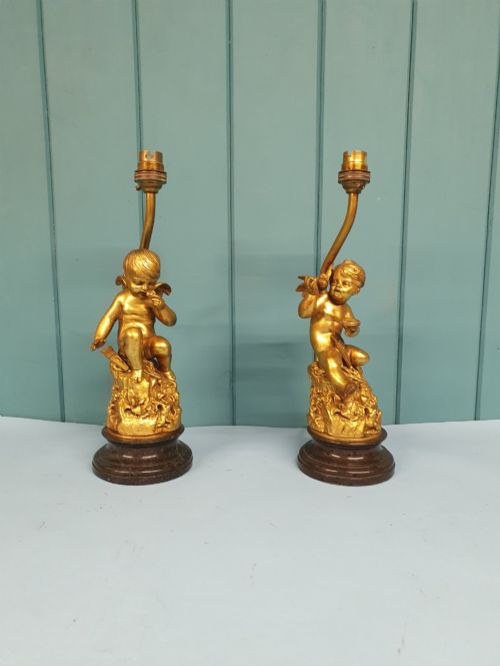


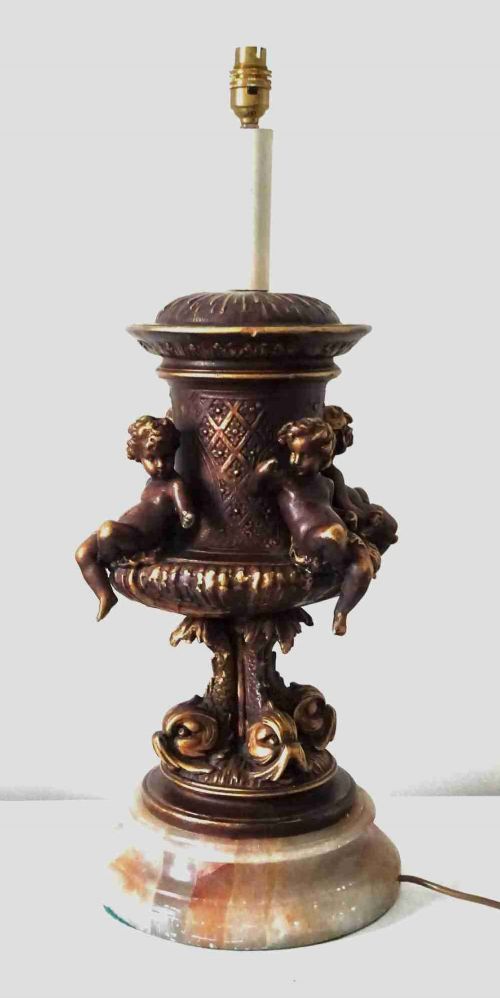
Cherub Figural Lamp
These cherub figural lamps combine classical winged figures with period lighting, bringing ornate continental metalwork and sculpted charm into domestic interiors.
Cherub Figural Lamp
The pieces span from the late nineteenth century into the early twentieth century, drawing heavily on French Rococo Revival, Neoclassical, and Art Nouveau design vocabularies. Such lighting serves both practical illumination and decorative sculpture, often featuring elaborate torchères, beaded shades, or toleware elements.
The physical forms range from compact table bases to large sculptural compositions involving dolphins or classical motifs. Makers and foundries of the period utilised these cherubic themes to create domestic ornamentation that reflected continental tastes of the era.
Materials and construction methods
Makers utilised cast bronze, brass, and spelter for the primary figural bodies, employing traditional foundry techniques to render the detailed wings, hair, and limbs of the putti. These metal elements were frequently finished with gilt or patinated coatings to enhance the visual depth of the sculpture.
Many examples incorporate secondary materials such as white marble for heavy bases and glass or fabric for shades, sometimes accented with beaded trims or gilt toleware. The combination of solid stone plinths with lighter metal figures provided necessary stability for the vertical lamp structures.
Cherub Figural Lamp Retail Price Guide 2026
Typical asking prices for cherub figural lamp among the pieces listed under this phrase on Sellingantiques today, from the lower quarter to the upper quarter. They describe what is for sale here now, not the wider market.
Current listings feature materials including marble, glass, bronze, brass, gilt metal, and fabric across various nineteenth and twentieth-century periods.
Evaluating craftsmanship and execution
Material selection significantly influences the overall calibre of the lamp, with heavy bronze castings and genuine marble bases representing a superior standard compared to lighter gilt metal or hollow brass assemblies. The integration of period wiring components and well-preserved surface patination further distinguishes the better examples.
Aug. Moreau
The Cherub Figural Lamp Glossary
- Putto
- A plump, naked male child figure frequently found in classical art and sculpture. On these lamps, putti serve as the central figural support holding torches or lighting elements.
- Torchère
- A stand or standard designed to carry a light source. In this context, the cherub is often depicted holding the torchère column.
- Spelter
- A zinc alloy commonly utilised as a substitute for bronze in nineteenth and twentieth-century metalware. It is softer and lighter than bronze.
- Toleware
- Enamelled and lacquered metalware used for decorative shades and lamp components. It provides durable colour and surface decoration.
- Rococo Revival
- A nineteenth-century design style characterised by ornate scrollwork, asymmetry, and naturalistic motifs. This aesthetic heavily influences many of these figural pieces.
Cherub Figural Lamp: Frequently Asked Questions
What periods do these lamps date from?
The pieces span from the late nineteenth century through to the early twentieth century, specifically covering eras like the 1890s, the Edwardian period, and the Art Deco transition of the 1930s.
Stylistic indicators such as Rococo Revival curves or later simpler lines help place an item within this broad chronological window.
How were these lamps originally used?
They functioned primarily as decorative lighting on side tables, mantelpieces, or as wall sconces in formal nineteenth and early twentieth-century drawing rooms.
Their dual role as sculpture and illuminator meant they were placed to be visible from multiple angles within a room.
How do I live with a heavy bronze lamp?
Placing them on sturdy furniture is essential due to the weight of the bronze and marble components used in their construction.
Careful positioning away from high-traffic edges protects both the delicate metal details and the supporting surface.